
Aramats Team
Written by the Aramats team at Arackathara Group, manufacturers and exporters of rubber matting solutions since 1973.
Written by the Aramats team at Arackathara Group, manufacturers and exporters of rubber matting solutions since 1973.
Sublimation printed mats allow companies to showcase logos, brand colours, photographs, and intricate graphics on floor mats. These mats can take branding into physical spaces without the use of signs or wall graphics, from hotel entrances and retail stores to exhibitions and promotional displays. Businesses exploring custom logo mats can use them to bring their brand identity into customer-facing spaces.
The quality of the finished design depends on more than the artwork itself. The printing process, printable surface, and mat construction all matter. Understanding how sublimation works can help businesses choose suitable designs and make informed decisions before placing an order.
Sublimation printing is a heat-transfer process that uses specialised inks to transfer a design onto a compatible material, typically polyester or a surface with a suitable polymer coating.
During printing, heat turns the dye into a gas, allowing it to bond with the compatible surface. This process can reproduce multiple colours, gradients and detailed images, making it useful for designs that would be difficult to create using a limited-colour print.
For mats, the important consideration is material compatibility. Not every rubber surface is suitable for direct sublimation printing, so buyers should check how the design is applied and what materials are used in the finished product.
The process involves a few key stages, from preparing the artwork to checking the finished mat.
The process begins with the design. This could be a company logo, promotional graphic, photograph, or combination of brand elements.
The artwork needs to fit the dimensions of the mat. Small text, fine details and logos should remain clear at the intended size. Businesses should also check spelling, colour choices and image quality before sending the design for production.
The artwork is printed onto specialised transfer paper using sublimation inks. The paper holds the design until it is transferred to the compatible printable surface.
The quality of the original image matters here. A low-resolution logo or photograph may appear blurred when enlarged, so using suitable artwork can help achieve a clearer result.
The transfer paper is laid on the surface to be printed on, and heat is applied under controlled conditions. The dye transfers from the paper and bonds with the compatible material.
The required temperature, pressure, and processing time depend on the material and product. Settings must be suitable for the particular mat being produced.
After printing, the design can be checked for placement, colour consistency, and visible defects. The mat’s dimensions and construction should also match the order specifications.
For businesses placing larger orders, reviewing an artwork proof or sample before full production can help prevent errors from being repeated across the entire batch.
A company logo may contain several colours, gradients or detailed graphics. Sublimation printing can reproduce these elements on a suitable surface, giving businesses more flexibility when preparing branded designs.
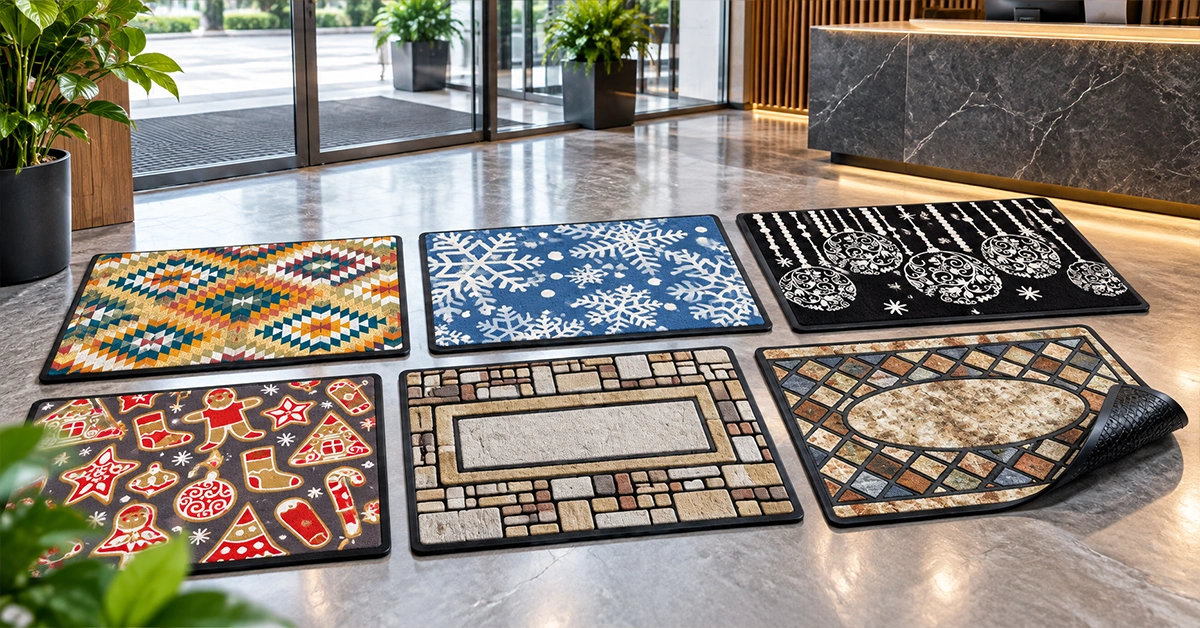
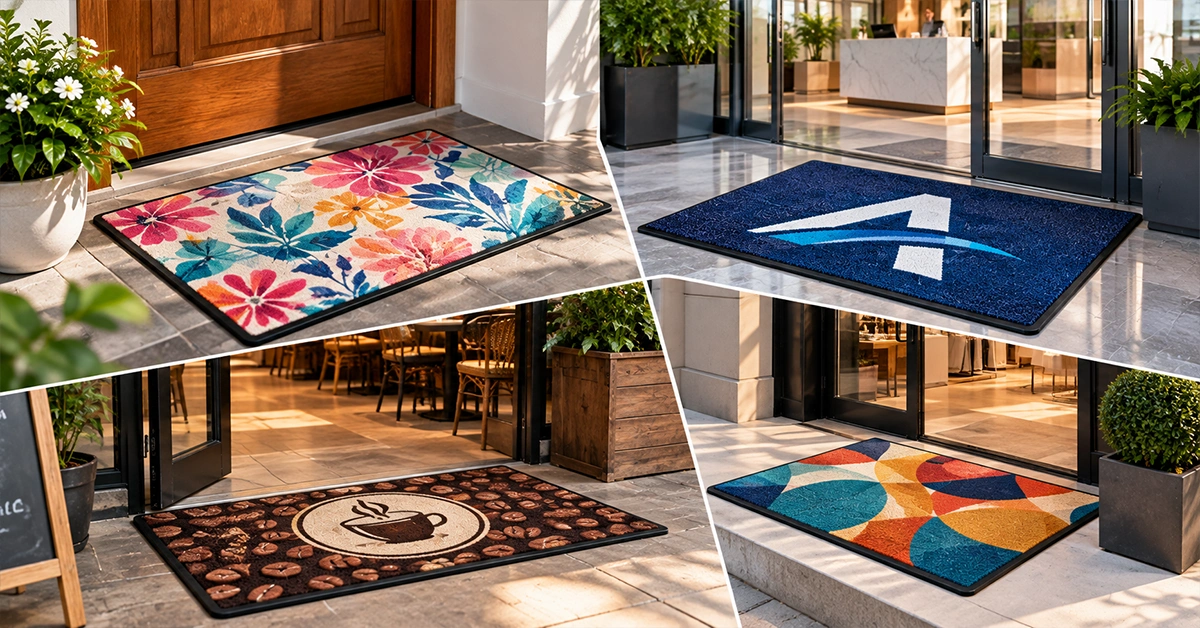
Full-colour printed mats can be considered for reception areas, showrooms, retail spaces and promotional displays where the artwork needs to follow a particular brand identity.
However, adding more colours does not automatically make a design more effective. Clear logo placement and a balanced layout can make the finished mat easier to recognise.
Businesses can also explore custom rubber mats for business branding when deciding how to incorporate their brand into physical spaces.
Some designs rely on more than a logo or a short message. Photographs, illustrations and complex graphics may be central to the intended appearance.
Sublimation printing can accommodate this level of detail when the printable surface and production process are suitable. The final result still depends on the quality of the source image and the printing setup.
The designs printed are flexible and can be used for different spaces and campaigns. A hotel may place its logo near an entrance, while a retailer may design a mat to coincide with a product launch.
The design should reflect the purpose of the mat rather than reproduce existing marketing material at a different size.
The intended location should guide both the design and the choice of product.
Businesses looking for custom printed doormats should consider the available floor space, expected foot traffic, and exposure to moisture or dirt. A mat designed for a dry indoor area may not be suitable for every entrance. For decorative applications, businesses can also explore home décor mats to compare other mat options.
Sublimation printing offers several design possibilities, depending on the product and the intended use.
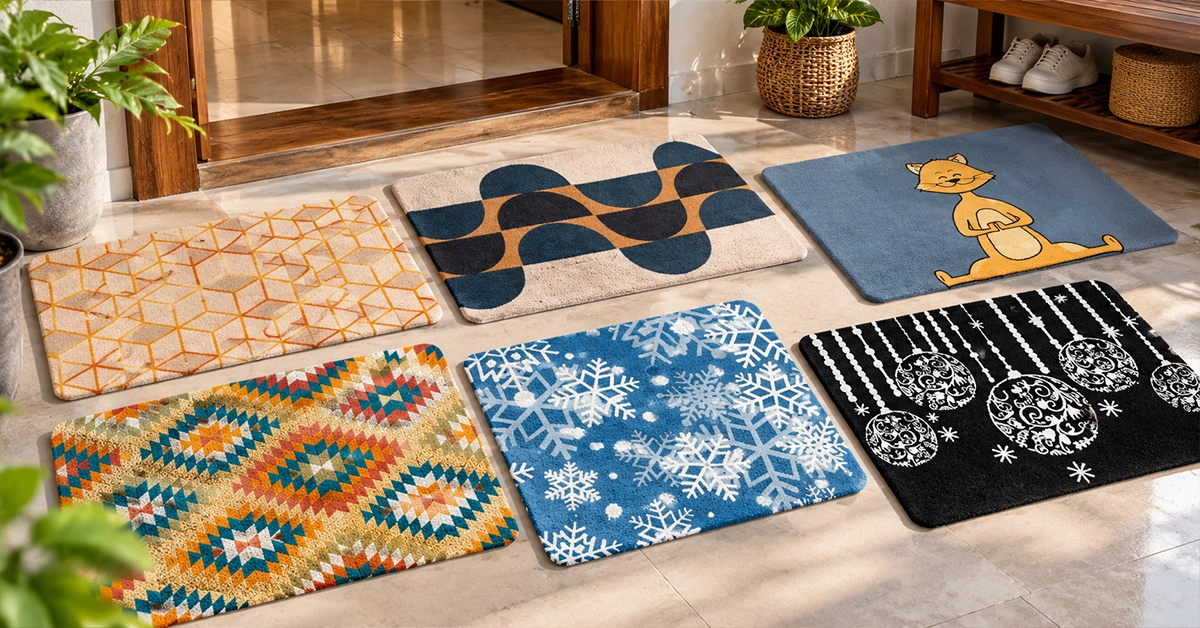
Photo printed mats feature photographs or image-based artwork rather than relying only on logos and text. They may be suitable for decorative settings, customised gifts, or promotional displays.
Use a high-resolution image to get a clear result and check the printable dimensions with the supplier. Cropping should also be taken into account before production, so that important parts of the photograph are not lost.
Personalised printed mats can feature names, messages, logos or artwork created for a particular customer or business. For commercial buyers, personalisation may mean adapting a design to match brand guidelines or the requirements of a specific location.
The available options depend on the product. Confirm what can be customised, including dimensions, artwork and quantities, before finalising the design.
A good design is only one part of a successful order. Businesses should confirm the following details before proceeding.
These checks can be particularly useful when ordering for multiple branches or when the design must match existing brand materials.
Aramats offers sublimation printed mats with full-colour custom designs, fade-resistant printing and durable rubber backing. The product is listed for applications including branded entrances, home décor and promotional use.
Businesses considering a customised mat can enquire about available specifications, dimensions and order quantities. Providing the artwork and intended application at the outset can help clarify the options available for the project.
Sublimation printed mats give businesses the option to use detailed graphics, photographs and brand colours on customised mats. The printing process offers flexibility in design, but the final choice should also account for the material, dimensions and conditions in which the mat will be used.
For branding and promotional projects, preparing suitable artwork and confirming product specifications before production can help businesses get a result that meets their requirements.
Aramats offers sublimation printed mats with custom full-colour designs and durable rubber backing for selected branding and promotional applications.
Explore the Aramats sublimation mats range to review the available options and enquire about your design, dimensions, and quantity.
For additional information on managing floor-related risks in commercial spaces, consult the UK Health and Safety Executive's guide to preventing slips and trips at work.
Yes. It can reproduce multiple colours, gradients and detailed graphics on an appropriate surface. Results vary depending on the source artwork, material and printing setup.
No. Suitability depends on the mat's construction and specifications. Make sure the product can handle the expected foot traffic, moisture and cleaning requirements.
Prepare the artwork, preferred size, required quantity and intended use. Businesses should also communicate any brand guidelines or delivery requirements.
Bulk ordering depends on the supplier and product. Confirm minimum quantities, pricing, production schedules and artwork approval requirements before placing the order.