Heavy equipment can really hammer industrial floors. Machinery, tools, oil, grease, dirt, vibration, and constant movement can all have an impact on the floor and the people around it.
Choosing the right mat can provide additional protection as well as increase the comfort and functionality of machinery workstations. But not all rubber mats are created equal.
When choosing rubber mats for heavy equipment, take into account the weight of the equipment, traffic, surface conditions, strength, and use of the area. Businesses can also explore innovations in rubber mat technology to understand how newer designs and features can support different industrial applications.
Why Use Rubber Mats Around Heavy Equipment?
Repetitive motions, high loads, and long standing are typical in industrial machinery. Use of proper rubber matting around these areas can provide a practical work surface.
Depending on the application, rubber matting can help:
- Protect selected floor areas from everyday wear
- Improve underfoot grip
- Provide cushioning for employees who stand for long periods
- Create a defined working area around machinery
- Handle dirt, moisture, and other workplace contaminants
The right choice depends on the type of equipment and the conditions in which the mat will be used.
What to Consider When Choosing Heavy-Duty Rubber Mats
1. Equipment Weight and Load
First of all, let’s talk about the gear.
A standing machine can concentrate the load on a small part of the floor. The repeated rolling loads come from the movement of the forklifts, carts, and other equipment.
Things to remember before you choose heavy-duty rubber mats:
- Weight of equipment
- When the equipment is stationary
- Point loads or machine feet at supports
- If the mat is to be run over by vehicles or carts
- Frequency of usage
2. Thickness and Construction
While the mat thickness can affect the cushioning and overall performance, selecting the thickest mat isn’t always the answer.
For a machinery workstation where employees stand for several hours, cushioning may be an important consideration. In a busy walkway, a lower-profile mat may be more practical.
The mat’s construction, flexibility, strength, and ability to remain stable should also be considered.
3. Surface Grip
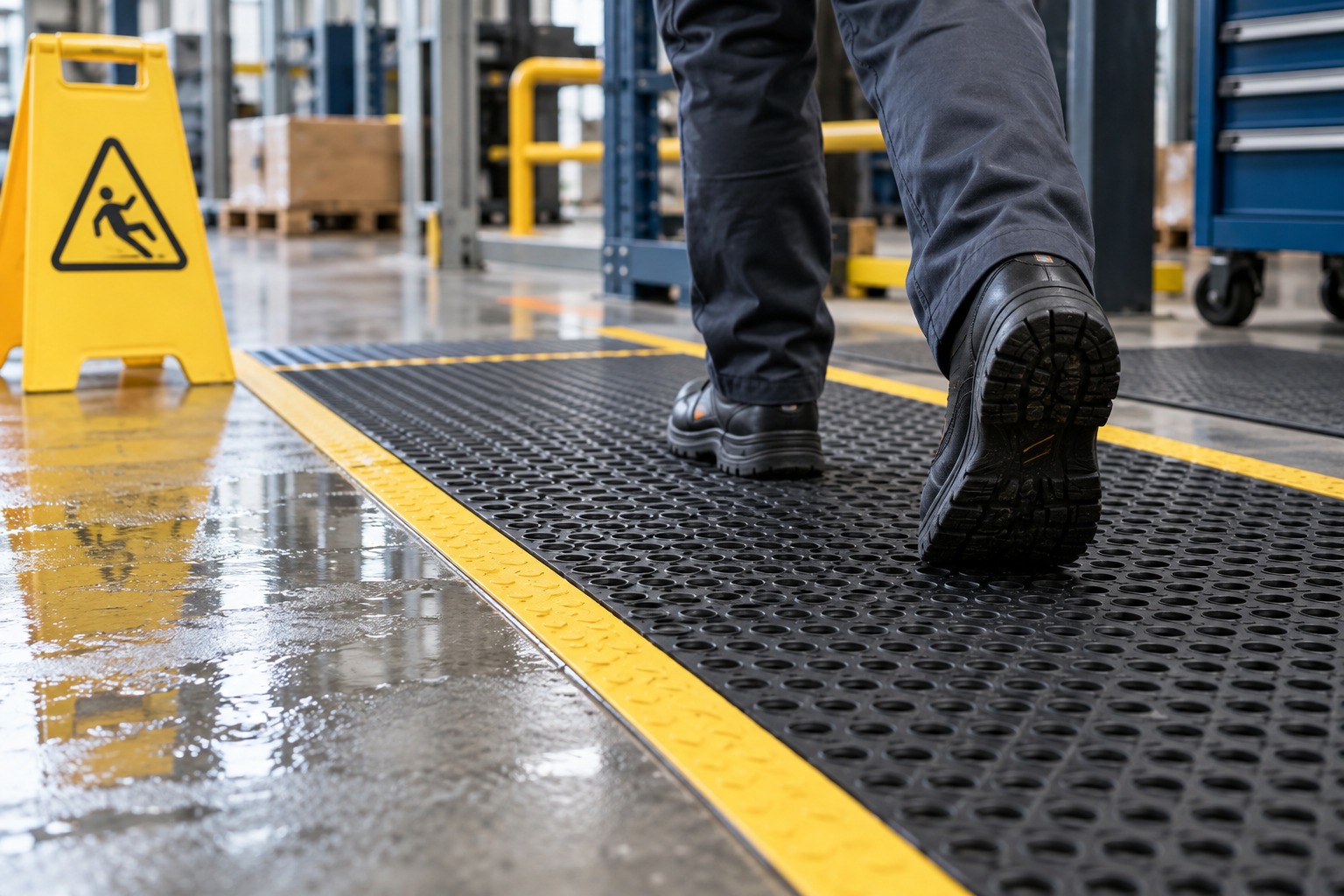
Industrial areas can become slippery from water, oil, grease, dust, or other contaminants.
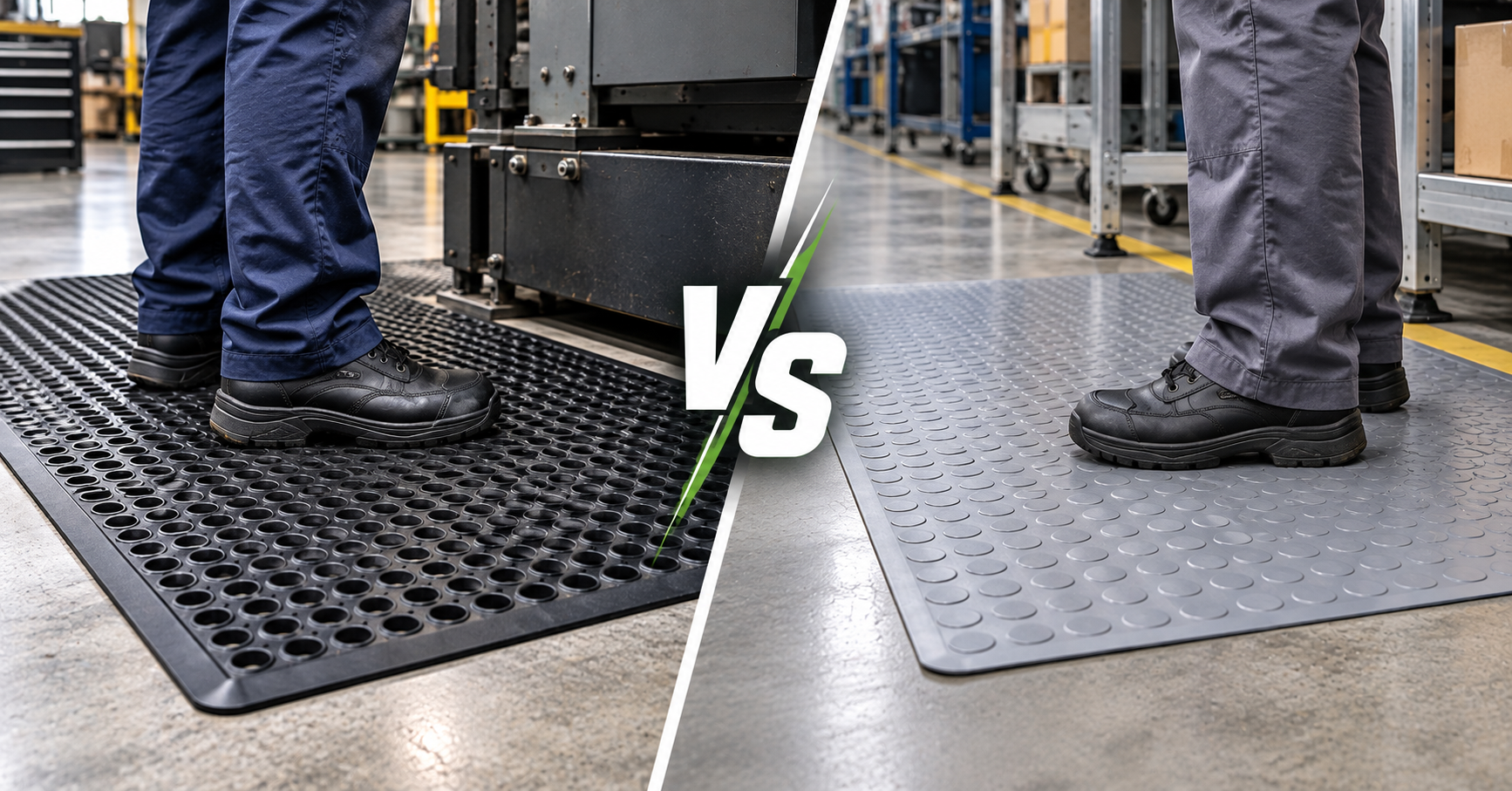
A rubber surface with texture can provide greater traction to employees working around machinery. If liquids are commonplace, then a mat with good drainage or a surface pattern could also be useful.
Choose the surface according to the actual conditions of the workplace rather than relying only on the appearance of the mat.
4. Workplace Conditions
A workshop and a manufacturing floor may both require industrial matting, but the conditions can be very different.
Think of what the mat will regularly come up against:
- Oil and grease
- Water and moisture
- Dirt and dust
- Temperature variations
- Many people walking around
- Movement of machinery
- Cleaning products
When selecting industrial rubber matting, make sure the product is appropriate for the substances and conditions present in the area. Businesses with sustainability requirements can also consider eco-friendly rubber mat options when evaluating suitable products.
5. Durability
Heavy equipment areas are seldom low-use environments. Employees may walk over the same section repeatedly, and machinery and tools can add further wear to the surface.
A durable industrial mat is a more practical long-term choice than repeatedly replacing a product designed for lighter applications.
Where Can Rubber Mats for Heavy Equipment Be Used?
Manufacturing and Production Areas
Production workers may work long hours operating or watching machines. A mat around a work area is useful. It gives a cushion and a more comfortable surface to stand on. It also gives a surer footing.
Workshops and Maintenance Areas
Workshops can be filled with oil, grease, tools, metal parts, and general debris. Heavy equipment floor mats can be placed around workbenches, machinery, and maintenance stations where workers stand and work on a regular basis.
Machinery Workstations
A machine operator may remain in one position for much of the day. In these areas, comfort, grip, and durability can all be important.
The mat should cover the main standing area without extending unnecessarily into surrounding walkways. For longer work areas, rubber floor runners may also be considered where the application and traffic conditions are suitable.
Warehouses
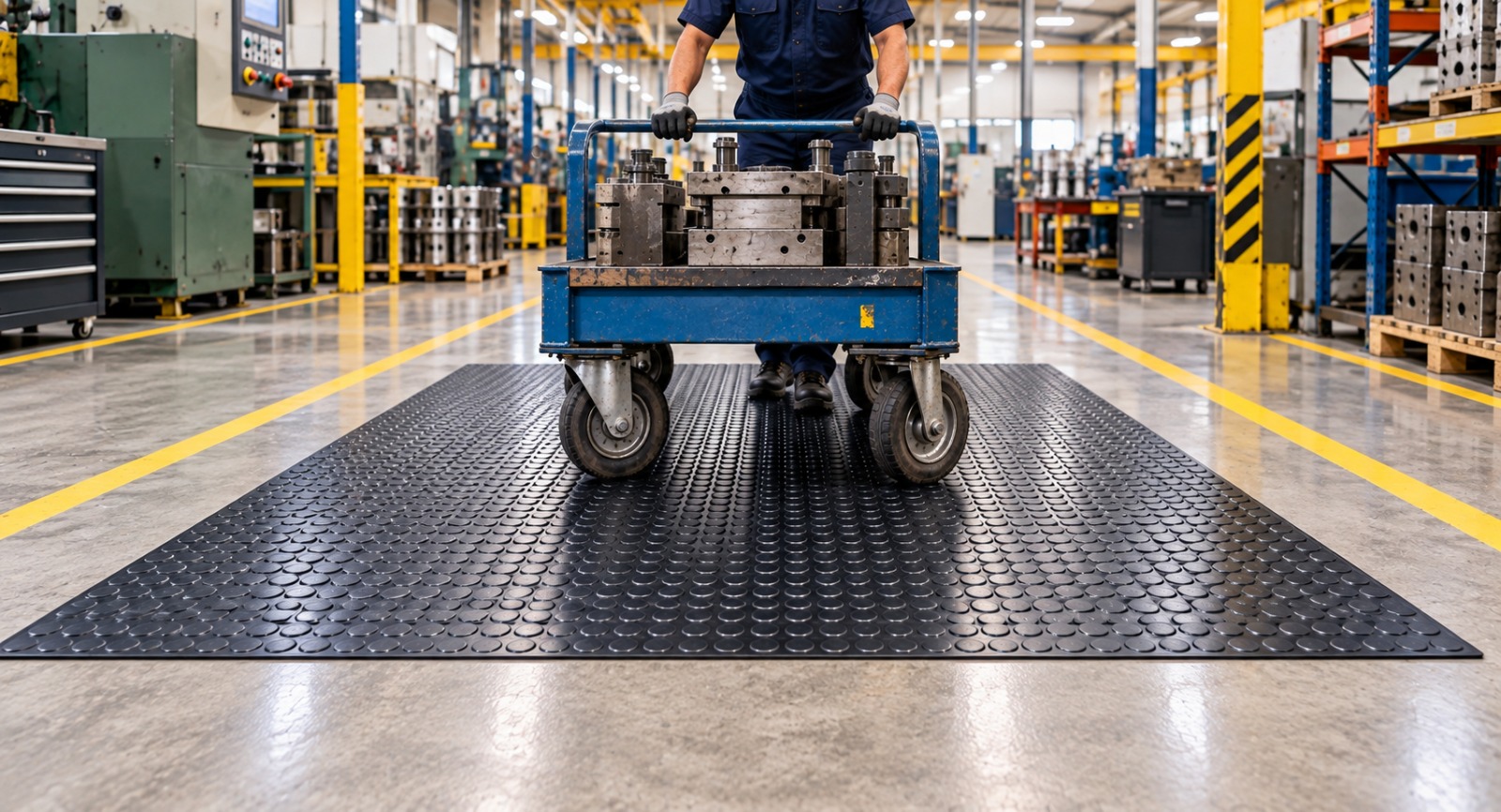
Warehouses may have forklifts, pallet trucks, carts, and other equipment moving throughout the facility. If a rubber mat will be exposed to moving equipment, make sure it is specifically designed for that type of traffic. Mats intended for pedestrian use should not automatically be used under heavy vehicles.
How to Position Rubber Mats in Machinery Areas
It is important to position mats correctly for safety and performance.
The mat should lie flat on a suitable floor, the edges secured and not curled or damaged. Don’t use worn or loose mats in high-traffic areas. Find the mat where employees really stand or work, not on nonworking floor space of a stationary machine.
If equipment or material has to be moved over the mat, confirm the product is correct for the application prior to installation.
Maintaining Industrial Rubber Matting
With regular cleaning and inspection, a mat will stay in usable condition.
In areas of heavy use:
- Regularly clean dirt and debris
- Promptly clean up oil spills and other spills
- Wipe clean following the manufacturer’s instructions
- Check for cuts, cracks, or excessive wear
- Ensure the mat stays flat
- Replace severely damaged mats
How often it gets cleaned will depend on the traffic in the area and what the mat gets exposed to. Businesses comparing different floor mats for industrial and commercial applications should also consider traffic levels, durability, placement, and maintenance requirements.
Why Choose ARAMATS for Industrial Matting?
Choosing an industrial mat should start with the conditions of the workplace. Equipment weight, traffic, exposure to contaminants, standing time, and maintenance requirements can all influence the right product.
ARAMATS manufactures rubber products for a range of industrial and commercial applications. Its rubber matting solutions can be considered for workplaces where durability, grip, floor protection, and everyday practicality are important.
For companies considering rubber flooring for machinery areas, choosing a product based on the real-life application can help provide better long-term performance.
Conclusion
When selecting rubber mats for heavy equipment, it is all about matching the mat to the working environment. When deciding, consider the weight of your equipment, traffic, surface conditions, durability, and employee comfort.
A well-chosen rubber mat can offer a practical surface around machinery and at the same time support safer and more comfortable working conditions.
The UK Health and Safety Executive also provides guidance on preventing slips and trips at work, including considerations around workplace conditions, contamination, housekeeping, and suitable flooring.
Find the Right Rubber Mat for Your Equipment Area
Looking for rubber matting for machinery, workshops, production areas, or other harsh industrial environments?
ARAMATS supplies rubber matting for a wide range of industrial and commercial uses. Businesses looking for a reliable rubber mat supplier in the UK can explore available options based on their application and workplace requirements.
Explore the ARAMATS range or get in touch with the team to find the right matting solution for your workplace.
Frequently Asked Questions
Are rubber mats suitable for heavy equipment?
Certain rubber mats are designed for demanding industrial environments and can be suitable around heavy equipment. The product should be selected according to the equipment load, traffic, and workplace conditions.
What are heavy-duty rubber mats used for?
They are commonly used around machinery, manufacturing workstations, workshops, maintenance areas, and other industrial locations exposed to repeated use.
Can forklifts drive over rubber mats?
Only mats designed to be used with vehicle or equipment traffic should be used in these areas. Before installing, check the manufacturer’s specs.
What thickness of rubber mat is best for machinery areas?
There is no one ideal thickness. The choice is a function of equipment load, traffic, cushioning requirements, and intended application.
Do rubber mats protect industrial floors?
Suitable rubber matting can provide an additional protective layer in selected areas and help reduce everyday wear from equipment, tools, and foot traffic.

Written by the ARAMATS team at Arackathara Group, manufacturers and exporters of rubber matting solutions since 1973.