Warehouses are busy working environments where floors have to handle constant foot traffic, moving equipment, dropped items, dirt, moisture, and long hours of standing. The right matting can make specific areas more comfortable and practical while providing an additional layer of protection for the floor.
But not every warehouse needs the same type of mat. The best rubber mats for warehouses in the UK depend on where they will be used, how much traffic the area receives, whether workers stand for long periods, and whether the floor is exposed to water, oil, or other contaminants.
This guide covers the main factors UK warehouse operators should consider when choosing warehouse rubber mats. For businesses exploring different product technologies and applications, innovations in rubber mat technology can also provide useful options for specific workplace requirements.
Why Use Rubber Mats in Warehouses?
Warehouse floors experience continuous use. Employees may walk between storage areas, packing stations, loading zones, and workstations throughout the day.
Rubber matting can provide in selected areas:
- Better grip underfoot
- Cushioning for long-standing
- Extra protection for floor surfaces
- Work surface is more comfortable in the work area
- Supporting safer working areas
- Easier management of dirt and minor spills
The mat should be chosen according to the specific task and environment rather than simply covering the entire warehouse.
What to Look for in Warehouse Rubber Mats UK
Before buying warehouse rubber mats UK, consider how the mat will actually be used.
1. Traffic and Daily Wear
A warehouse can have very different traffic levels depending on the area.
A packing station may receive constant pedestrian traffic, while a storage section may have fewer employees but regular equipment movement.
In a high-traffic area, look for a durable matting that can withstand repeated use every day without getting worn or damaged quickly.
2. Foot Traffic vs Equipment Traffic
That distinction matters. A mat placed at a standing workstation has different requirements from one exposed to pallet trucks or other warehouse equipment.
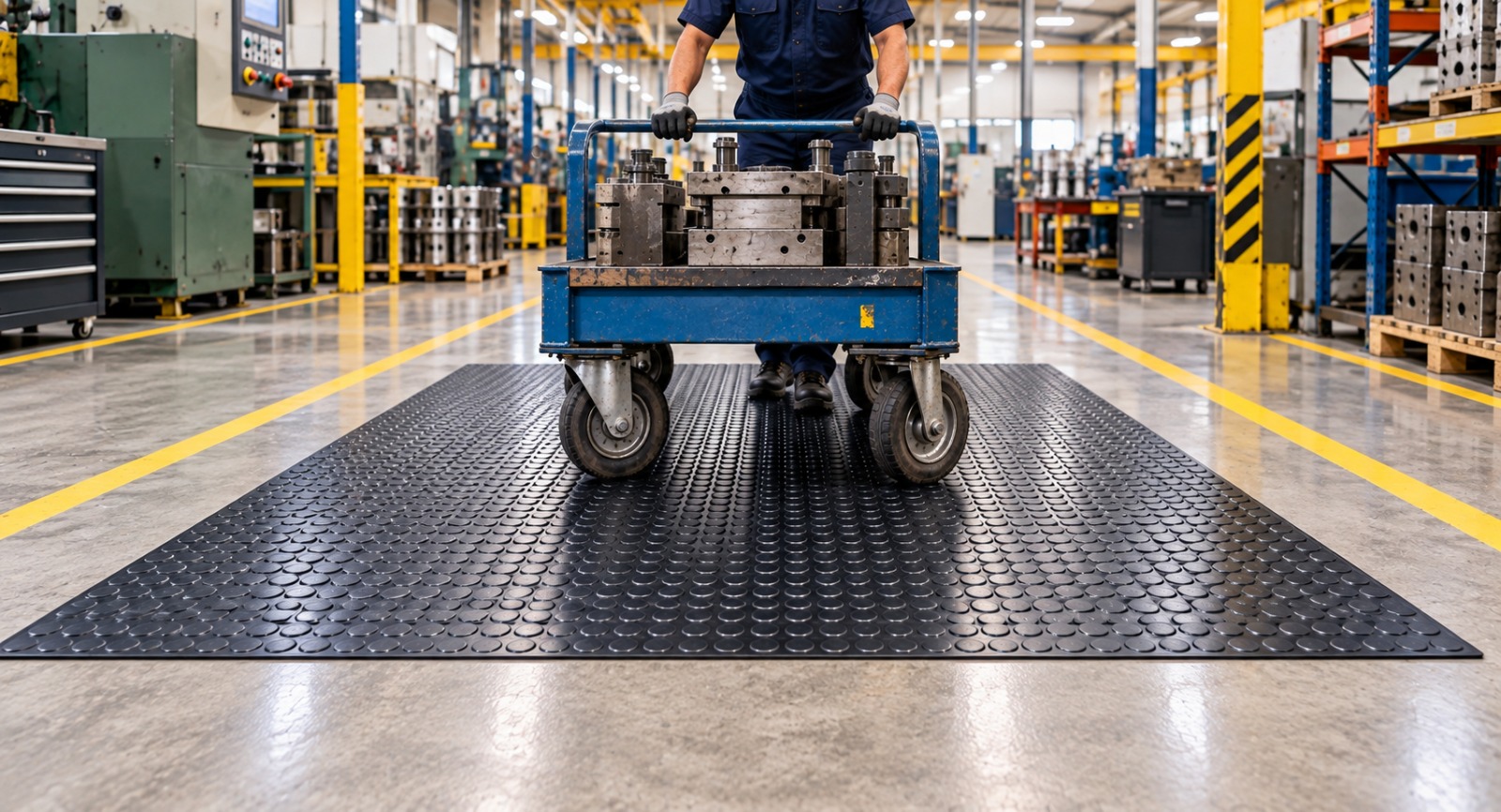
If forklifts, pallet trucks, carts, or similar equipment will pass over the mat, check that the product is designed for that type of traffic. A mat intended for pedestrian use should not automatically be used beneath moving equipment.
3. Surface Grip
Dust, water, mud, and other contaminants can make warehouse floors more difficult to walk on.
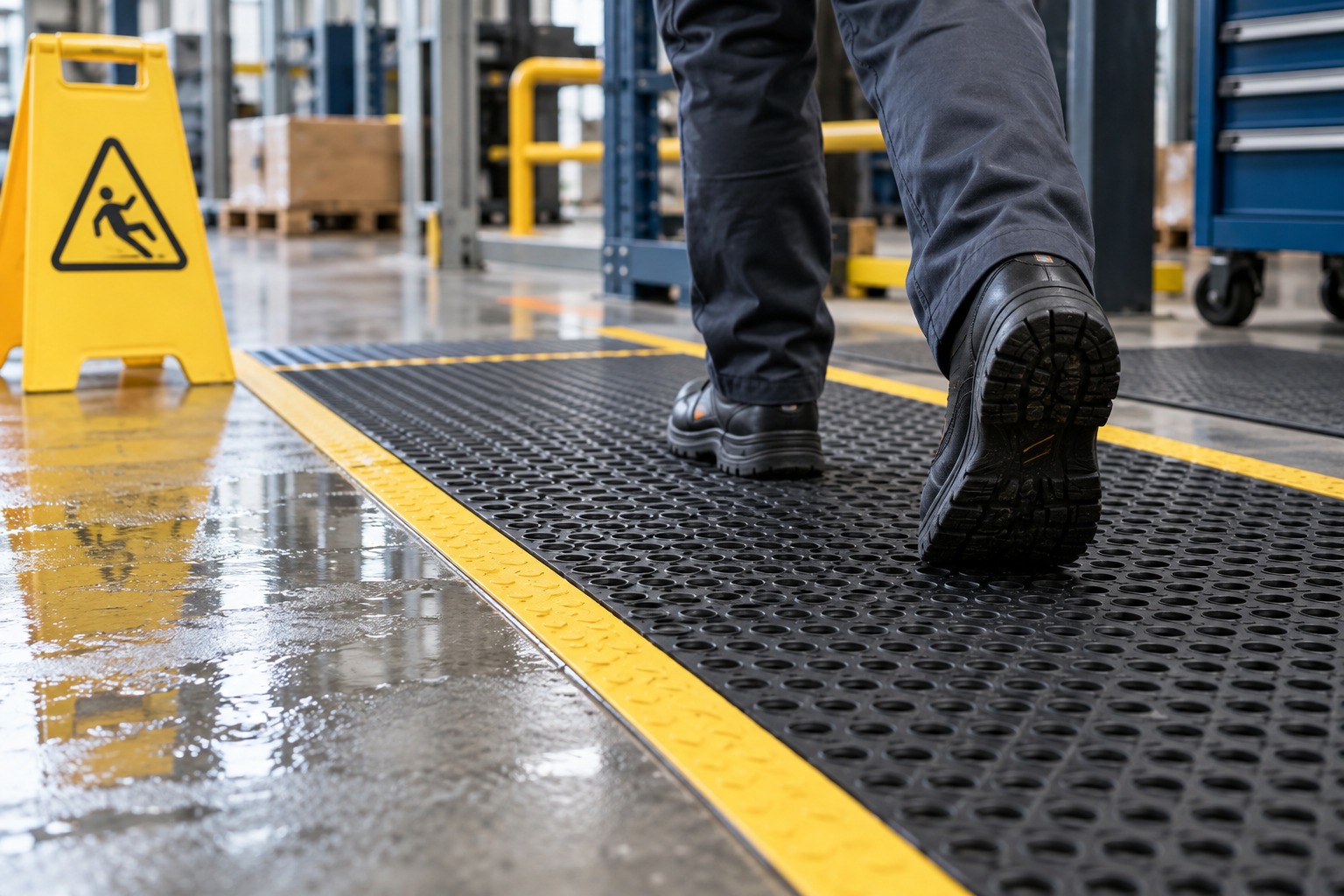
A textured rubber surface can provide additional traction in areas where employees regularly walk or stand. For entrances or locations exposed to moisture, drainage features may also be useful.
When comparing safety mats for warehouses in the UK, don't just decide on the look of the surface but look at the actual floor conditions. Businesses can also refer to HSE guidance on slips and trips at work when reviewing workplace conditions.
4. Comfort for Standing Workers
Not every warehouse task involves constant movement. Packing, sorting, labelling, inspection, and machine operation may require employees to stand in one place for extended periods.
For these workstations, anti-fatigue mats for warehouses UK can provide cushioning underfoot and may make prolonged standing more comfortable.
The appropriate mat will depend on the workstation, standing duration, surface conditions, and other workplace requirements.
5. Size and Placement
A mat should cover the area where it is actually needed without becoming an obstruction.
For a packing station, for example, the mat should provide enough coverage for the employee's normal standing and working area. At an entrance, a larger mat may be more appropriate for managing moisture and dirt brought in from outside.
Pay attention to edges and positioning, particularly in busy walkways.
Best Types of Rubber Mats for Warehouse Areas
Different warehouse zones can benefit from different types of matting.
Anti-Fatigue Mats for Packing and Workstations
Employees working at packing, sorting, assembly, or inspection stations may spend several hours standing.
An anti-fatigue rubber mat can provide a cushioned surface underfoot and is particularly useful where prolonged standing is part of the job.
Heavy-Duty Mats for High-Use Areas
Areas with constant foot traffic or demanding working conditions require durable matting.
Heavy-duty rubber mats for warehouses can be considered for workstations and industrial areas where the mat is exposed to repeated use and wear. The required construction will depend on the workload and whether equipment is also involved.
For demanding industrial and commercial areas, businesses can also explore floor mats for industrial and commercial applications when assessing suitable matting options.
Drainage Mats for Wet Areas
Some warehouse environments have entrances, cleaning zones, or other areas where water can accumulate.
A drainage-style mat can allow water to move away from the main standing surface and can be useful in appropriate wet areas.
Entrance and Dirt-Control Mats
Warehouse entrances can bring in rainwater, mud, dust, and other debris.
Placing suitable matting at entrances can help capture some of this dirt and moisture before it reaches the main warehouse floor.
Where Should You Use Rubber Flooring for Warehouses UK?
Rubber matting does not necessarily need to cover an entire warehouse floor. It can be more practical to identify areas where employees spend the most time or where specific floor conditions create a need for additional matting.
Common locations include:
- Dispatch and Packing Stations
- Choosing areas
- Machine operator posts
- Sections of the workshop
- Doors of warehouse
- Loading and staging areas
- Quality-control and inspection stations
- Areas where employees stand for extended periods
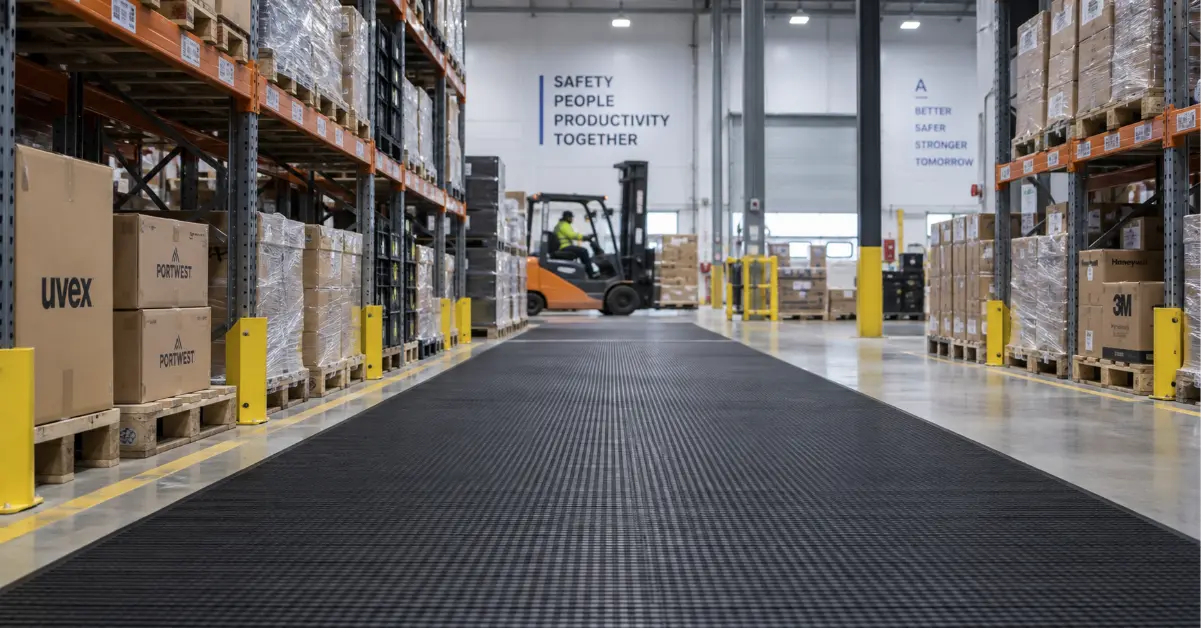
Rubber floor runners can also be considered for suitable long or narrow work areas where continuous coverage is required.
The choice of mat should reflect the conditions in each location.
Rubber Mats vs Other Warehouse Flooring Options
Rubber is one of several flooring and matting options available for warehouse environments.
It's flexible and cushioned to help if you are working at a standing desk. Textured surfaces can give you more grip. Rubber can be appropriate for rugged work environments if the right product is chosen.
However, the best solution depends on the application. A warehouse may use different flooring or matting products in different zones rather than relying on one product throughout the facility.
How to Maintain Warehouse Rubber Mats
Even durable matting needs regular care.
Warehouse floors can accumulate dust, packaging debris, dirt, oil, and other contaminants. Regular cleaning helps maintain the mat's surface and makes it easier to identify damage.
A basic maintenance routine should include:
- Remove dirt and debris on a regular basis
- Fast removal of spills
- Following the cleaning instructions of the manufacturer
- Checking for cracks, cuts, and excessive wear
- Keeping mats flat and on the floor
- Replacing damaged mats when necessary
High-traffic areas may require more frequent inspection than quieter parts of the warehouse.
How to Choose the Best Warehouse Mats UK
There is no single mat that can be called the best for every warehouse.
Before purchasing, consider:
Where will the mat be used?
A packing station, entrance, and equipment area have different requirements.
How much traffic will it receive?
Higher traffic generally calls for greater durability.
Will employees stand for long periods?
If so, cushioning and anti-fatigue properties may be important.
Will the mat encounter water, oil, or dirt?
Choose a surface and build that works in the conditions.
Will warehouse equipment run over it?
Make sure the mat is built for the expected traffic of the equipment.
How do you clean it?
Consider the cleaning routine and maintenance requirements before installing.
Answering these questions can make it easier to narrow down the right industrial rubber mats UK for each warehouse area.
Why Choose ARAMATS for Warehouse Rubber Mats?
For warehouse operators, choosing a mat is not simply about finding the thickest or most durable-looking product. The mat needs to match the actual working conditions.
ARAMATS manufactures rubber products for industrial and commercial applications, offering matting solutions for different workplace requirements. As an established rubber mats brand in India exporting internationally, ARAMATS supplies warehouses and businesses across multiple markets, including the UK.
Businesses looking for rubber flooring for warehouses in the UK can assess their individual work areas and select matting based on factors such as traffic, standing time, moisture, surface grip, durability, and maintenance.
Businesses can also consider an experienced rubber mat supplier in the UK when evaluating matting solutions for different warehouse applications.
Conclusion
Choosing the best rubber mats for warehouses in the UK starts with understanding how each area of the warehouse is used. A packing station may need comfortable anti-fatigue matting, while an entrance may benefit from a moisture- and dirt-management solution.
Traffic, equipment movement, surface grip, durability, standing time, and maintenance should all be considered before making a purchase.
Rather than choosing one mat for every application, warehouse operators can select suitable warehouse rubber mats UK according to the demands of individual work areas.
Find the Right Rubber Mats for Your Warehouse
Looking for rubber matting for packing stations, workstations, entrances, or other warehouse areas?
ARAMATS offers rubber matting solutions for a range of industrial and commercial applications.
Explore the ARAMATS range to find the right matting solution for your warehouse.
Frequently Asked Questions
What are the best rubber mats for warehouses?
The best mat for your use depends on the warehouse area. Anti-fatigue mats are suitable for packing and standing workstations, and heavy-duty or drainage mats may be more appropriate for other uses.
Are rubber mats suitable for warehouse floors?
Yes, rubber matting can be useful in selected warehouse areas such as packing stations, entrances, workstations, and other high-use zones.
Are anti-fatigue mats suitable for warehouses?
They can be particularly useful at workstations where employees stand for extended periods, including packing, sorting, inspection, and assembly areas.
Can forklifts drive over warehouse rubber mats?
Only if the specific mat is designed and rated for that type of traffic; always check the manufacturer's specifications before using a mat in forklift routes.
How do I choose warehouse rubber mats in the UK?
Consider the location, the traffic level, the standing time, moisture or contamination, movement of equipment, the size of the mat, durability, and maintenance needs.
How long do warehouse rubber mats last?
There is no fixed lifespan. Lifespan depends on the construction of the mat, traffic, working conditions, maintenance, and frequency of use. Regular inspection can aid in determining when replacement is necessary.

Written by the ARAMATS team at Arackathara Group, manufacturers and exporters of rubber matting solutions since 1973.