Commercial kitchens are busy, wet, and demanding work environments. Water, oil, grease, food debris, and cleaning products can end up on the floor throughout the day. At the same time, kitchen staff are constantly moving between preparation areas, cooking stations, sinks, storage, and service areas.
This makes floor matting more than a matter of comfort. The right commercial kitchen mats can provide additional underfoot grip, help manage liquids, and make standing workstations more comfortable.
But not every kitchen mat is suitable for the same conditions. Drainage, surface design, durability, cleaning, and placement all need to be considered before choosing a mat.
Why Do Commercial Kitchens Need Rubber Matting?
Kitchen floors can become contaminated quickly, particularly around sinks, dishwashing areas, cooking stations, and food preparation zones.
The UK Health and Safety Executive identifies wet floors and contamination from food debris, oil, and other fluids as important factors in kitchen slip risks. Its guidance also highlights the importance of suitable flooring, housekeeping, and measures to control contamination.
Suitable rubber mats for commercial and industrial applications can help by:
- Providing a more stable standing surface
- Improving underfoot grip
- Allowing liquids to drain away in suitable designs
- Adding cushioning for employees who stand for long periods
- Creating defined working areas around equipment and stations
Matting should form part of a wider approach to kitchen safety rather than being treated as the only control measure.
For a broader overview of how rubber mats can be used across different environments, see this guide on the benefits of rubber floor mats.
What Makes a Good Rubber Mat Ideal for a Commercial Kitchen?
1. Slip-Resistant Surface
Kitchen floors may be exposed to water, oil, and grease, so surface grip is an important consideration.
A textured surface can provide additional traction underfoot. However, the actual performance depends on the mat design and the conditions in which it is used.
When selecting anti-slip kitchen mats, look at the type of contamination the mat is expected to encounter rather than assuming that every rubber mat provides the same level of slip resistance.
The surface of the underlying floor also matters. A mat cannot replace appropriate flooring, cleaning, or other workplace controls.
For additional information about reducing workplace slip risks with appropriate matting, see how to reduce slips and falls with the right rubber matting.
2. Drainage
Drainage is particularly useful in areas where water or other liquids are regularly present.
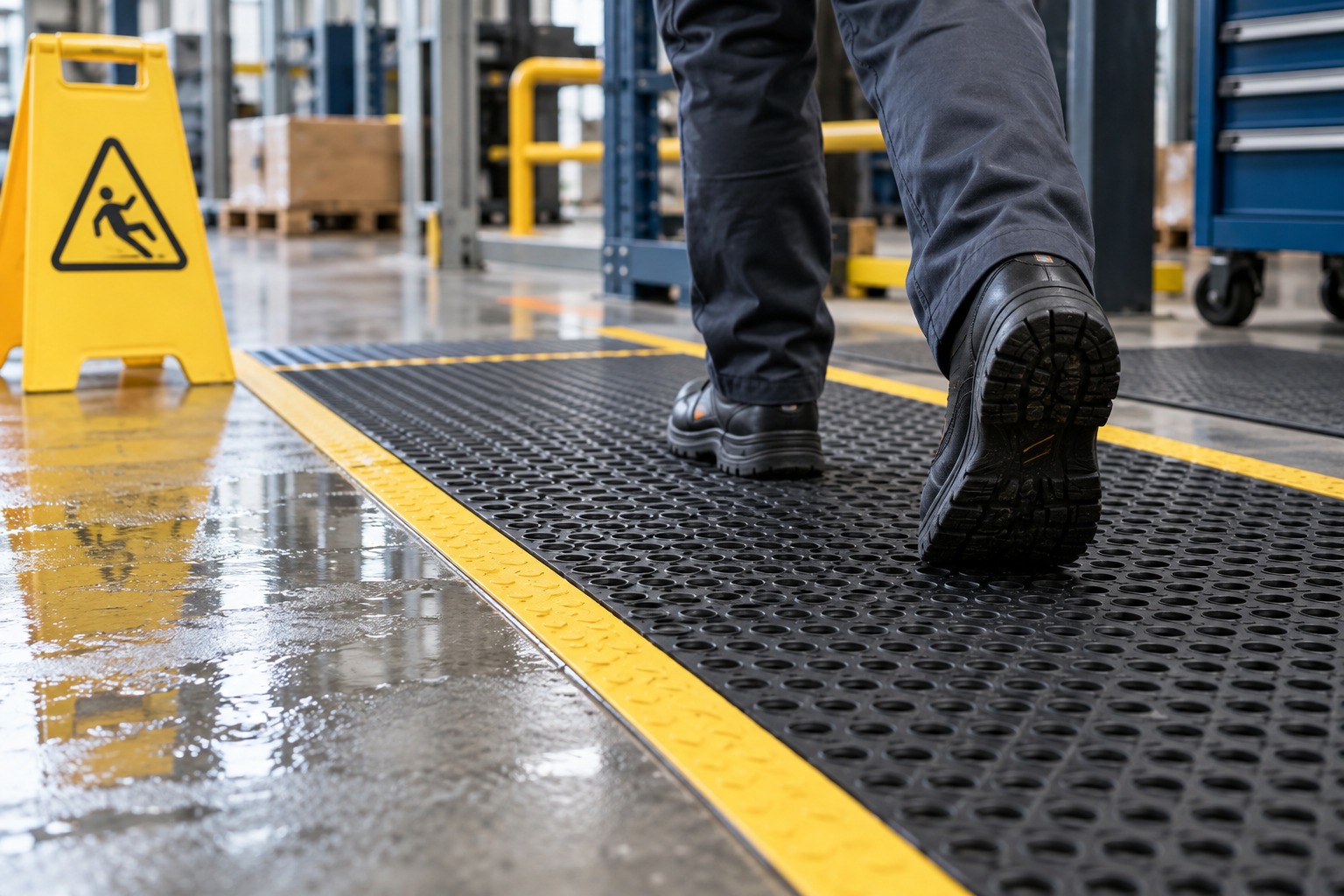
Drainage mats for commercial kitchens can have openings or raised structures that allow liquid to move away from the main standing surface.
They may be useful around:
- Sinks
- Dishwashing areas
- Food preparation zones
- Wet processing areas
- Areas that are washed frequently
Food particles and debris can get underneath or in drainage openings in the mat, so the mat still needs to be cleaned regularly.
Drainage should therefore be considered together with the cleaning requirements of the kitchen rather than as a substitute for good housekeeping.
3. Comfort for Standing Work
Kitchen employees can spend much of a shift standing.
A cushioned rubber mat can provide a more comfortable surface at fixed workstations such as preparation counters, cooking stations, and washing areas.
In areas where employees stand for extended periods, anti-fatigue matting may help create a more comfortable working surface. The mat should offer appropriate cushioning without being so soft or unstable that employees have difficulty moving around.
For businesses comparing different flooring and matting materials, the article rubber mats vs PVC mats provides another useful comparison.
4. Durability
Commercial kitchen mats endure constant foot traffic, cleaning, moisture, and everyday wear and tear.
Look for industrial kitchen matting suited to the expected level of use. The construction should be appropriate for the environment rather than selected purely on thickness or appearance.
Durability is particularly important in commercial kitchens because mats may be exposed to repeated cleaning, moisture, food particles, grease, and heavy daily use.
A suitable mat should also remain stable and functional throughout its expected service life.
Where Should Rubber Mats Be Used in Commercial Kitchens?
The best location for a mat depends on where floor contamination and prolonged standing are most likely.
Around Sinks and Dishwashing Areas
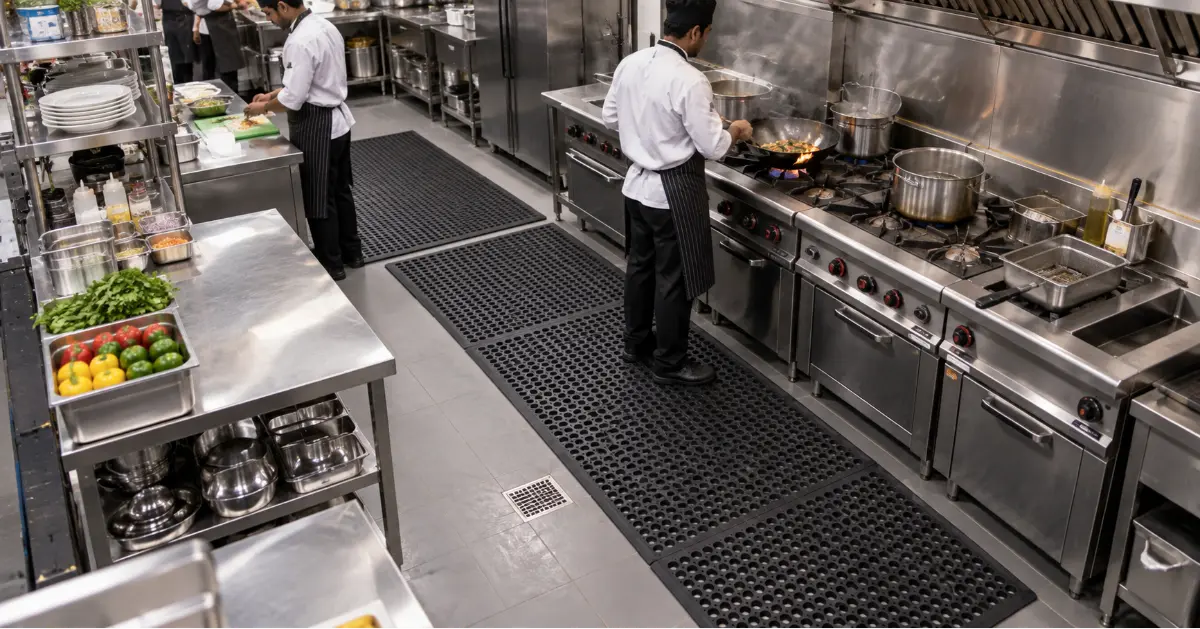
Water is often unavoidable around sinks and dishwashing stations. A suitable rubber drainage mat can allow water to move away from the standing surface.
These areas also need frequent cleaning to prevent food debris and other contaminants from accumulating.
Where drainage mats are used, the area underneath should also be inspected and cleaned regularly.
Food Preparation Areas
Preparation stations may require employees to stand in one place for long periods.
A suitable kitchen rubber mat can provide cushioning and a more comfortable standing surface while maintaining appropriate underfoot grip.
The mat should also be practical to remove and clean, particularly where food particles can accumulate around the edges or underneath the mat.
Cooking Stations
Cooking areas can experience grease, food spills, and high foot traffic.
Matting selected for these conditions should be easy to clean and appropriate for the surrounding environment. A suitable surface can also provide additional underfoot stability in areas where employees repeatedly move between cooking equipment and preparation stations.
The right choice depends on the actual conditions rather than simply selecting the thickest or most heavily marketed mat.
Service and Back-of-House Areas
The routes between storage, preparation, and cooking may be quite busy with constant foot traffic.
Matting may be useful in specific workstations without covering the whole kitchen floor unnecessarily.
In larger commercial areas, the type and placement of floor mats should be considered according to traffic patterns, contamination levels, and the tasks carried out in each zone.
Drainage Mats vs Solid Kitchen Mats
Both types can have a place in a commercial kitchen.
Drainage mats are particularly useful where water is regularly present because their design allows liquid to move away from the main standing surface.
Solid rubber mats may be more appropriate for relatively dry workstations where cushioning and underfoot comfort are the main considerations.
The choice should be based on the actual working conditions. A drainage mat is not automatically the right choice for every kitchen area.
Consider the following factors when choosing between drainage and solid mats:
- Amount of water present
- Frequency of cleaning
- Type of floor contamination
- Level of foot traffic
- Duration of standing
- Ease of lifting and cleaning the mat
- Available floor space
- Need for drainage or cushioning
The correct solution may also vary within the same kitchen. A dishwashing station may need a different mat type from a relatively dry food preparation counter.
For a wider look at different applications of floor matting, businesses can also refer to the ultimate guide to rubber floor mats.
How to Maintain Commercial Kitchen Floor Mats?
Kitchen mats need regular cleaning because they can collect grease, food particles, water, and other debris.
A practical maintenance routine should include:
- Cleaning mats according to the manufacturer's instructions
- Removing food debris regularly
- Cleaning spills promptly
- Cleaning beneath drainage mats
- Checking for cracks, damage, or excessive wear
- Making sure mats remain flat and properly positioned
- Replacing damaged mats when necessary
Cleaning underneath the mat is especially important in commercial kitchens. Dirt, moisture, grease, and food particles can accumulate between the mat and the floor if the area is not cleaned regularly.
Good housekeeping is an important part of controlling slips and trips in commercial kitchens. HSE guidance notes that wet or contaminated floors are common causes of slips in catering environments and recommends measures to control contamination and maintain suitable working conditions.
You can also review tips for choosing the right floor matting when evaluating mat design, placement, and maintenance requirements.
A regular inspection routine can help identify damaged edges, curled corners, worn surfaces, or other conditions that could create additional trip hazards.
Choosing the Right Rubber Matting for Commercial Kitchens
Before buying rubber mats for commercial kitchens, consider where each mat will be used.
Is the Area Wet?
A drainage design may be useful where water is regularly present. Open or raised designs can help liquids move away from the main standing surface.
Is Grease or Oil Common?
Check that the mat is appropriate for the substances encountered in the kitchen. Different rubber compounds and mat designs can perform differently depending on the environment.
Do Employees Stand for Long Periods?
Cushioning and comfort may be important at fixed workstations. Anti-fatigue designs can be considered where employees spend extended periods standing.
How Much Traffic Does the Area Receive?
Busy kitchens need matting that can take repeated daily use. Consider foot traffic, equipment movement, cleaning frequency, and the type of work carried out in the area.
How Will the Mat Be Cleaned?
Select a design to suit your kitchen cleaning routine. Mats should be practical to remove, clean, inspect, and reposition when necessary.
Will the Mat Act as a Barrier?
Edges should be flat and securely in place, especially around high-traffic walkways. A mat that moves, curls, or develops damaged edges can create a trip hazard.
What Size and Coverage Are Required?
A mat should cover the intended workstation without creating unnecessary obstacles around entrances, equipment, or walking routes.
For large commercial kitchens, it can be useful to evaluate each workstation separately instead of selecting one mat type for the entire floor.
Rubber Matting and Kitchen Slip Prevention
Rubber matting can be one part of a broader strategy for managing slip and trip risks.
According to the HSE, slips in kitchens commonly occur on wet or contaminated floors, including floors affected by food debris and fluids such as oil. The organisation recommends addressing contamination, housekeeping, flooring, and other contributing factors rather than relying on a single measure.
This means kitchen operators should consider:
- Regular floor cleaning
- Prompt spill management
- Suitable footwear
- Appropriate floor surfaces
- Correct mat selection
- Proper drainage
- Regular inspection
- Good housekeeping
- Safe traffic routes
Read the HSE guidance on preventing slips and trips in kitchens and food service for additional workplace safety information.
Why Choose ARAMATS for Commercial Kitchen Matting?
Commercial kitchens require matting that fits the realities of daily food-service work. Water, grease, food debris, cleaning routines, and constant foot traffic all need to be considered when selecting a product.
ARAMATS manufactures rubber products for commercial and industrial applications, including matting solutions suited to different workplace requirements.
For businesses looking for commercial kitchen floor mats, the focus should be on choosing the right design for each area—whether that is a wet dishwashing station, preparation counter, cooking area, or other high-use workspace.
The wider ARAMATS rubber mat range can be explored for different commercial and industrial matting requirements.
The company also provides information about different rubber mat applications, materials, and workplace flooring considerations, helping buyers compare options according to their specific requirements.
Conclusion
The right rubber matting for commercial kitchens can help create more practical working areas by providing appropriate grip, cushioning, and liquid management.
The best choice depends on where the mat will be placed. Wet areas may benefit from drainage designs, while standing workstations may need greater cushioning and comfort.
Whatever the application, matting should be combined with good housekeeping, prompt spill management, suitable flooring, and appropriate workplace practices to help control slip and trip risks.
A kitchen does not necessarily need the same mat throughout every area. Assessing each workstation and selecting matting according to its specific conditions can help create a more practical and manageable working environment.
Find the Right Rubber Matting for Your Commercial Kitchen
Looking for rubber mats for preparation areas, dishwashing stations, cooking zones, or other commercial kitchen workspaces?
ARAMATS offers rubber matting solutions for a range of commercial and industrial applications.
Explore the ARAMATS website to learn more about rubber matting options and find solutions suited to your commercial flooring requirements.
Frequently Asked Questions
Are rubber mats suitable for commercial kitchens?
Suitable rubber mats can be used in commercial kitchens, particularly around workstations and areas exposed to moisture. The mat should be appropriate for the specific kitchen conditions, including the amount of water, grease, foot traffic, and cleaning required.
Are rubber kitchen mats slip-resistant?
Some rubber mats are designed with textured surfaces to improve underfoot grip. Slip resistance depends on the specific product, surface design, floor condition, and contaminants present.
A mat should not be treated as the only control for slip risks.
What are drainage mats for commercial kitchens?
Drainage mats are designed with openings or raised structures that allow water and other liquids to move away from the main standing surface. They can be useful in wet areas such as dishwashing stations and around sinks.
Where should non-slip rubber mats for kitchens be placed?
They can be used around sinks, dishwashing areas, preparation stations, cooking workstations, and other areas where moisture or prolonged standing is common.
The exact placement should depend on the working conditions and cleaning requirements of each area.
How often should commercial kitchen rubber mats be cleaned?
Cleaning frequency depends on the level of use and contamination. Busy kitchens may require frequent cleaning throughout the day, along with regular cleaning underneath drainage mats.
Always follow the manufacturer's cleaning recommendations for the specific product.
Are drainage mats better than solid rubber mats?
Neither type is automatically better for every application.
Drainage mats can be useful in wet areas where liquid needs to move away from the standing surface, while solid rubber mats may be suitable for relatively dry workstations where cushioning and comfort are priorities.
What should I consider when buying commercial kitchen mats?
Consider the level of moisture, grease exposure, foot traffic, standing time, drainage requirements, cleaning routine, mat size, durability, and how securely the mat sits on the floor.
Can rubber mats help reduce kitchen slip risks?
Appropriately selected matting can form part of a wider slip-risk management strategy. However, kitchen safety also depends on suitable flooring, cleaning, spill management, footwear, housekeeping, and other workplace controls. HSE guidance recommends addressing the wider causes of slips and trips rather than relying on one measure.

Written by the ARAMATS team at Arackathara Group, manufacturers and exporters of rubber matting solutions since 1973.