
Aramats Team
Written by the Aramats team at Arackathara Group, manufacturers and exporters of rubber matting solutions since 1973.
Written by the Aramats team at Arackathara Group, manufacturers and exporters of rubber matting solutions since 1973.
Selecting the right stable flooring is an important decision for equestrian facilities, livestock farms and agricultural businesses. Flooring must withstand daily animal movement, regular cleaning and demanding working conditions while providing a suitable surface for animals.
For distributors, dealers, farm operators and commercial buyers, sourcing rubber stable mats in bulk involves more than comparing prices. Buyers should consider material quality, dimensions, thickness, surface design, product consistency and supplier reliability.
This makes choosing the right Rubber Stable Mat Manufacturer in India an important step for businesses planning large-volume purchases. Explore the rubber mat collection from Aramats and learn about different rubber mat manufacturing and supply solutions.
This guide explains what bulk buyers should look for when evaluating rubber stable mats and related livestock flooring products.
Animal housing areas experience regular activity throughout the day. Animals stand, walk, rest and move across the flooring, while the surface is exposed to moisture, waste and frequent cleaning.
Concrete and other hard flooring surfaces may require suitable bedding or additional flooring solutions to meet the requirements of animal facilities.
Rubber stable mats can provide a resilient layer over an appropriate base floor. Depending on their construction and intended application, they may offer:
The performance of a mat depends on its material formulation, thickness, surface design and installation conditions. Bulk buyers should evaluate product specifications rather than relying only on general product descriptions.
Before contacting a manufacturer, identify where the mats will be used.
Different animal facilities have different flooring requirements. A horse stable, dairy farm and general livestock housing area may need different product characteristics.
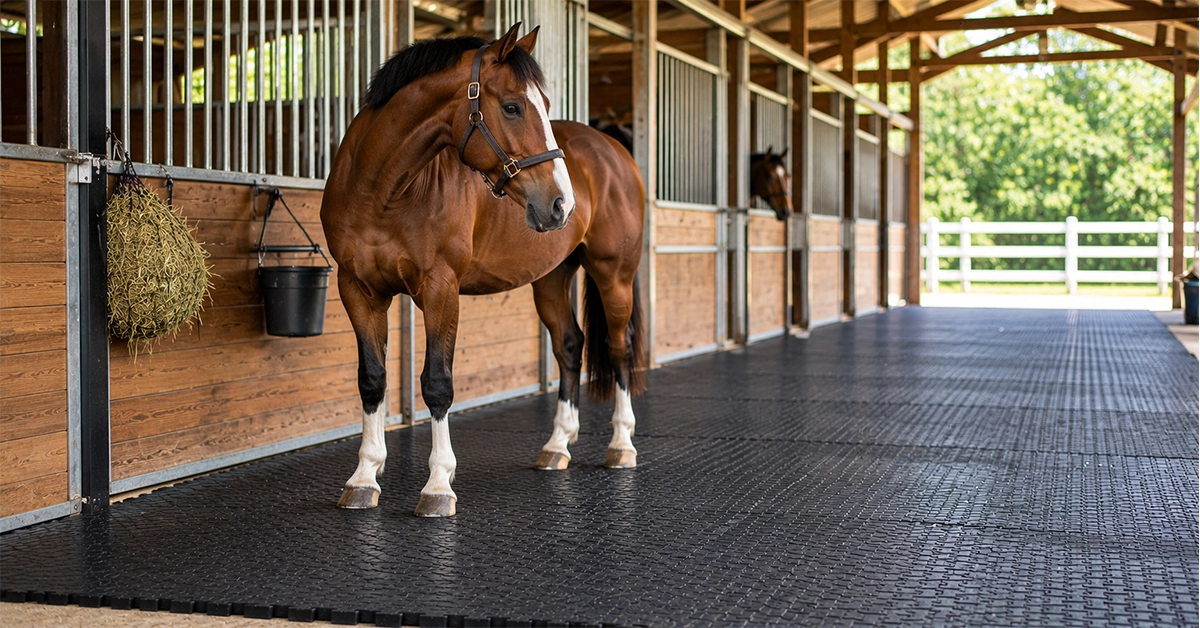
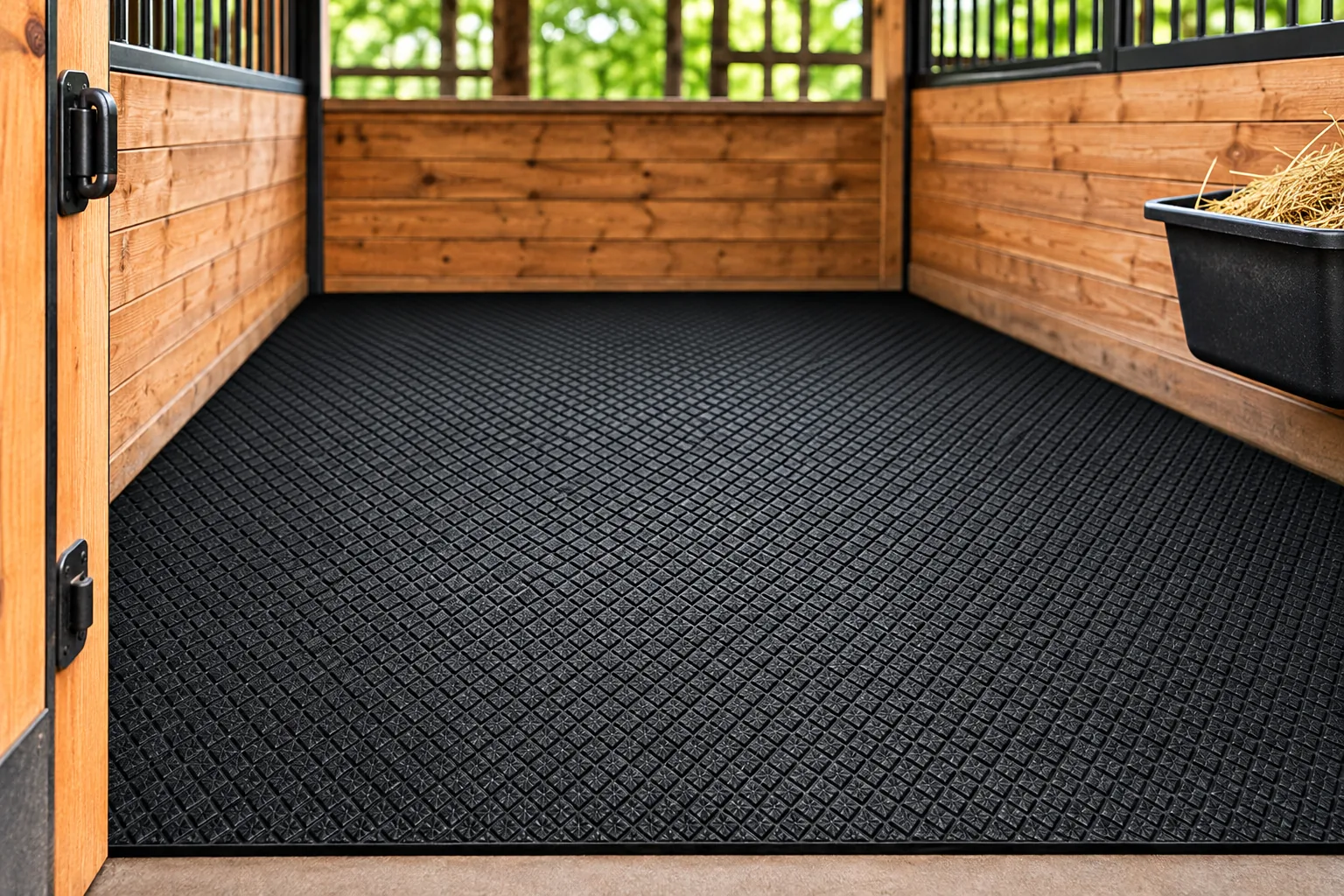
Rubber horse mats are commonly considered for stalls and other equestrian areas. When selected and installed correctly, they can provide a resilient surface over a suitable floor.
Buyers should consider cushioning, surface grip, thickness, dimensions and ease of cleaning when evaluating horse stall flooring.
For additional information about stable management and safety, refer to the British Horse Society's stable safety guidance.
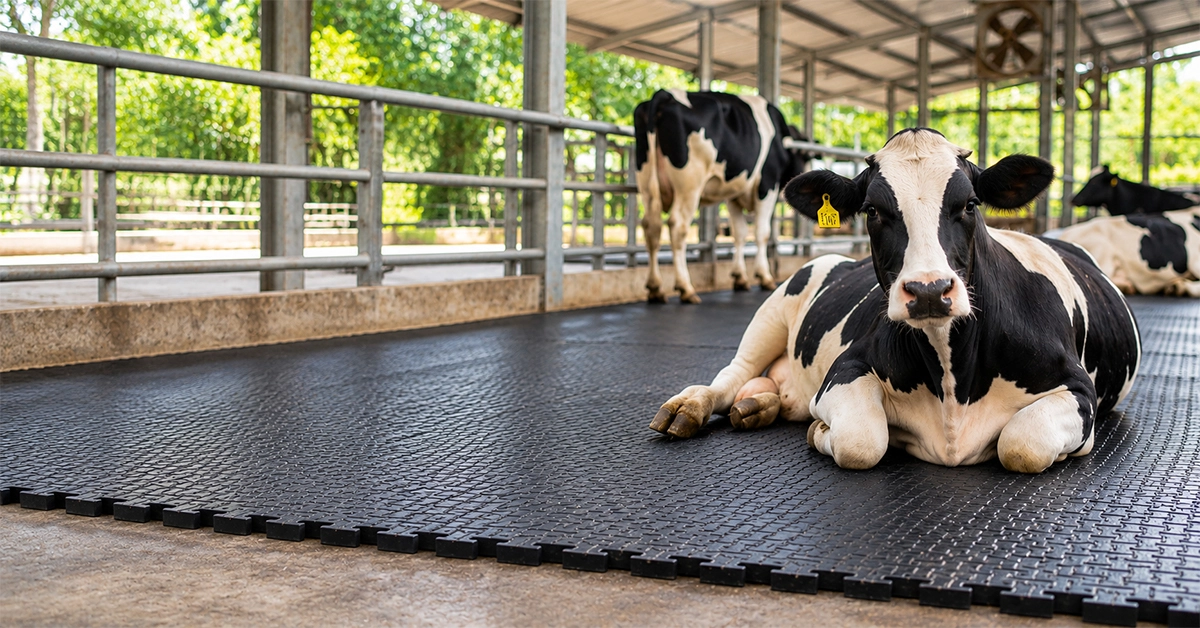
Rubber cow mats are used in certain cattle housing applications where animal comfort and flooring management are important considerations.
Buyers sourcing dairy farm rubber mats should assess the intended installation area, exposure to moisture, cleaning routines and type of cattle housing involved.
Read more about how rubber flooring can support comfort and flooring management in dairy cow housing.
The wider category of livestock flooring mats includes products designed for different animal housing environments.
However, a mat intended for one type of livestock should not automatically be assumed suitable for another. Always check the manufacturer's recommended application and product specifications.
Rubber mats can vary in their performance under normal use, making material quality an important purchasing consideration.
When comparing manufacturers, ask about rubber composition, manufacturing processes and product specifications.
Important factors include:
These details help bulk buyers determine whether a product meets the requirements of their customers or facility.
A reliable supplier should be able to provide clear product information rather than relying only on broad claims such as heavy-duty or premium quality.
You can also explore different rubber material types and their applications before finalising your product requirements.
Thickness is an important consideration when selecting stable flooring. However, the thickest product is not automatically the best choice.
The appropriate specification depends on the application, base floor, expected use and required level of cushioning.
When sourcing heavy-duty horse mats, compare available thicknesses and dimensions against the requirements of the stable.
Also consider whether the manufacturer can maintain consistent sizing across bulk orders. Standard sizes are helpful when planning installations, especially for distributors serving multiple facilities.
Large flooring areas may require multiple mats to cover the available space.
Interlocking stable mats use connecting edges that allow individual sections to fit together. Depending on the design, this format can help create a more continuous surface and accommodate different floor layouts.
For bulk buyers, it is useful to check:
The base floor must be properly prepared. The completed installation should be free of gaps, loose edges and raised areas that could create hazards.
Explore modular rubber mat systems to understand how modular flooring designs can accommodate different layouts.
Stable and livestock flooring requires regular cleaning. A product's surface design and installation method can influence how easy it is to maintain.
Before purchasing rubber mats for dairy farms or equestrian applications, understand how the mats should be cleaned and whether they need to be lifted periodically.
Consider the following:
Rubber mats do not eliminate the need for good drainage, bedding management or regular cleaning. These factors should be considered as part of the overall flooring arrangement.
For further guidance, read these tips for choosing the right floor matting.
A bulk purchase is a business decision that can affect product availability, installation schedules and customer satisfaction.
When evaluating a rubber stable mat manufacturer in India, consider the supplier's ability to provide clear information and consistent products.
Look for different sizes, thicknesses and surface designs that match your applications.
Ask about minimum order quantities, production capacity and the supplier's ability to handle repeat orders.
Batch-to-batch consistency is important for distributors and large facilities. Ask for product specifications and, where possible, samples before placing a large order.
Rubber mats are often bulky and heavy. Confirm the packaging, transportation and delivery procedures, including any special handling instructions.
Review pricing, payment terms, lead times, warranty conditions and replacement policies before finalising the purchase.
A clear understanding of these details can help avoid unnecessary delays and complications.
Some bulk buyers may source flooring for more than one type of animal facility. Although certain material characteristics may overlap, the applications are not identical.
Horse stall flooring needs to account for the movement, standing and resting requirements of horses. Dairy and cattle applications may have different requirements related to animal movement, moisture exposure and cleaning.
Similarly, equine flooring solutions may include products for stalls, walkways and other equestrian areas, with specifications varying according to the intended use.
Businesses exploring rubber cow mats in India should therefore compare cattle-specific products separately from horse stable mats.
Before ordering, verify the intended application of the product with the manufacturer.
Manufacturers and distributors may also research suppliers across international markets.
Search terms such as rubber cow mats USA and horse stall mats UK reflect interest in livestock and equestrian flooring across different regions. However, product requirements, import conditions, technical specifications and applicable standards may vary from market to market.
For buyers considering suppliers for export or distribution, check the following:
Likewise, businesses comparing horse stable mats in India should consider the supplier's ability to meet their specific order and distribution requirements.
Large buyers should have a detailed discussion with the manufacturer before making a purchase.
Useful questions include:
The answers can help buyers compare suppliers based on more than price alone.
Selecting the right rubber stable mat manufacturer in India requires careful evaluation of product quality, application suitability, order capacity and supplier reliability.
Whether sourcing rubber horse mats, rubber cow mats or other livestock flooring products, bulk buyers should prioritise clear specifications and consistent quality. A suitable product can support better flooring management in animal facilities, while a dependable supplier can make repeat purchasing and distribution more straightforward.
ARAMATS offers rubber matting solutions for commercial and industrial applications. Businesses looking for stable and livestock flooring can explore the available product range and confirm specifications, intended applications and bulk order requirements directly with the team.
Visit the Aramats rubber mats collection to explore available options.
Contact ARAMATS to discuss your rubber matting requirements and identify suitable solutions for your business.
Look for clear product specifications, consistent material quality, suitable product formats, reliable order capacity and transparent commercial terms. The manufacturer should also be able to explain which applications each product is designed for.
Not necessarily. Both are rubber flooring products, but they may have different specifications and intended uses. Buyers should check that the selected product is suitable for the relevant animal housing environment.
Interlocking mats can be useful for covering large or irregularly shaped areas. Their suitability depends on the connection design, floor preparation and installation method.
Check material composition, dimensions, thickness, surface finish and product specifications. Buyers may also request samples before placing a large order to assess whether the product meets their requirements.
Some manufacturers offer export services, but availability, shipping arrangements and destination-market requirements vary. Consult the supplier for details about export capabilities and relevant documentation.