
Aramats Team
Written by the Aramats team at Arackathara Group, manufacturers and exporters of rubber matting solutions since 1973.
Written by the Aramats team at Arackathara Group, manufacturers and exporters of rubber matting solutions since 1973.
Custom mats can do more than protect floors. For businesses, they can also reinforce brand identity, improve the appearance of an entrance and create a more professional environment for customers and employees. From independent shops to offices, hospitality venues and commercial facilities, printed mats offer a practical way to bring branding into everyday spaces.
For businesses sourcing custom printed rubber mats in the UK, the challenge is finding a product that balances appearance, durability and suitability for its intended location. Print quality matters, but so do the mat's construction, dimensions, cleaning requirements and expected foot traffic.
For retailers, distributors and commercial buyers in London, understanding these factors can make wholesale purchasing easier and help avoid choosing a product that looks good in a catalogue but does not meet the requirements of the space.
Businesses often use entrance mats and floor coverings to manage dirt, define an entrance area or create a more finished appearance. Adding a printed design makes it possible to combine these practical purposes with branding.
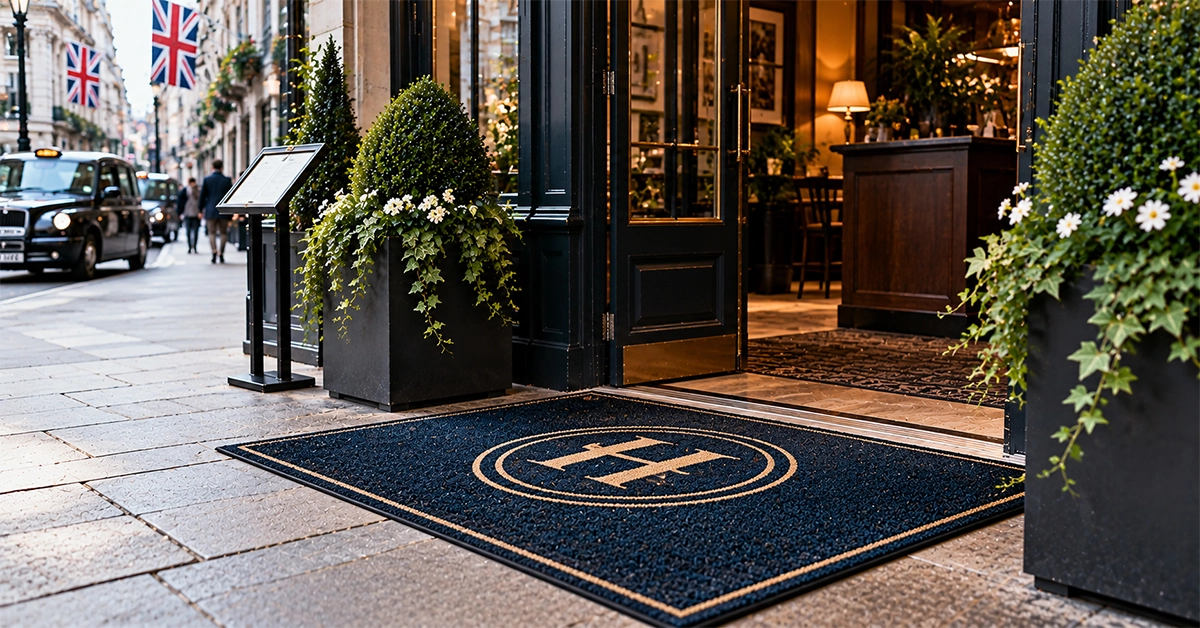
For example, a company may display its logo near the entrance, while a retail business may use a branded mat to complement its shop interior. Hotels, offices and showrooms may also consider printed mats as part of their wider presentation.
The design and construction of the product determine its suitability. Some mats may be intended for indoor branding, while others are designed for more demanding environments. Buyers should check the manufacturer's specifications rather than assuming that all printed mats offer the same features.
Businesses interested in branded flooring can explore custom logo mats from Aramats for available product and customisation options.
London businesses operate across a wide range of settings, from high-street retail shops and offices to restaurants, hotels and commercial premises. Their matting requirements can vary considerably depending on the entrance, available floor space and daily traffic.
When comparing custom printed mats in London, consider where the mat will be placed and what you need it to achieve.
A small office reception may require a compact mat with a clear company logo. A retail entrance may need a larger design that complements the shop's branding. A hospitality business may prioritise a neat appearance that fits its interior.
Measure the intended area and check available sizes before ordering. Consider door clearance, floor conditions and whether the mat will be used in a high-traffic area.
A suitable mat should fit comfortably in the space without obstructing movement or creating a tripping hazard.
Not every printed mat is made in the same way. The base material, printable surface and backing all influence its appearance and suitability.
Rubber can be used in the backing or incorporated into the construction of different mat products. Some printed mats have a separate printable layer on top, while others use different printing processes or specially prepared surfaces.
This distinction matters because ordinary rubber is not automatically suitable for every printing process. If you require a particular finish, ask the supplier how the design is applied and which materials are used.
When sourcing printed rubber mats in the UK for commercial applications, confirm the manufacturer's information on wear resistance, cleaning and intended use.
You can also explore the rubber mats range from Aramats to review available matting options and product categories.
The logo is often the most recognisable visual element of a printed mat. Misalignment, blurry text or colours that differ significantly from the approved artwork can affect the overall presentation.
Send a high-resolution logo file and ask about artwork requirements before production. If a proof or sample is available, review the design at its actual size rather than only on a computer screen.
Simple layouts can be particularly effective for entrance mats. A clear logo with sufficient space around it may be easier to recognise than a design containing too many details.
For more ideas about using branded flooring, read Custom Rubber Mats: Why Businesses Should Consider Branding Their Floors.
The mat should suit the location in which it will be used. Consider the width of the entrance, the amount of floor space available and the direction in which people move through the area.
If the mat is intended for a doorway, check that it will not interfere with the door or sit unevenly on the floor. Confirm the finished dimensions with the supplier before approving the order.
Branding does not need to be limited to signs, displays and printed materials. Floor mats can provide another opportunity to create a consistent look across a commercial space.
Branded floor mats in the UK may feature a company name, logo, brand colours or a simple design that complements the interior.
A branded mat can be placed in an office reception area, for example, to create a coordinated first impression. A showroom may opt for a design that suits its visual identity, while a hotel may include printed mats in selected indoor spaces.
The key is to keep the design appropriate for the location. A busy entrance may benefit from a clear, uncomplicated logo, while a decorative indoor space may allow for more elaborate artwork.
Before selecting a product, establish whether branding is the main priority or whether the mat must also meet specific functional requirements. This helps narrow down the appropriate materials and product specifications.
For businesses that want to make their branding more visible, logo mats can provide a practical option for selected commercial spaces.
The approach depends on the context:
For locations with heavy foot traffic or significant moisture exposure, ask whether the particular product is suitable for those conditions. Branding should not come at the expense of appropriate flooring performance and safe placement.
Buying wholesale allows businesses and distributors to source multiple mats for different locations or customers. However, the appropriate order quantity depends on expected demand, storage capacity and the type of customisation required.
When comparing wholesale printed mats in the UK, review the following factors.
Confirm the minimum number of mats required, including whether custom designs have separate quantity requirements.
Ask for quotations based on consistent specifications. The total cost may vary depending on size, material, printing method and quantity.
Establish who checks the logo and design before production begins. Keep a copy of the approved artwork for future orders.
Ask for realistic production timelines, delivery costs and policies regarding repeat orders.
Confirm how the supplier handles products that arrive damaged or do not match the agreed specifications.
If you are ordering for several business locations, check whether the same design can be produced in different sizes and whether the specifications can remain consistent across the order.
It is also sensible to request a sample or proof, where available, before committing to a large quantity.
For additional purchasing advice, read the Ultimate Guide for Choosing a Reliable Rubber Mat Supplier for Large Orders.
Businesses considering custom entrance mats in the UK should select products according to the entrance environment, not just the appearance of the printed design.
The requirements of an indoor entryway may differ from those of a mat positioned near an exterior entrance. The choice can be affected by weather exposure, moisture, dirt, cleaning frequency and foot traffic.
Ask the supplier about the intended application, maintenance instructions and relevant performance specifications. If the mat will be used in an area where slip resistance is important, request appropriate product information rather than assuming that a rubber backing alone guarantees safe performance.
The UK's Health and Safety Executive guidance on slips and trips in retail environments provides useful information for businesses reviewing floor safety and workplace conditions.
Also consider how the mat will be cleaned and whether its design and construction are appropriate for the expected conditions.
For more purchasing guidance, see Tips for Choosing the Right Floor Matting.
Custom printed mats allow businesses to combine floor coverage with practical branding. The right product depends on its intended use, expected foot traffic and the business's requirements for appearance and construction.
When comparing custom printed rubber mats in the UK, design and unit price are not the only considerations. Check material compatibility, print quality, dimensions, maintenance requirements and wholesale terms before ordering.
Aramats offers matting solutions for commercial and industrial applications. Explore the available range and discuss your requirements for printed designs, product specifications and order quantities with the team.
Looking for a matting solution for your business? Explore Aramats' range of mats to review the available options.
Check the mat's construction, printing method, dimensions, intended application and cleaning requirements. Confirm the artwork, price, minimum order quantity and delivery details before approving production.
Yes, depending on the product and printing process. Businesses can provide suitable logo artwork but should check the printable area, file requirements and available colours with the supplier.
Some products may be suitable for commercial entrances, but performance varies depending on construction and specifications. Review the manufacturer's recommendations for traffic levels, moisture exposure, cleaning and safe placement.
Wholesale ordering can be useful when several locations need consistent branding or when a distributor plans to resell the products. Before purchasing, check order quantities, size options, repeat-order consistency and total delivery costs.
Maintain approved logo files, colour references, dimensions and product specifications. If materials or printing methods change, ask the supplier to confirm whether the agreed design can be reproduced and review a new proof before production.