
Aramats Team
Written by the Aramats team at Arackathara Group, manufacturers and exporters of rubber matting solutions since 1973.
Written by the Aramats team at Arackathara Group, manufacturers and exporters of rubber matting solutions since 1973.
Printed mats serve a variety of markets, from home décor and personalised gifts to branded entrances and commercial interiors. For importers and distributors, the opportunity lies in selecting products that meet customer expectations and can be sourced consistently.
However, buying mats in bulk requires more planning than placing a single order. Print quality, material compatibility, minimum order quantities (MOQs), shipping costs and product specifications all influence the final purchasing decision. If you are comparing wholesale sublimation mats in the UK, understanding these factors before placing an order can help you manage costs, reduce uncertainty and build a dependable product range.
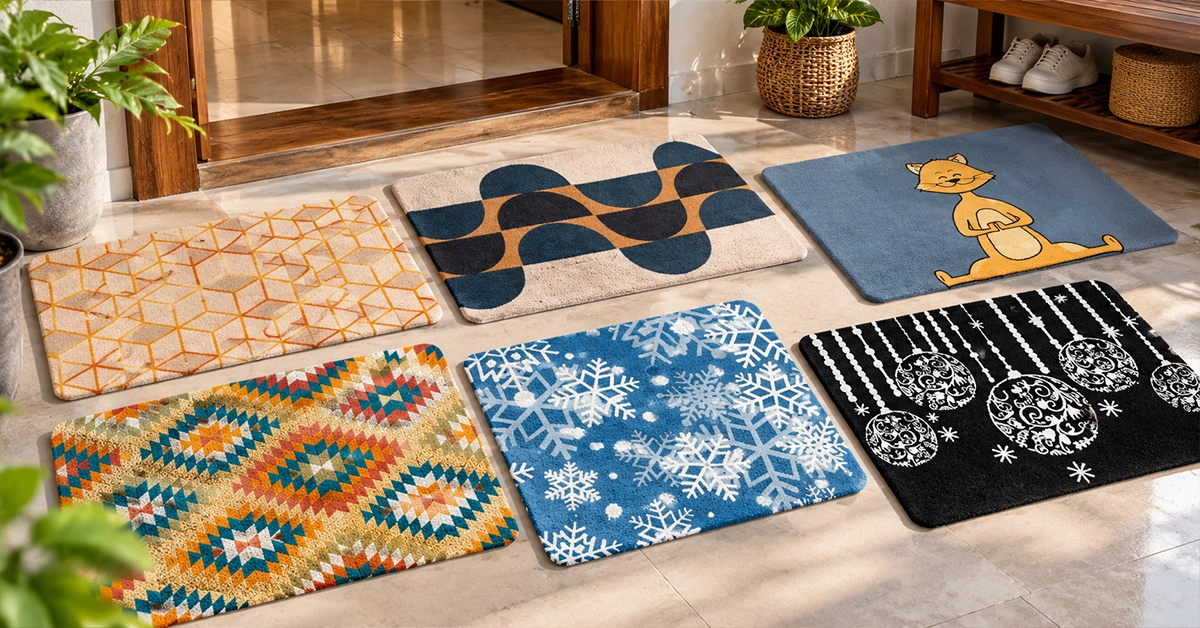
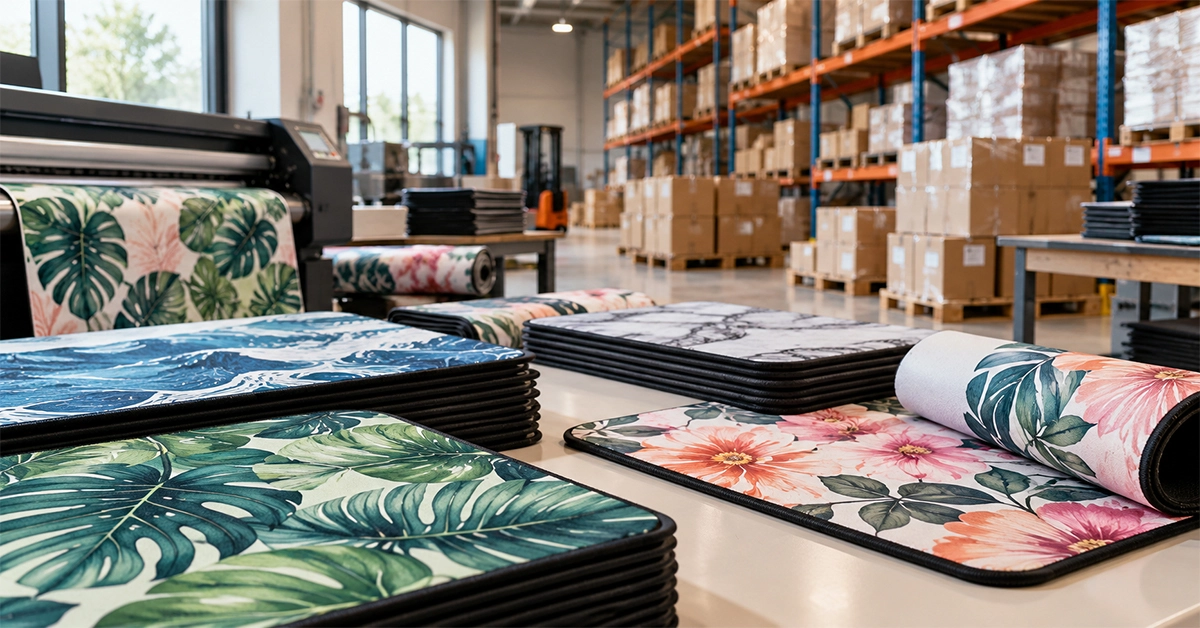
Sublimation printing uses heat to transfer designs onto compatible printable surfaces using specialised inks. It can be used to produce colourful graphics, photographs, patterns and branded designs, depending on the material and printing process.
For wholesalers, potential customers include homeware retailers, gift shops, promotional merchandise companies and businesses looking for customised mats. Each customer group has different requirements. A gift retailer may prioritise attractive designs, while a corporate buyer may focus on branding consistency and repeat availability.
Before choosing a product range, consider your target customers, expected demand and preferred price points. This can help you decide which sizes, designs and customisation options are worth exploring.
If you are researching product options, explore sublimation mats from Aramats to review the available range and enquire about product specifications, sizes and quantities.
A reliable supplier should provide clear information about product construction, available dimensions, printing methods and intended applications. Product photographs alone are not enough to assess whether a mat meets your requirements.
When evaluating suppliers serving UK businesses, ask for:
Repeat-order consistency is another important consideration. If a design performs well with your customers, you may want to reorder it. Ask how approved artwork, dimensions, materials and printing requirements are recorded so that future orders can follow the same specifications.
Clear communication also matters. Agree on who approves artwork, how production updates will be provided and what happens if the delivered products differ from the agreed specifications.
You can explore rubber matting solutions from Aramats to understand its broader matting categories and discuss which products may suit your business requirements.
Print quality can influence customer satisfaction, particularly when mats feature company logos, photographs or detailed designs. Blurred graphics, unexpected colours and incorrectly positioned artwork can lead to complaints and additional costs.
Before approving a design, check the following:
Small text and fine details may not reproduce as expected at the final print size. Where possible, review a sample or digital proof before committing to a large production run.
Material compatibility is equally important. Sublimation generally requires a suitable polyester surface or a specially coated substrate. It should not be assumed that every rubber surface can be printed directly using sublimation.
If a mat has a rubber backing, ask the supplier which layer receives the print and whether the construction is suitable for the intended application. Also request cleaning instructions and information about any limitations affecting use.
For businesses considering branded products, this guide to custom rubber mats and branded flooring options provides additional context about customised matting.
The unit price is only one part of the wholesale calculation. A larger order may reduce the cost per mat, but it also increases the amount of stock you need to finance, store and sell.
When comparing bulk printed mat options, request quotations for different quantities where possible. Check whether prices vary according to size, artwork complexity, material or production setup.
Confirm the minimum order quantity (MOQ), especially if each design requires separate artwork preparation or production. Ask whether different designs can be combined within one order and whether sample orders are available.
For a new design, starting with a smaller quantity may be sensible if the supplier permits it. You can then use sales results to inform future purchasing decisions.
Importers should consider more than the quoted product price. Depending on the order and shipping arrangement, the total cost may include:
For UK-bound shipments, confirm the applicable import requirements and charges before finalising your pricing. The UK government's product safety guidance for manufacturers and importers is also a useful reference when reviewing responsibilities for products placed on the market.
For larger purchasing requirements, consult this guide to choosing a reliable rubber mat supplier for large orders to help structure your supplier evaluation.
Not every printed mat is designed for the same environment. A decorative mat intended for home use may have different requirements from one placed at a busy shop entrance or in an office.
Before ordering, establish how your customers intend to use the products. Ask the supplier about:
If slip resistance, frequent moisture exposure or heavy foot traffic is a concern, request relevant product specifications or test information. Do not assume that a printed mat is suitable for every commercial environment simply because it has a rubber backing.
Product descriptions should accurately communicate the intended use and any limitations. This helps retailers explain what they are selling and reduces the risk of misunderstandings after purchase.
For further selection advice, see these tips for choosing the right floor matting.
Wholesale purchasing involves balancing availability against the risk of unsold inventory. Ordering too little can make it difficult to meet demand, while ordering too much may tie up working capital and storage space.
Before committing to a large order, review your sales history, customer requirements and seasonal demand. If you are introducing new designs, consider testing a smaller range first where order quantities allow.
Maintain a record of approved artwork, product dimensions, material specifications, agreed prices and order details. This makes it easier to compare supplier quotations and manage repeat purchases.
You should also establish a process for inspecting incoming products. Check quantities, packaging, print quality and dimensions against the purchase order. Document any discrepancies and contact the supplier promptly.
These simple processes can help importers and distributors maintain more consistent product information and make better-informed purchasing decisions.
Selecting a wholesale sublimation mat supplier in the UK requires careful consideration of product quality, printing compatibility, customisation, pricing and order management.
For importers and distributors, reviewing specifications before purchase can help reduce uncertainty and create a product range that better meets customer expectations. Comparing total landed costs, checking minimum order quantities and confirming delivery arrangements are equally important.
Whether you supply decorative mats, personalised products or mats for selected commercial applications, clear specifications and realistic demand planning are essential to a sustainable wholesale strategy.
Aramats offers sublimation mats for printed designs and customised applications. Buyers can explore the available range and contact the team to discuss their requirements.
If you are sourcing products for a retail, promotional or distribution business, explore Aramats' sublimation mats to review the options and enquire about available sizes, specifications and order quantities.
Review the material, printing compatibility, dimensions, available designs, minimum order quantities and delivery terms. For larger orders, request a sample or proof where available and confirm the agreed specifications in writing.
No. Sublimation generally requires a compatible polyester surface or specially coated substrate. Not every rubber surface is suitable for direct sublimation printing, so confirm the product's construction and printing method with the supplier.
Bulk purchasing may reduce the unit price, but the overall cost also depends on shipping, storage, customisation, duties and applicable taxes. Compare the total landed cost against realistic sales expectations before placing a large order.
Minimum order quantities vary by supplier and product. Standard products may have different requirements from custom designs that need separate artwork preparation or production setup. Confirm the MOQ and whether different designs can be combined.
Keep approved artwork, product dimensions, material specifications and print requirements on record. Ask the supplier how repeat orders are managed and whether samples or proofs can be reviewed when specifications change.