
Aramats Team
Written by the Aramats team at Arackathara Group, manufacturers and exporters of rubber matting solutions since 1973.
Written by the Aramats team at Arackathara Group, manufacturers and exporters of rubber matting solutions since 1973.
Businesses looking to expand their product range often need more than a standard mat. Retailers may want distinctive designs, promotional merchandise companies may need branded products, and distributors may be looking for customised mats that can be ordered in larger quantities.
Sublimation printing offers a way to transfer artwork, patterns and branding onto compatible mat surfaces. However, choosing the right manufacturing partner involves more than comparing designs and prices. Material suitability, print quality, production consistency and order requirements all affect the finished product.
If you are searching for a reliable sublimation mats manufacturer in India, understanding these factors can help you make informed sourcing decisions and find products that suit your business needs.
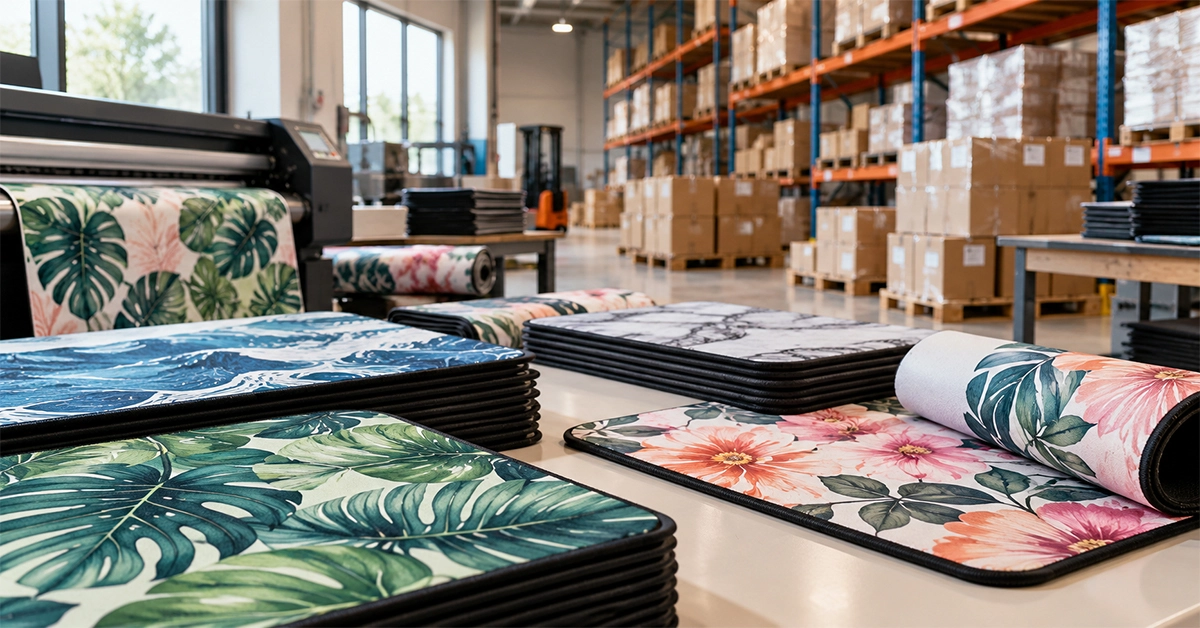
A sublimation mats manufacturer works with suitable materials and printing processes to produce mats featuring customised graphics, patterns, logos or other artwork. Depending on the product range and manufacturing setup, buyers may be able to choose from existing designs or request custom printing.
These products can serve several markets, including home décor, personalised gifts, promotional merchandise, retail and selected commercial interiors.
For businesses, the advantage lies in offering products that combine practical use with distinctive visual designs. A retailer might stock decorative mats, while a corporate merchandise business could explore branded options for clients or promotional campaigns.
However, not every manufacturer offers the same level of customisation. Before placing an order, confirm the available sizes, printable areas, material options and production capabilities.
Explore the sublimation mats range from Aramats to review the available options and discuss your requirements with the supplier.
One of the main attractions of sublimation printing is its ability to reproduce colourful graphics and detailed designs on compatible surfaces. Depending on the printing process and material, this can include photographs, illustrations, patterns and company branding.
For businesses developing their own product ranges, custom sublimation mats in India can provide an opportunity to create designs that reflect a particular audience or brand identity.
The quality of the artwork still matters. High-resolution files, suitable colour preparation and an appropriate print area can help reduce problems with blurred details, distorted logos or unexpected results.
For businesses exploring other branded mat options, custom logo mats from Aramats may also be worth considering, depending on available product specifications and printing methods.
Custom printed mats can complement the rest of a company's visual identity. Businesses may incorporate branded artwork into selected indoor areas, promotional campaigns or product lines.
When choosing a product for a particular location, consider its construction and performance characteristics. A design may look attractive, but durability, cleaning requirements and suitability for the intended environment also matter.
Retailers and distributors often compete with similar products. Offering distinctive designs can help a product range appeal to customers looking for something different.
Rather than ordering large quantities without understanding demand, businesses can begin by identifying their target customers and the designs they are most likely to purchase.
Selecting the right supplier requires a closer look at product specifications, communication and production processes.
When comparing a sublimation mat supplier in India, consider the following factors.
Ask what the mat is made of and which surface receives the print. Sublimation generally requires a compatible polyester surface or specially coated substrate. The process cannot be used directly on every rubber mat.
Review the sharpness of the artwork, colour reproduction, alignment and overall finish. If possible, request a sample or proof before ordering a large quantity.
Check the available dimensions, shapes, designs and backing constructions. Confirm whether custom sizes and artwork are available and whether these options involve additional costs.
Ask how approved artwork and product specifications are recorded for repeat orders. Consistency matters when you plan to sell the same product over an extended period.
A supplier should be able to explain production requirements, clarify which features can be customised and provide realistic information about timelines.
These checks help businesses compare suppliers on more than the initial unit price. For additional guidance, read the Ultimate Guide for Choosing a Reliable Rubber Mat Supplier for Large Orders.
Material selection is especially important when sourcing printed mats. Sublimation printing relies on a compatible printable surface, so the construction of the mat directly affects the result.
Some mats use a polyester-based top layer attached to a separate backing, while others may use specially coated materials. The backing may be made from rubber or another material, depending on the product.
This distinction matters for buyers searching for a printed mat manufacturer in India. The fact that a mat contains rubber does not necessarily mean its rubber surface is suitable for sublimation.
Before placing an order, ask the supplier which layer is printable and what material limitations apply. If the mat is intended for a busy commercial setting, also check the manufacturer's information on cleaning, wear resistance and suitability for that environment.
For a technical explanation of the process and its material requirements, see Mimaki's guide to sublimation printing.
A sample can help you assess the appearance and finish, but it should not be treated as proof of performance characteristics that have not been tested or specified.
For retailers, distributors and promotional merchandise businesses with established demand, buying in bulk may be appropriate. However, larger orders also require more investment in inventory, storage and logistics.
When comparing wholesale sublimation mats in India, consider the total cost rather than looking only at the price per unit.
Ask the supplier to confirm the minimum order quantity (MOQ) and whether it differs between standard products and custom designs. Products with different artwork or specifications may have separate production requirements.
Understanding these conditions helps you plan your initial investment and decide how many designs to include.
The final quotation may depend on the mat's size, material, printing requirements, order quantity and packaging. Ask whether artwork preparation or other customisation services involve additional charges.
Compare quotations using the same specifications so you can assess the available options fairly.
Confirm the expected production timeline, dispatch arrangements and delivery charges before committing to an order. If the products are needed for a campaign or seasonal launch, allow sufficient time for artwork approval, production and transport.
It is also useful to clarify how shortages, damaged items or products that do not match the approved specifications will be handled.
For broader product-selection advice, see Tips for Choosing the Right Floor Matting.
For businesses planning repeat purchases, maintaining clear product records can make sourcing easier.
Keep copies of approved artwork, dimensions, material specifications and print requirements. Record any changes between orders and ask the supplier to confirm them before production begins.
If you are introducing a new design, consider testing its appeal before investing heavily in stock. Feedback from customers and early sales can help you decide which products are worth reordering.
A reliable sourcing process involves more than finding a manufacturer once. It also requires suitable product selection, clear expectations and effective communication as your business grows.
Choosing the right sublimation mat manufacturer involves finding the appropriate balance between design flexibility, material compatibility, print quality, production consistency and cost. Clear specifications and careful supplier evaluation can help retailers, distributors and businesses reduce avoidable sourcing problems.
Before choosing a sublimation mats manufacturer in India, identify your target market, verify the printable surface and compare the full order requirements. Planning carefully can help you source products that meet customer expectations and support your business goals.
Aramats provides a range of mat products for businesses exploring printed and customised mat solutions. Review the available products and discuss your design requirements, material specifications and order quantities with the team.
Looking for sublimation mats for your business? Explore Aramats' sublimation mats to review the available options and confirm which products meet your requirements.
Check the manufacturer's material specifications, printing capabilities, product options, minimum order quantities and quality-control procedures. Where possible, request a sample or proof before placing a larger order.
Custom designs may be available depending on the supplier's capabilities and the mat's printable area. Confirm artwork formats, print dimensions, colour requirements and any additional customisation charges.
No. Sublimation generally requires a compatible polyester surface or specially coated material. Some rubber-backed mats have a printable top layer, but ordinary rubber is not automatically suitable for direct sublimation.
Wholesale ordering may suit a small business if the minimum order quantity, total investment and expected sales align with its budget. Compare unit prices, storage needs, customisation costs and delivery charges before ordering.
Document approved artwork and product specifications, and confirm any changes to materials, dimensions or printing methods before production. Where samples or proofs are available, review them when introducing a new design or changing specifications.