
Aramats Team
Written by the Aramats team at Arackathara Group, manufacturers and exporters of rubber matting solutions since 1973.
Written by the Aramats team at Arackathara Group, manufacturers and exporters of rubber matting solutions since 1973.
Choosing the right flooring is an important part of maintaining a safe, comfortable and hygienic environment for horses. Whether you manage a professional equestrian facility, a horse boarding stable or a private horse farm, suitable flooring can support daily stable management and improve the usability of horse stalls.
Horse stable mats in India are an option for facilities looking for durable, resilient flooring. Rubber mats are commonly considered because they offer cushioning, a practical surface for everyday stable use and easier maintenance when installed and cared for correctly. Explore rubber mats from Aramats and learn how modular rubber mat systems can provide adaptable flooring solutions for different spaces.
This guide explains the key benefits, selection factors, installation considerations and maintenance practices to consider when choosing rubber stable mats for equestrian facilities in India.
Horse stable mats are flooring products designed for use in horse stalls, resting areas and other equestrian spaces. They are generally made from durable materials such as rubber and are placed over a suitable prepared floor.
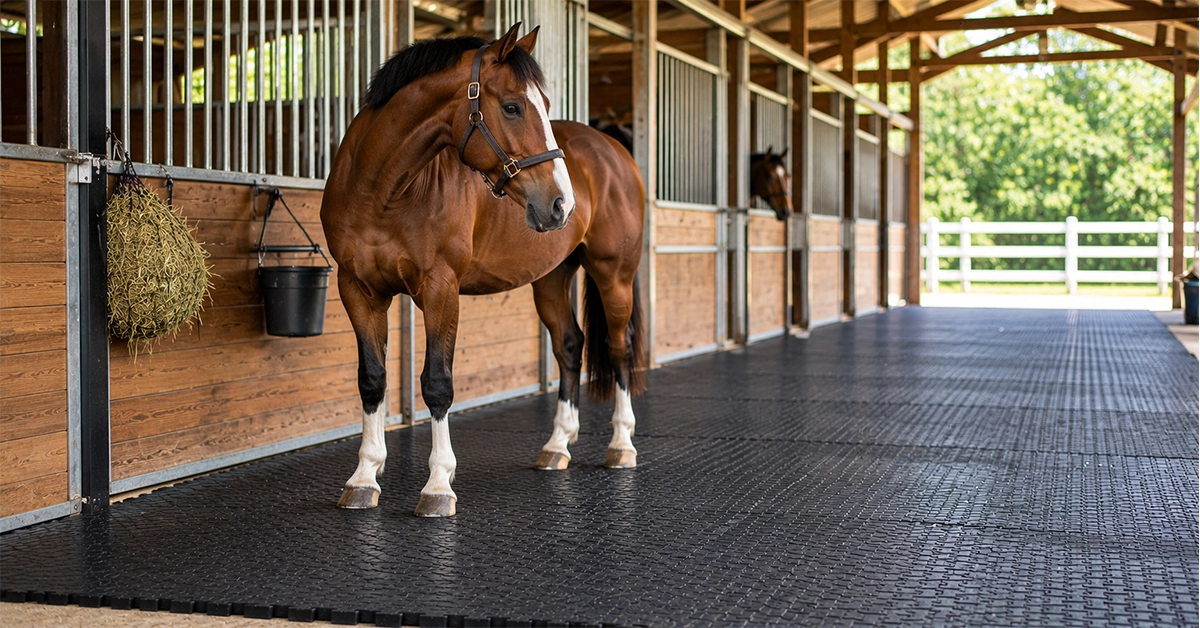
Rubber horse mats are designed to provide a more resilient surface than some traditional hard flooring options. Depending on their thickness, texture, size and material composition, they may help improve underfoot comfort and provide additional traction.
When selecting horse stall flooring, it is important to consider the horse's comfort, stable hygiene, drainage requirements and the overall suitability of the flooring material.
Concrete and other hard flooring surfaces can be uncomfortable for horses when they spend extended periods standing or resting. Rubber stable mats provide a more resilient surface that may offer additional cushioning.
The level of comfort depends on mat thickness, material quality, the condition of the underlying floor and the bedding used above the mats.
Stable floors can become slippery due to water, urine, bedding materials and regular horse movement. Rubber mats with a suitable textured surface can help provide traction underfoot.
However, no mat can guarantee slip prevention. The surface should be selected according to the stable environment and kept clean and properly maintained.
For more information about choosing suitable matting, read tips for choosing the right floor matting.
Rubber stable mats can make routine stable cleaning more manageable when installed over a properly prepared and drained base.
Their surface can be cleaned as part of a regular stable hygiene routine. Mats should be lifted periodically, where practical, to inspect and clean the floor underneath. This helps prevent moisture and waste from accumulating between the mat and the base.
Horse stables experience regular movement, pressure and contact with moisture and cleaning products. Heavy-duty rubber mats may be suitable for these demanding environments when the material and specifications are selected correctly.
Before purchasing, check the mat's thickness, density, dimensions, surface texture and resistance to the conditions in which it will be used.
Rubber stable mats are available in different formats, including individual mats and interlocking systems. These options allow stable owners to consider the size and layout of individual stalls.
For larger or differently shaped spaces, modular systems may offer more flexibility during installation.
Different rubber mat designs are available for different flooring requirements. The right option depends on the stable layout, intended use and maintenance needs.
Solid rubber mats provide a continuous flooring surface and are available in different thicknesses and dimensions. They may be considered for individual horse stalls and resting areas.
Check the product specifications to ensure that the mat is suitable for the expected load and stable conditions.
Interlocking stable mats feature connecting edges that allow individual pieces to fit together. This design can help create a larger flooring area and may simplify the installation process.
Explore modular rubber mat systems to understand how modular flooring can be adapted to different layouts.
Textured mats have patterned surfaces designed to provide grip. The pattern and material should be appropriate for the stable environment and should not create an unnecessary cleaning challenge.
Heavy-duty mats are designed for environments where flooring experiences frequent use and higher levels of wear. When considering them for horse stalls, review the manufacturer's specifications rather than relying on the product description alone.
Selecting suitable stable flooring requires more than comparing prices. Consider the following factors before making a purchase.
Check the rubber composition and product specifications. Rubber types such as SBR and EPDM have different characteristics and may be suitable for different applications.
Read EPDM vs SBR vs Nitrile Rubber Mats: Which One Is Best? to understand some of the differences between common rubber materials.
Thickness can influence cushioning, durability and overall performance. The appropriate thickness depends on the stable's flooring base, intended use and the manufacturer's recommendations.
Avoid choosing a mat based on thickness alone. Density, construction and material quality are also important.
A suitable surface texture can help provide traction. Choose a pattern that is practical for horse movement and does not make routine cleaning unnecessarily difficult.
Measure the stable area before ordering mats. Consider the stall dimensions, corners, entrances and any drainage features.
The mats should fit properly without creating raised edges or gaps that could become tripping hazards.
Drainage is essential when installing rubber stable mats. Water and other liquids should not become trapped beneath the flooring.
The base should be appropriately prepared, and the installation should follow the manufacturer's guidance. Regularly inspect underneath the mats to check for moisture accumulation.
Consider how easily the mats can be cleaned, lifted and reinstalled. A practical maintenance routine is important for keeping the stable environment hygienic.
Correct installation is important for the performance and safety of horse stable flooring.
Before installation:
If the installation requires modifications to the stable floor or drainage system, consult an experienced professional.
Regular maintenance helps preserve the condition of rubber stable mats and supports stable hygiene.
A consistent cleaning and inspection routine can help identify potential flooring problems early.
Traditional stable flooring may include concrete, compacted earth or other locally used surfaces. Each option has different maintenance and performance requirements.
| Flooring Type | General Considerations |
|---|---|
| Concrete | Durable and easy to clean, but can be hard underfoot and may become slippery when wet. |
| Compacted earth | Can provide a softer surface but may require regular maintenance and levelling. |
| Rubber stable mats | Offer a resilient surface and can be installed over a suitable prepared base. Drainage and cleaning underneath remain important. |
| Other specialised flooring | Performance depends on the material, installation and suitability for equestrian use. |
The best flooring choice depends on the stable's construction, horse management practices, budget and maintenance requirements.
Equestrian facilities need flooring that can withstand regular use while supporting practical stable management. Selecting a suitable rubber mat involves evaluating material quality, surface design, thickness, installation requirements and long-term maintenance.
ARAMATS offers rubber matting solutions for different commercial and industrial applications. If you are exploring rubber flooring options, visit the Aramats rubber stable mats collection to review the available range and product information.
Before selecting any product for horse stalls, confirm with the manufacturer that its specifications, material composition and intended application are suitable for equestrian use.
Rubber mats may be suitable for horse stables when their material, thickness, surface texture and installation are appropriate for the environment. Proper drainage and regular cleaning are also essential.
There is no single thickness that is ideal for every stable. The right option depends on the flooring base, stall requirements, material density and manufacturer's recommendations.
Interlocking rubber mats can be considered for horse stalls because their connecting design allows individual pieces to form a larger flooring area. Ensure that the joints fit securely and do not create gaps or raised edges.
Remove manure and bedding regularly, clean the surface with a suitable cleaning product and inspect underneath the mats periodically. Follow the manufacturer's maintenance instructions.
Bedding requirements depend on the stable management system, horse comfort needs and the mat manufacturer's guidance. Rubber mats should not automatically be treated as a complete replacement for bedding.
Rubber mats may be installed over a suitable concrete base, provided the surface is properly prepared and drainage is addressed. Follow the product installation instructions.
You can explore rubber matting products from manufacturers and suppliers in India. Compare material specifications, dimensions, thickness, surface design and intended applications before purchasing. You can also review the rubber mat product range from Aramats and contact the company to confirm whether a suitable product is available for stable flooring.
Choosing the right horse stable mats in India involves considering comfort, traction, durability, drainage, installation and maintenance. Rubber stable mats can be a practical flooring option for equestrian facilities when the selected product is designed for the intended application and installed correctly.
Before purchasing, compare product specifications and confirm suitability with the manufacturer. A well-planned flooring system, combined with regular cleaning and inspection, can support a more manageable and functional stable environment.