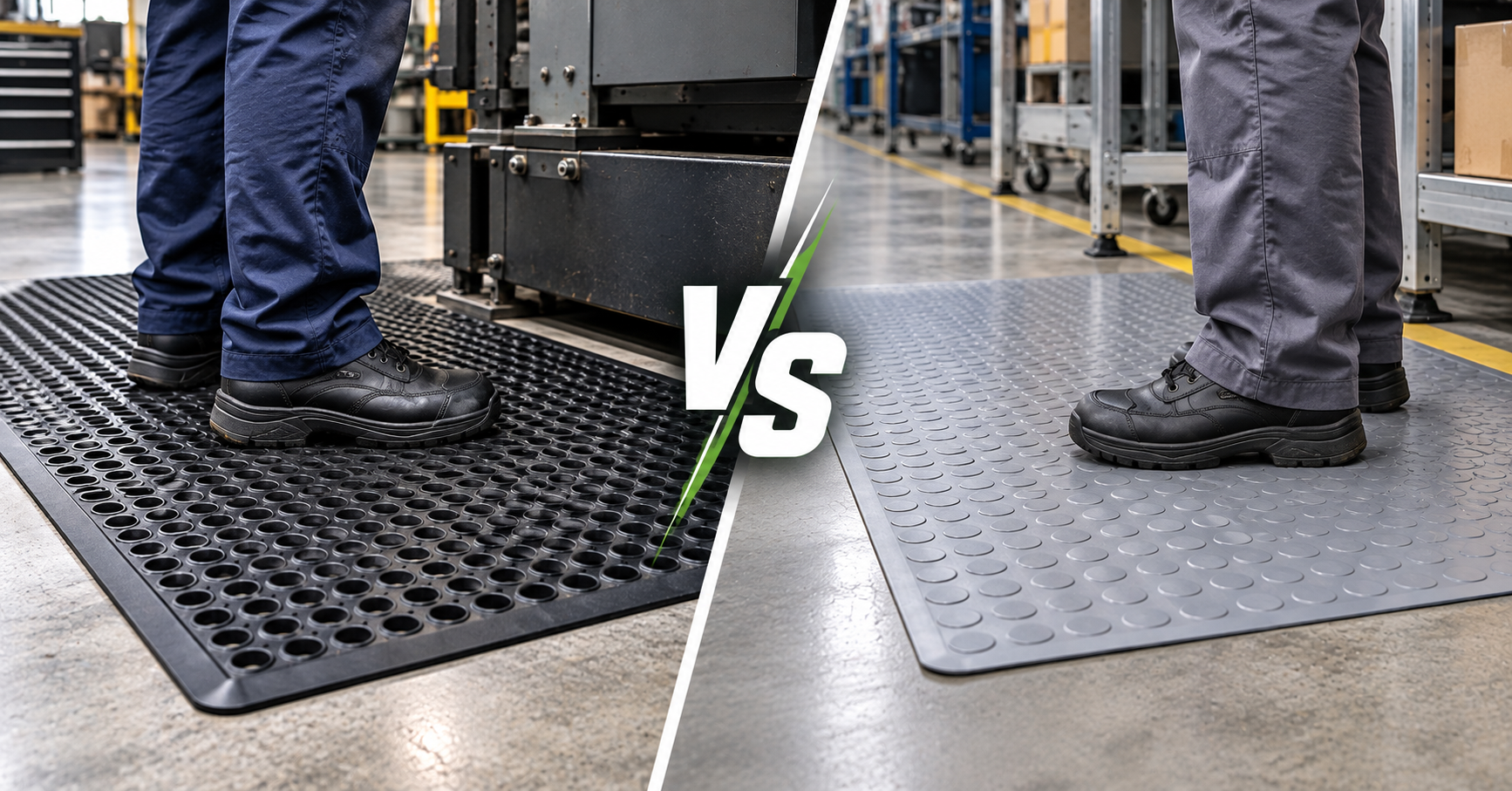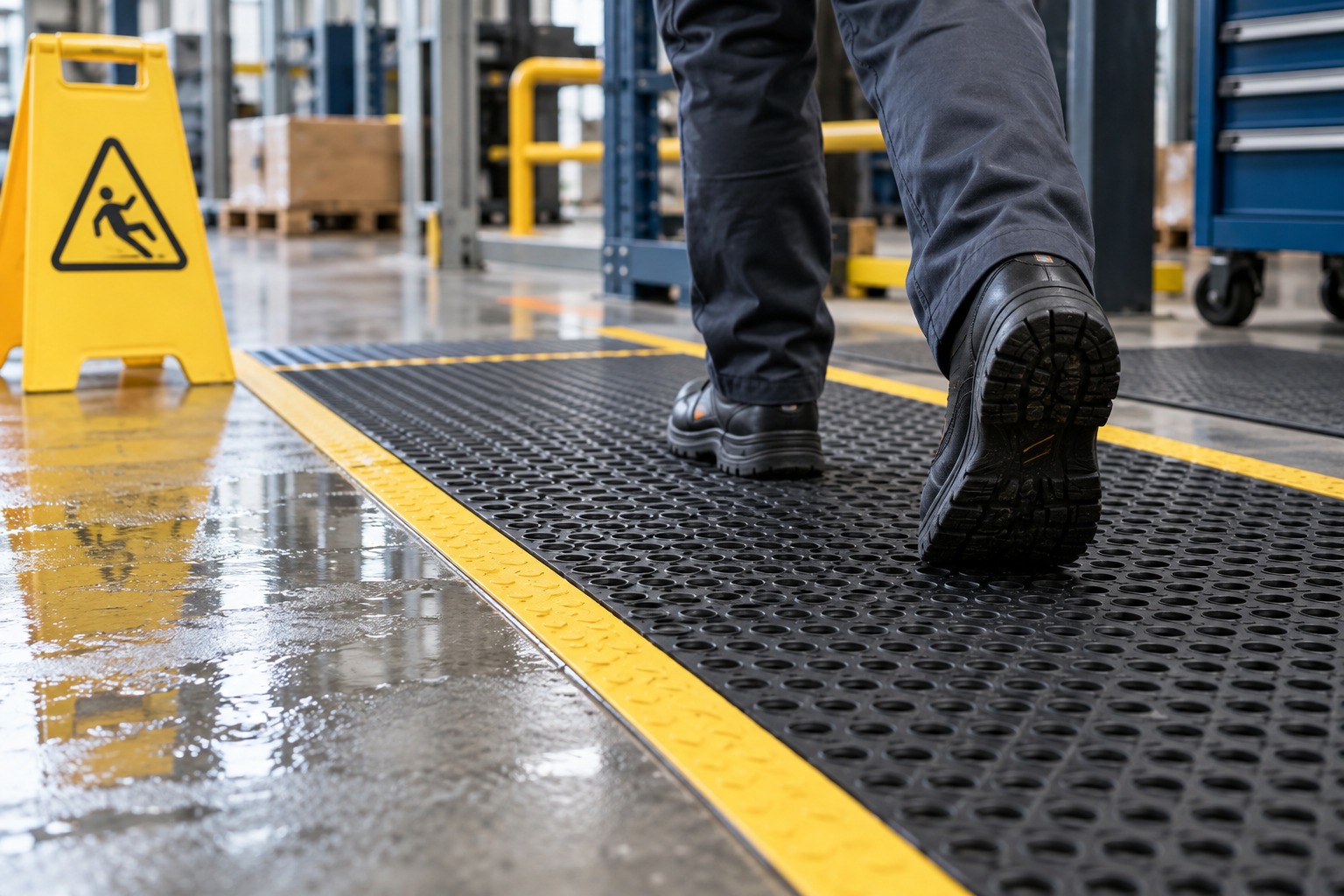
Slips and falls represent significant safety concerns in workplaces, particularly where workers encounter water, oil, grease, dust, or substantial foot traffic. Quality floor matting can enhance traction and create a more secure walking and working environment.
Selecting appropriate rubber matting for slip prevention forms a crucial part of workplace safety strategy. However, simply placing a mat on the floor isn’t sufficient. The mat must match the environment, surface conditions, traffic volume, and work nature. Industrial and commercial rubber mats can be suitable for workplaces with demanding traffic and environmental conditions.
Why Do Slips and Falls Happen in Workplaces?
Workplace slips typically occur due to poor grip or inadequate attention to liquids and debris management. Common causes include:
- Water and liquid spills
- Oil and grease accumulation
- Dust, dirt, and debris
- Wet entrances during rainy conditions
- Unsuitable or smooth flooring surfaces
- Heavy foot traffic volume
- Deteriorated floor surfaces
- Curling, moving, or worn mats
These hazards intensify in industrial and commercial settings, especially around entrances, production zones, kitchens, workshops, warehouses, and workstations. Suitable slip-resistant rubber mats provide textured surfaces that help mitigate these risks.
How Does Rubber Matting Help Prevent Slips and Falls?
The success of safety matting depends on design and application appropriateness. Correct rubber matting addresses slip prevention through several mechanisms. Businesses looking for suitable options can also explore different rubber mat manufacturers and their available solutions to find matting designed for specific workplace requirements.
1. Provides Better Underfoot Grip
Rubber delivers natural traction, while textured or patterned surfaces enhance grip further. This proves especially valuable where workers face moisture, dirt, or contaminants.
2. Helps Manage Water and Liquids
Many designs feature drainage holes, grooves, or patterns that redirect liquids away from walking surfaces. This benefits commercial kitchens, food processing areas, entrances, and locations experiencing frequent spills.
3. Creates a More Stable Working Surface
Properly selected rubber matting establishes defined work areas while providing cushioning for extended standing periods.
4. Supports Safer High-Traffic Areas
Busy entrances, walkways, production zones, and workstations endure constant foot traffic. Durable non-slip rubber matting maintains suitable walking conditions in these demanding spaces.
How to Choose the Right Anti-Slip Rubber Mat
Different rubber mats suit different workplace conditions. Key selection factors include:
1. Surface Grip and Texture
Choose matting with surfaces designed for adequate traction in your environment. Textured patterns improve grip, though specific designs should address the contamination types likely present.
2. Drainage and Liquid Management
Wet area mats should feature drainage capabilities allowing water and liquids to escape. These prove particularly useful in kitchens, wet processing environments, entrances, and moisture-heavy areas.
3. Workplace Conditions
Daily mat exposure includes:
- Water and dampness
- Grease and oil
- Dust and dirt
- Food or workplace debris
- Cleaning supplies
- Heavy equipment or traffic
Material and construction must suit these specific conditions.
For businesses operating in the UK, this guide to choosing the right rubber mat for a UK workplace can help with evaluating matting based on workplace conditions and usage.
4. Traffic and Durability
A warehouse mat experiences different demands than office entrance matting. Industrial and commercial applications require matting that withstands expected daily use levels and wear patterns.
5. Size, Thickness and Placement
Mats should cover high-risk slip areas without creating trip hazards. Consider available floor space, surrounding surfaces, thickness, edges, and positioning or cleaning ease.
Best Applications for Non-Slip Rubber Matting
Factories and Manufacturing Facilities
Production floors encounter machinery, dirt, moisture, and constant movement. Positioned matting around selected workstations and production areas provides enhanced grip and cushioning.
Workshops
Workshop environments expose matting to oil, grease, metal debris, and contaminants. Appropriate anti-slip mats create stable surfaces around workstations and frequently used areas.
Warehouses
Warehouse staff regularly traverse storage, packing, loading, and dispatch zones. Heavy-duty matting in high-traffic areas proves essential.
Commercial Kitchens
Kitchen environments present challenging conditions involving water, food spills, grease, and prolonged standing. Proper matting targets wet floor areas while offering grip and cushioning.
Entrances and Wet Areas
Rain and moisture create particularly hazardous entryways. Moisture control matting reduces water tracked onto surrounding floors.
Where Should Slip-Resistant Rubber Mats Be Placed?
Mat location matters as much as the mat itself. Consider placement in areas with regular moisture, contaminant, or heavy foot traffic exposure:
- Building entrances
- Factory workstations
- Production equipment surrounds
- Commercial kitchens
- Wet processing areas
- Workshop workstations
- Packing and preparation areas
- Common walkways
Rather than unnecessary workplace-wide coverage, businesses should target specific risk areas with appropriate matting.
Workplace Slip Prevention: Why Maintenance Matters
Quality mats require periodic maintenance to function effectively. Over time, surfaces accumulate dirt, oil, grease, and contaminants, diminishing effectiveness. Regular cleaning preserves surface condition and enables early problem identification.
Businesses should:
- Follow manufacturer cleaning recommendations
- Remove dirt and debris buildup
- Address spills immediately
- Inspect mats for damage or excessive wear
- Verify correct mat positioning
- Replace damaged or worn mats promptly
Heavy-use industrial settings operating nearly round-the-clock require frequent inspections.
Workplace Slip Prevention Goes Beyond Matting
Rubber matting represents one safety element but isn’t a complete solution independently. Effective slip prevention also requires proper housekeeping and workplace practices. The UK Health and Safety Executive (HSE) guidance on preventing slips and trips highlights the importance of managing contamination, maintaining suitable flooring, using effective matting systems, choosing appropriate footwear, and maintaining good housekeeping.
- Prompt spill cleanup
- Clear walkways
- General floor maintenance
- Appropriate work shoe selection
- Regular high-risk area inspection
- Mat selection matching specific settings
- Damaged or unsuitable mat replacement
Combined with proper matting, these practices significantly enhance workplace safety and maintenance standards.
Why Choose ARAMATS for Safety Rubber Matting
Suitable mat selection depends on use conditions. ARAMATS supplies rubber matting for diverse industrial, commercial, and workplace requirements.
Successful selections depend on multiple factors including surface conditions, traffic patterns, moisture exposure, durability needs, maintenance requirements, and intended applications. Experienced manufacturers help businesses select appropriate options based on practical requirements rather than appearance alone. Businesses can also consider an experienced rubber mat supplier in UK London or an established Indian rubber mat brand when evaluating manufacturing experience and supply capabilities.
Conclusion
Identifying workplace floor areas most susceptible to slipperiness and implementing appropriate safety measures reduces slip and fall incidents substantially. Correct rubber matting for slip prevention adds traction, controls moisture, and establishes more secure surfaces in selected work areas.
Optimal solutions emerge when matting selection aligns with actual working conditions. Before deciding, evaluate all relevant factors including traffic, moisture, contaminants, durability, surface design, and maintenance requirements.
Combining appropriate anti-slip rubber mats, regular cleaning, excellent housekeeping, and solid workplace practices creates safer, more functional working environments.
Find the Right Rubber Matting for Safer Workplaces
ARAMATS offers rubber matting solutions for diverse industrial and commercial applications. Explore the ARAMATS range or get in touch with the team to discover appropriate matting solutions for your workplace.
Frequently Asked Questions
Do rubber mats help prevent slips and falls?
Appropriate matting can enhance traction and create more secure surfaces, especially in moisture or contaminant-exposed areas. Effectiveness depends on design, condition, placement, and application suitability.
What makes a rubber mat anti-slip?
Anti-slip mats typically feature textured or patterned surfaces for improved traction. Wet-environment designs often include drainage features.
Where should anti-slip rubber mats be used?
They suit entrances, factories, workshops, warehouses, kitchens, wet processing areas, and locations where moisture, contaminants, or heavy traffic increase slip risks.
Are rubber mats suitable for wet workplaces?
Damp-environment mats feature texturing or drainage. Mat type depends on moisture type and volume.
How often should workplace rubber mats be cleaned?
Cleaning frequency depends on workplace type, traffic volume, and contamination types. Heavy-traffic or high-spill areas require more frequent cleaning and inspection.
What should businesses consider when choosing slip-resistant matting?
Consider surface grip, drainage, working conditions, traffic, durability, size, thickness, location, and maintenance requirements, ensuring the mat suits its intended environment.

Written by the ARAMATS team at Arackathara Group, manufacturers and exporters of rubber matting solutions since 1973.