Commercial spaces deal with constant movement. Customers, employees, deliveries, trolleys, and equipment can put considerable pressure on flooring throughout the day.
The usual floor coverings in these areas may not be able to provide the grip, wear resistance, or practical protection required. Rubber mats for high-traffic areas are an easy solution to protect flooring and to give a better surface to walk and work on.
However, choosing a mat for a busy commercial environment involves more than looking for the thickest or heaviest product. The right option depends on where the mat will be placed, the type of traffic it will receive, and the conditions it needs to handle.
Why Use Rubber Mats in High-Traffic Areas?
High footfall can accelerate floor wear, particularly around entrances, service counters, corridors, workstations, and other busy areas.
Suitable high-traffic rubber mats can provide an additional protective layer between the floor and everyday activity. They can also help create a more stable walking surface and, depending on the design, provide additional traction.
For areas where slips and trips are a concern, businesses can also review practical guidance on reducing slips and falls with the right rubber matting.
Rubber is also practical for commercial environments because many rubber mats can withstand regular use and can be cleaned and maintained as part of normal workplace routines.
What Makes a Good High-Traffic Rubber Mat?
Not every rubber mat is designed for the same conditions. When selecting rubber matting for high-traffic areas, consider the demands of the location.
Durability
A busy commercial environment requires matting that can withstand repeated use without quickly losing its shape or surface performance.
The expected traffic should be considered alongside the mat’s material and construction.
For demanding commercial and industrial environments, businesses can also explore heavy-duty industrial floor mats in the UK to understand how heavy-duty matting can be matched to higher-use areas.
Surface Grip
Entrance areas, service spaces and other busy locations can experience moisture and dirt brought in by foot traffic.
A suitable surface pattern can provide a grip underfoot and may help reduce the risk associated with slippery conditions. But matting should be combined with good housekeeping and proper workplace safety practices.
Businesses can refer to the Health and Safety Executive (HSE) guidance on preventing slips and trips at work for additional workplace safety guidance.
Ease of Cleaning
Commercial mats can collect dirt, dust and moisture throughout the day.
A practical mat should fit into the cleaning routine of the premises. Mats that can be removed, cleaned and maintained efficiently can be particularly useful in busy environments.
Coverage
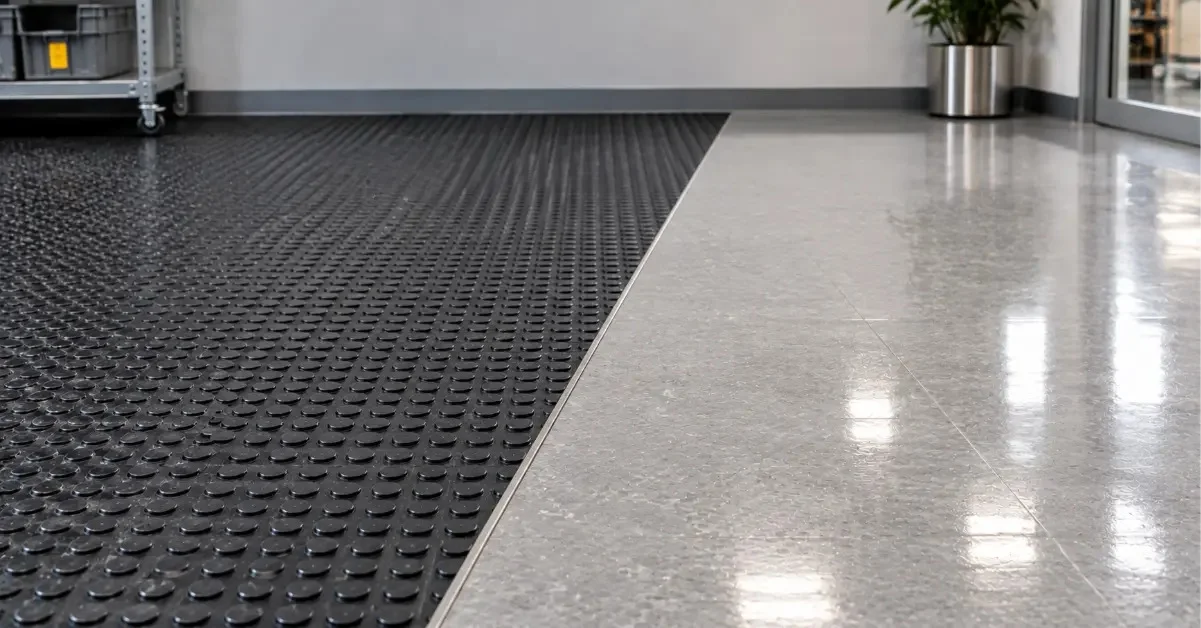
The size of the mat matters just as much as the material. A mat should cover the area where protection or traction is required without creating unnecessary edges or obstacles. For larger spaces, modular or interlocking systems may provide a practical solution.
Where Can Commercial Rubber Mats Be Used?
Commercial rubber mats can be used in many different areas, depending on the product.
Entrances and Reception Areas
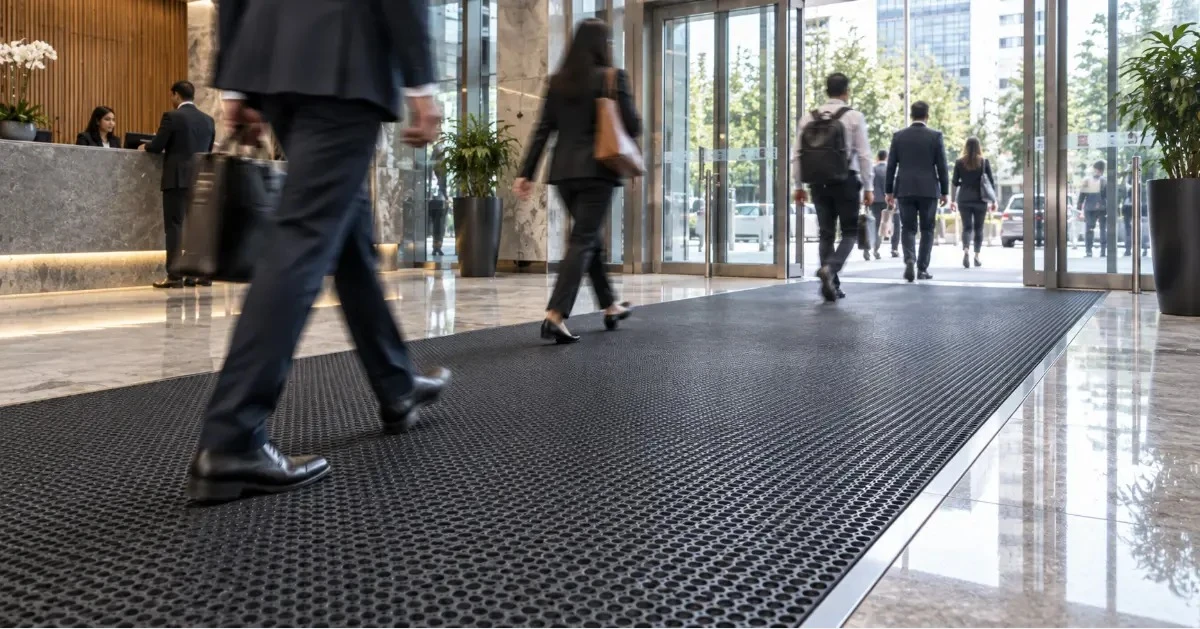
Entrance flooring receives continuous foot traffic and can be exposed to water, dirt, and debris brought in from outside. A good entry mat can control that traffic and protect the floor underneath it.
For businesses comparing different commercial flooring options, rubber floor mats for busy commercial environments can provide additional context on applications for high-use areas.
Retail and Customer Areas
In retail environments, there is often a constant movement of customers. In some areas, especially where extra durability or underfoot support is needed, rubber matting can be installed.
Service Counters and Workstations
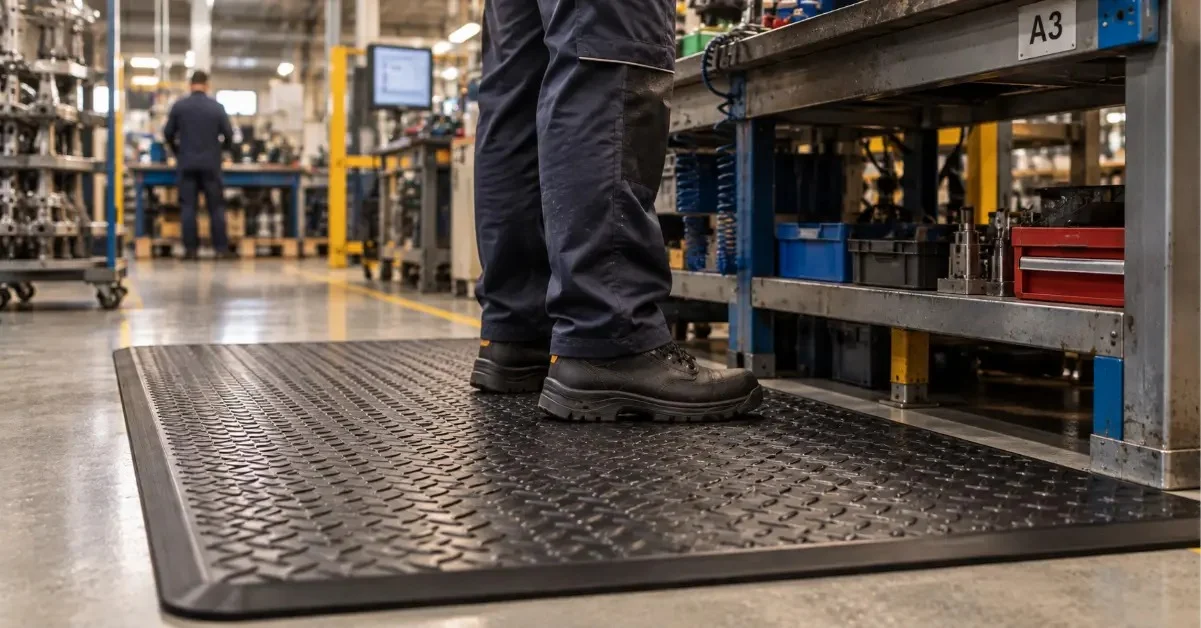
Employees who work behind counters or at fixed stations may stand for long periods. Here, an appropriate anti-fatigue rubber mat can provide cushioning underfoot.
For prolonged standing, businesses can also consider anti-fatigue mats for industrial workstations when selecting suitable workplace matting.
Workshops and Back-of-House Areas
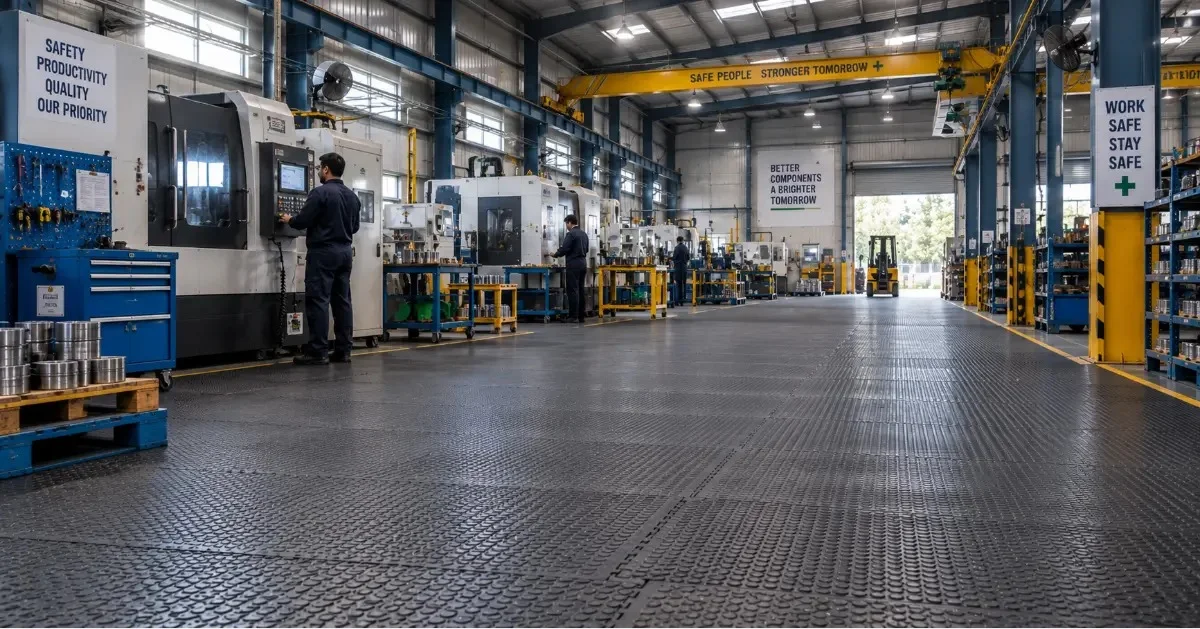
Commercial premises may also include storage rooms, preparation areas, maintenance spaces, or workshops where floors experience heavier use.
Here, heavy-duty commercial mats may be appropriate where the working conditions demand greater durability.
Choosing Rubber Mats Based on Traffic
The term “high traffic” can mean different things depending on the workplace.
A shopping environment may experience thousands of individual footsteps, while a commercial workshop may have fewer people but heavier loads from equipment and carts.
Things to think about before selecting a mat:
- How many people are using the area?
- Is there equipment or trolley traffic?
- Are the loads concentrated in certain areas?
- Is the place wet or dirty?
- Will employees be required to stay in one position for extended periods of time?
- Does the mat need drainage?
- How frequently will the area be cleaned?
- Does the mat need to be moved regularly?
These questions help identify the type of durable rubber floor mats required rather than relying on traffic level alone.
Are Heavy-Duty Mats Always Necessary?
Not every commercial area requires a heavy-duty mat.
A reception area and a commercial workshop may both be busy, but their flooring requirements are different. A product designed for heavy equipment may be unnecessary in a customer-facing space, while a lightweight general-purpose mat may not be suitable for a demanding work area.
The aim is to match the mat to the actual environment.
Material, surface design, construction, drainage, cushioning, and expected traffic should all be considered before selecting a product.
Rubber Mats vs Other Commercial Floor Coverings
Rubber matting is one option among several types of commercial flooring and floor protection.
Its main practical advantage is versatility. Rubber mats are available in different surface patterns, constructions, sizes, and applications, allowing them to be used in areas ranging from commercial workstations to industrial environments.
They can also be used as a supplementary floor covering rather than requiring an entire floor to be replaced.
For businesses looking for flexible commercial floor matting, this can make rubber mats useful for targeted areas that experience particularly heavy use.
How to Maintain Rubber Mats in Busy Commercial Areas
Even durable mats need regular maintenance.
Dirt and debris should be removed routinely, while spills should be dealt with promptly. The cleaning method should be appropriate for the particular rubber product and the manufacturer’s recommendations.
The mat should also be checked periodically for:
- Damaged or worn surfaces
- Curling edges
- Movement or displacement
- Accumulated dirt underneath
- Signs of deterioration
Good maintenance can help keep the mat functioning properly and make it easier to identify when replacement may be necessary.
Choosing the Right Commercial Rubber Mat
The best place to start is always the application. With high footfall at your entrance, focus on traffic, moisture and dirt control, and surface grip. Consider cushioning and standing comfort if it’s for a workstation. In a workshop or service area, it might be more important that it is durable and resistant to hard use.
In other words, choosing rubber mats for commercial areas should be based on the conditions the mat will actually face.
A specialist supplier can help identify the appropriate construction, size, and surface design for the intended location.
Rubber Matting Solutions from ARAMATS
ARAMATS offers a range of rubber matting solutions for commercial, industrial and workplace environments.
Its range includes anti-fatigue mats, industrial mats, drainage solutions and interlocking options, allowing businesses to select products according to the requirements of individual areas.
For high-traffic commercial environments, the right choice should be based on the combination of footfall, equipment movement, working conditions, cleaning requirements, and the type of protection or support required.
Conclusion
The right rubber mats for high-traffic areas should be selected according to the demands of the environment rather than simply choosing the thickest or heaviest product.
Traffic levels, equipment movement, moisture, cleaning routines, standing time, and the required level of grip or cushioning can all influence the choice. For commercial spaces, a well-selected rubber mat can provide practical floor protection while supporting the day-to-day demands of a busy workplace.
Find the Right Rubber Mat for Your Commercial Space
ARAMATS provides rubber matting solutions for commercial and industrial applications, from anti-fatigue workstations to high-use areas and drainage environments.
Explore the ARAMATS rubber matting range to find commercial rubber matting suited to your workplace.
Frequently Asked Questions
What are the best rubber mats for high-traffic areas?
The right mat will depend on the traffic and the environment. Consider durability, the surface design, grip, cleaning and what you would like to use it for.
Are rubber mats suitable for commercial areas?
Yes. Rubber mats are used across many commercial and workplace environments, including entrances, workstations, service areas, and back-of-house spaces.
Are heavy-duty commercial mats better for high foot traffic?
Heavy-duty construction may be useful in demanding environments, but it is not automatically necessary for every high-footfall area. The mat should be selected according to the actual conditions.
How long do commercial rubber mats last?
Lifespan varies according to material, construction, traffic, maintenance, and the environment in which the mat is used. High-use areas generally require closer inspection and maintenance.
Can rubber mats be used in wet commercial areas?
Some rubber mats are designed with drainage or textured surfaces for wet environments. The product should be selected according to the amount and type of moisture involved.
How do I choose rubber matting for a busy workplace?
Consider traffic, load, standing time, moisture, dirt, cleaning needs, space available, and the type of surface performance needed. These factors will help in narrowing down the choices of suitable commercial rubber matting.

Written by the ARAMATS team at Arackathara Group, manufacturers and exporters of rubber matting solutions since 1973.