
Aramats Team
Written by the Aramats team at Arackathara Group, manufacturers and exporters of rubber matting solutions since 1973.
Written by the Aramats team at Arackathara Group, manufacturers and exporters of rubber matting solutions since 1973.
When businesses look for reliable rubber flooring, they need to consider more than the initial purchase price. Product quality, material specifications, durability, maintenance requirements, and supplier reliability all influence the long-term value of a flooring investment. For companies comparing options, choosing an experienced rubber floor mat manufacturer can help them assess products against their specific commercial or industrial needs.
Aramats manufactures and exports rubber matting products for commercial and industrial applications. Based in Kerala, India, the company serves international markets and offers matting options for different flooring requirements.
Choosing a manufacturer involves evaluating product quality, available specifications, manufacturing capabilities, and supply arrangements. Businesses should look for suppliers that can clearly explain their products and help identify suitable options for the intended application.
Important factors include:
Explore the rubber mat range from Aramats to learn more about available matting products.
Commercial and industrial environments have different flooring requirements depending on climate, foot traffic, equipment, and daily operations. Businesses should select mats according to the conditions in which they will be used.
In the UK, rain and moisture can create challenges around building entrances, while warehouses and factories may require durable matting for demanding work areas.
When choosing rubber mats for UK workplaces, buyers should consider:
Read more about choosing rubber mats for UK workplaces to understand the factors that can influence product selection.
Indian businesses may need matting suited to busy commercial spaces, manufacturing facilities, retail environments, kitchens, and other workplaces. Depending on the location, moisture, heat, dust, oils, and cleaning practices may influence which material and surface design is appropriate.
Before purchasing, businesses should check the product's intended use, material specifications, maintenance instructions, and compatibility with the working environment.
Rubber floor mats are available in different surface patterns and constructions. The right design depends on where the mat will be installed and what it needs to do.
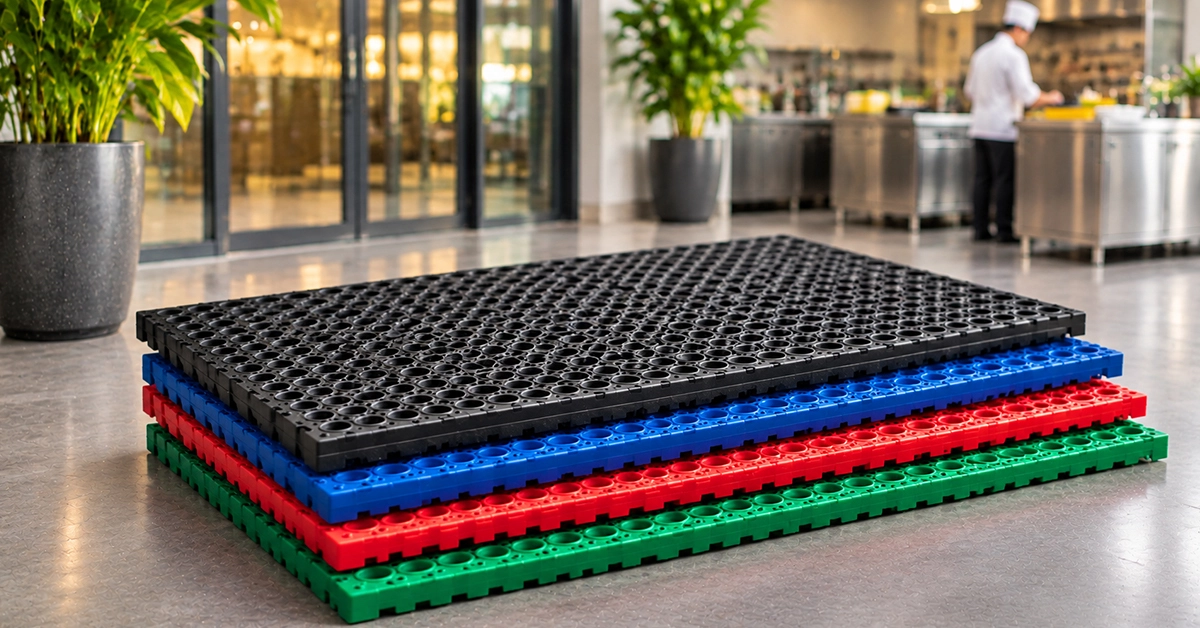
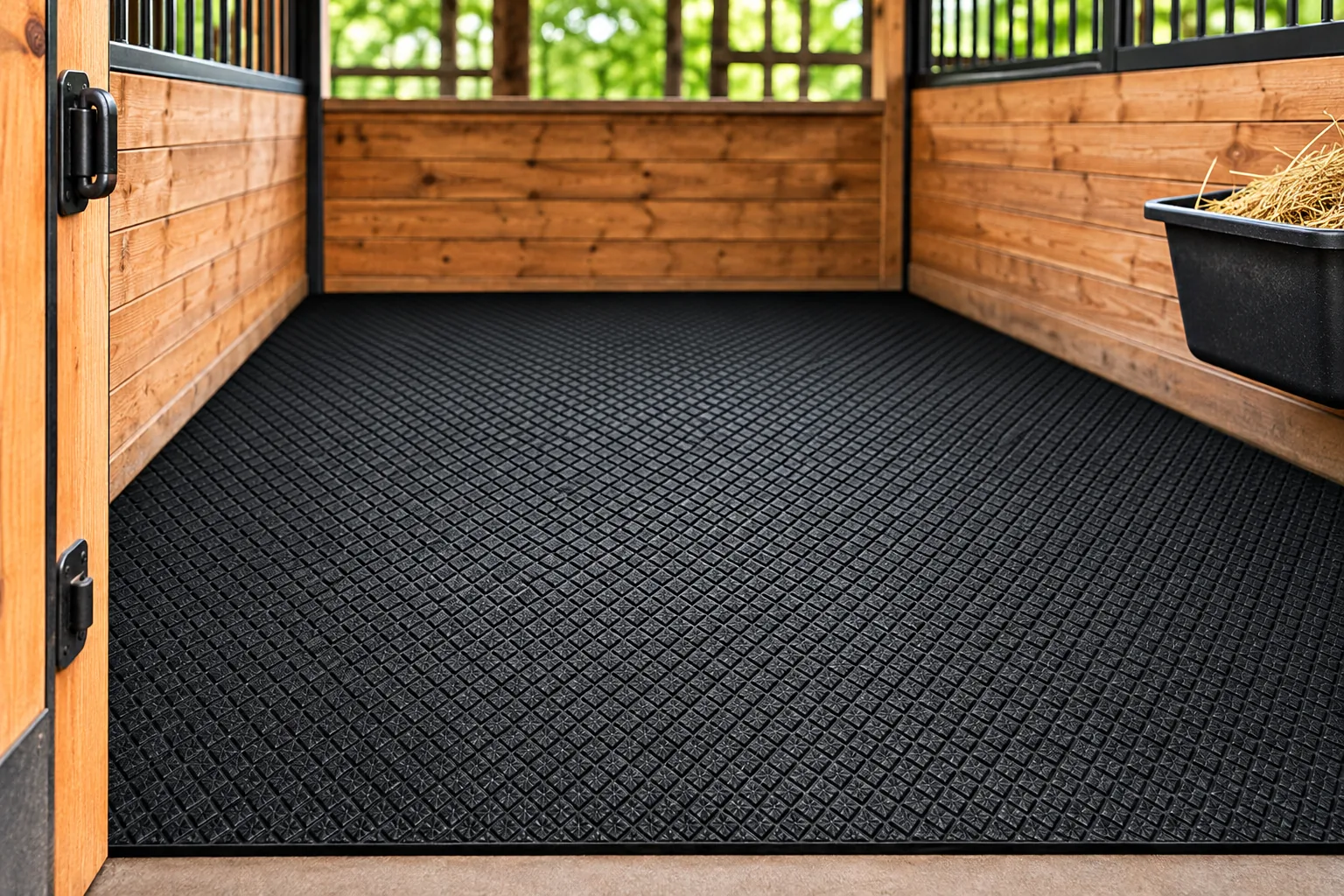
Coin, ribbed, studded, and other textured designs may be used for different commercial or industrial applications. Surface pattern should be selected according to the required traction, cleaning routine, and workplace conditions.
The required thickness depends on the intended application, expected loads, foot traffic, and the condition of the underlying floor. Buyers should not assume that one thickness is suitable for every industrial or commercial environment.
Review the product specifications and intended use before choosing a mat for heavy equipment, standing workstations, or high-traffic areas.
Mat edges and placement can affect accessibility and everyday safety. Correct sizing, secure positioning, and appropriate edge design can help reduce trip risks and prevent mats from shifting during use.
Installation requirements should be checked before ordering, especially in areas used by wheeled equipment or large numbers of pedestrians.
The cheapest mat is not always the most cost-effective option. A product that is unsuitable for its working environment may require more frequent cleaning, repair, or replacement.
When comparing rubber floor mats, businesses should consider:
Chemical resistance and outdoor performance vary by rubber compound and product construction. If mats will be exposed to oils, cleaning chemicals, high temperatures, or changing weather conditions, ask the manufacturer for relevant specifications.
For outdoor applications, explore weather-resistant rubber mats for outdoor use and confirm that the selected product is suitable for the intended location.
Regular maintenance helps preserve the condition of rubber matting and supports a cleaner working environment. Cleaning methods should follow the manufacturer's instructions and reflect the type of dirt or contamination present.
Businesses should also check mats regularly for wear, curling edges, movement, and damage. Mats should be kept clean and positioned securely to avoid creating additional hazards.
For workplace guidance, the UK Health and Safety Executive provides information on preventing slips and trips.
Aramats manufactures and exports rubber matting products for a range of commercial and industrial applications. Businesses in the UK and India can review the available product range and assess whether individual products meet their requirements.
When evaluating Aramats for a project, buyers should confirm:
This approach helps buyers make informed decisions based on their project requirements rather than relying solely on general marketing claims.
Visit the Aramats official website to explore its rubber matting products.
Choosing the right rubber floor mat manufacturer involves evaluating product specifications, durability, maintenance requirements, and supply capabilities. Businesses in the UK and India should select flooring products according to their workplace conditions and the performance they need.
Aramats manufactures and exports rubber matting products for commercial and industrial applications. Reviewing the available options and confirming their suitability with the supplier can help businesses make a practical, informed flooring investment.
Looking for rubber floor mats for your business? Visit Aramats to explore available products and discuss your commercial or industrial matting requirements.