Industrial floors have to deal with much more than everyday foot traffic. Machinery, vehicles, tools, spills, dirt, and prolonged standing can all affect the working environment.
For many UK businesses, rubber matting for industrial floors provides a practical way to protect selected areas while creating a more suitable surface for workers and equipment. Businesses looking specifically at standing workstations can also explore anti-fatigue mats for industrial workstations when comparing suitable options.
But industrial matting is not a one-size-fits-all purchase. The right solution depends on the workplace, the type of traffic, environmental conditions, and what the mat is expected to do.
Why Use Rubber Matting on Industrial Floors?
Concrete and other hard industrial flooring can withstand heavy use, but that does not necessarily make them ideal for every workstation or working area.
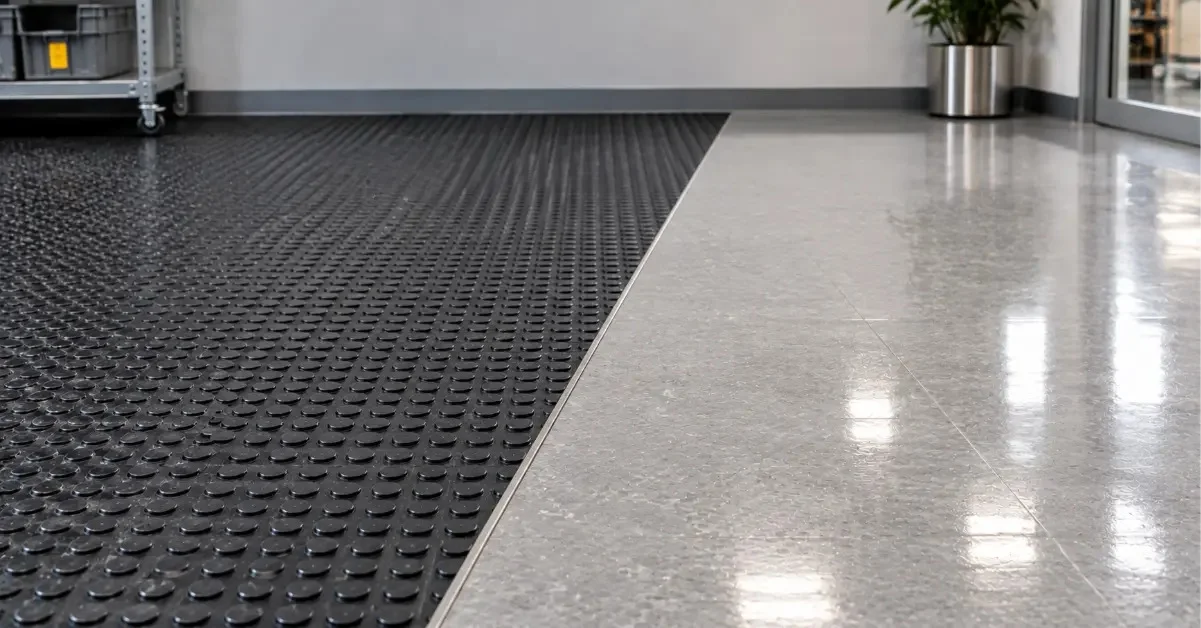
Suitable rubber flooring for industrial floors can provide an additional protective and functional layer. Depending on the product, rubber matting can offer cushioning, surface grip, drainage, or protection against everyday wear.
It can also be used selectively. Businesses do not necessarily need to cover an entire facility with rubber flooring when only particular work areas require additional protection or support.
What Should UK Businesses Consider?
The most suitable industrial rubber matting UK businesses choose should be based on the conditions of the specific workplace.
Before purchasing, consider:
- Type and frequency of traffic
- Whether employees stand for long periods
- Movement of carts or equipment
- Water, oil, or other contaminant exposure
- Required grip on surface
- Maintenance and cleaning requirements
- Impact and general wear
- Available space on floor
- How often you need to move or change the mat
This helps businesses select matting according to actual workplace requirements rather than simply choosing the heaviest-looking product.
Businesses can also review general guidance on choosing the right floor matting when assessing factors such as application, surface conditions and maintenance.
Industrial Floor Mats for Different Work Areas
Different areas within the same facility can have very different requirements.
Manufacturing Areas
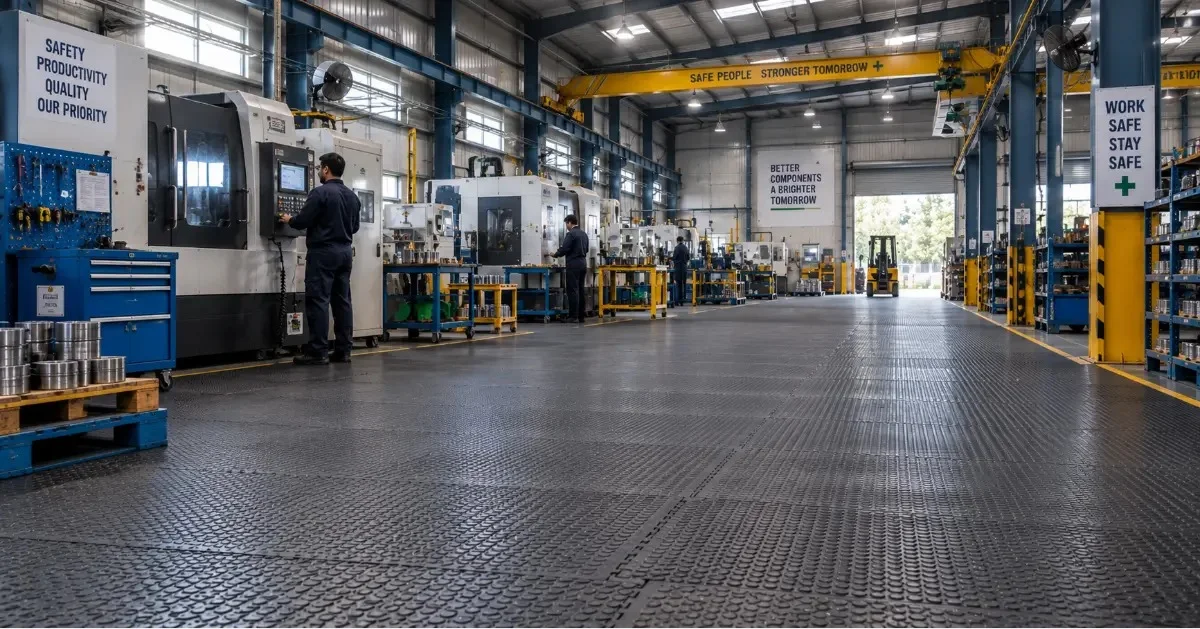
In production environments, we often see a combination of employee movement, machinery, and repetitive tasks. Rubber mats for factories can be laid around specific workstations to provide cushioning, protection of surfaces, or additional grip where needed. The mat should be chosen according to the machinery, traffic, and substances present in that particular area.
Machinery Workstations
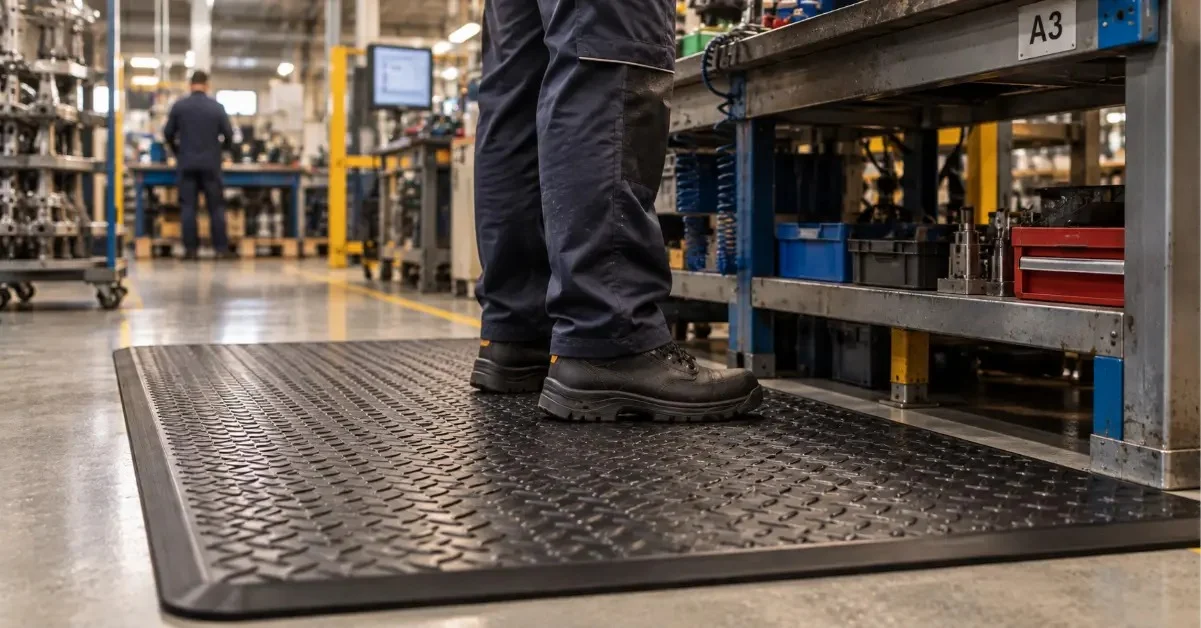
Employees working around machinery may spend long periods standing in one location. Anti-fatigue rubber mats can provide a more resilient standing surface, while the overall construction needs to suit the surrounding equipment and working conditions.
Warehouses
Warehouses experience a combination of pedestrian traffic and equipment movement. In these areas, businesses should consider durability, stability, surface design, and whether the mat will interfere with wheeled equipment.
Maintenance and Workshop Areas
Flooring is hard on tools, dirt, moisture, and repeated impact. For high-use areas, heavy-duty industrial matting is available. But it is important to make sure the specification fits the actual environment.
Industrial Floor Protection
One of the practical uses of industrial matting is industrial floor protection.
Mats can help create a barrier between the original floor and everyday activity in selected areas. They can also be useful around workstations where employees stand repeatedly or where specific floor conditions make additional surface protection desirable.
However, mats should not be viewed as a substitute for maintaining the underlying floor. Damaged, uneven, or poorly maintained flooring can still create workplace hazards.
The UK’s Health and Safety Executive advises businesses to keep floors in good condition, address contamination and maintain clear walkways as part of slip and trip prevention.
Slip Resistance and Workplace Safety
Slip resistance is particularly important where floors can become wet or contaminated.
HSE guidance identifies suitable floors, footwear, drainage, anti-slip surfaces and mats as potential control measures depending on the workplace conditions. It also stresses that contamination should be controlled and spillages dealt with promptly.
Businesses looking at matting as part of their workplace safety measures can also review rubber matting solutions for reducing slips and falls.
This means choosing a rubber mat should be part of a wider workplace safety approach.
A mat should be stable, appropriate for the environment and correctly positioned. Loose, damaged or poorly maintained mats can themselves become trip hazards.
For further workplace guidance, see the Health and Safety Executive guide to preventing slips and trips at work.
What Type of Rubber Floor Matting Is Suitable?
There is no single rubber floor matting solution for every industrial application.
A workstation where employees stand for several hours may benefit from an anti-fatigue design. A wet area may require a drainage surface. A general walkway may have different requirements from a machinery station.
When comparing products, look at:
Surface Pattern
Textured surfaces can provide additional traction, but the suitability of a particular pattern depends on the workplace conditions.
Drainage
Where water or other liquids are regularly present, a drainage design may help keep the standing surface clearer.
Cushioning
For prolonged standing, the resilience of the mat can be more important than simply selecting the thickest product available.
Durability
The material and construction should be suitable for the expected traffic and working conditions.
Maintenance
The mat should fit into the site's cleaning and maintenance routine. A product that is difficult to clean or move may not be practical for a particular area.
When comparing rubber with alternative flooring materials, businesses can also consider the differences discussed in rubber mats vs PVC mats for industrial use.
How Should Industrial Mats Be Maintained?
Regular inspection is important in busy industrial environments.
Businesses should look for:
- Damaged surfaces
- Curling or lifting edges
- Movement or displacement
- Excessive wear
- Dirt or contamination beneath the mat
- Changes that could create trip hazards
HSE guidance specifically recommends checking for loose, damaged, and worn flooring and replacing it when necessary. It also recommends keeping walkways and work areas clear of obstructions.
Cleaning should follow the manufacturer's recommendations and should be appropriate for the mat material and the substances encountered in the workplace.
Do Industrial Floors Always Need Full Rubber Flooring?
No. For many businesses, targeted matting can be more practical than installing a rubber floor throughout an entire facility.
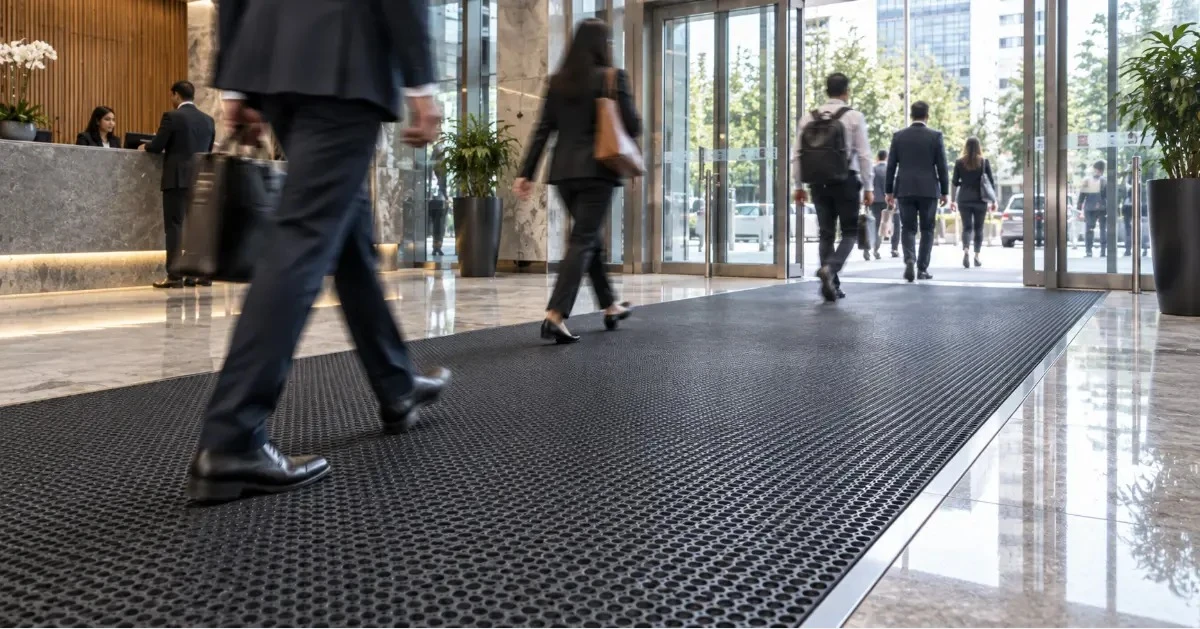
Individual mats can be placed at workstations, entrances, machinery areas, packing stations, or other locations where additional cushioning, protection, or surface performance is required.
This approach can also make maintenance and replacement more manageable because individual mats can be inspected and replaced when necessary.
Choosing Industrial Rubber Matting in the UK
For businesses comparing industrial floor mats UK suppliers, it is worth looking beyond price and thickness.
Consider the actual application first. Identify where the mat will be used, what workers and equipment will pass over it, what substances it may encounter, and how frequently it will need cleaning.
Then compare products based on their construction, surface design, drainage, cushioning, size, and intended use.
This approach makes it easier to select rubber matting for industrial floors that fits the workplace rather than buying a product simply because it is marketed as heavy-duty.
Industrial Rubber Matting from ARAMATS
ARAMATS offers a range of rubber matting solutions for industrial and workplace environments, including anti-fatigue, drainage and industrial surface options.
The range includes different constructions and sizes for applications where businesses need additional cushioning, grip, drainage or floor protection.
For UK workplaces, the most suitable option should be selected according to the specific working conditions, traffic and maintenance requirements.
Conclusion
Rubber matting for industrial floors can provide a practical solution for businesses looking to improve selected work areas without replacing an entire industrial floor.
The right product depends on the workplace. Traffic, machinery, standing time, moisture, contamination, drainage, grip, cushioning and maintenance all need to be considered before making a choice.
For UK businesses, the best approach is to assess the actual conditions first and then select industrial floor mats UK solutions that are designed for those requirements.
Find the Right Rubber Matting for Your Industrial Floor
ARAMATS supplies rubber matting solutions for industrial and workplace applications, including anti-fatigue, drainage and heavy-use matting.
Explore Aramats rubber matting solutions to find a rubber mat suited to your working environment.
Frequently Asked Questions
What is rubber matting used for in industrial workplaces?
Rubber matting can be used for areas such as workstations, machinery zones, factories, warehouses, and workshops. Depending on the design, it can provide cushioning, grip, drainage, or additional floor protection.
Are rubber mats suitable for factories?
Yes. Rubber mats for factories can be useful in selected work areas, particularly where employees stand for long periods or where additional surface protection is required. The product should be suitable for the specific factory environment.
What should I look for in industrial rubber matting?
Consider traffic, standing time, equipment movement, moisture, contaminants, surface grip, drainage, cushioning, durability, and maintenance needs.
Are heavy-duty industrial mats always the best choice?
Not necessarily. Heavy-duty industrial matting may be appropriate for demanding areas, but the mat should be matched to the actual application. A very heavy-duty product may not be necessary for a lighter-use workstation.
Can rubber matting help with workplace slip risks?
Suitable matting can form part of a slip-risk control strategy, particularly where mats are appropriate for the floor conditions. However, it should be combined with effective cleaning, spill control, suitable flooring and other relevant safety measures.
How long does industrial rubber matting last?
There is no fixed lifespan. Durability depends on the product, traffic, equipment, environmental conditions, maintenance, and frequency of use. Regular inspection can help identify when a mat needs repair or replacement.

Written by the ARAMATS team at Arackathara Group, manufacturers and exporters of rubber matting solutions since 1973.