
Aramats Team
Written by the Aramats team at Arackathara Group, manufacturers and exporters of rubber matting solutions since 1973.
Written by the Aramats team at Arackathara Group, manufacturers and exporters of rubber matting solutions since 1973.
Dairy farm flooring plays an important role in maintaining a suitable environment for cattle. Animals spend considerable time standing, walking and resting, so the surface beneath them needs to be selected carefully. Flooring should be practical to maintain, suitable for regular farm activity and designed to support animal comfort.
For dairy farm owners and agricultural distributors in the United States, rubber cow mats USA is an important product category to consider when evaluating flooring options for livestock facilities.
Heavy-duty rubber mats can provide a resilient surface over suitable base flooring. However, selecting the right product involves more than choosing a thick mat. Material quality, surface texture, dimensions, installation and cleaning requirements all influence its suitability.
This guide explores what dairy farms and bulk buyers should consider when sourcing rubber cow mats in the USA. You can also explore the rubber mat range from Aramats to learn about different rubber flooring options.
Dairy farm floors experience continuous use. Cattle move between resting areas, feeding spaces and other parts of the facility. Flooring is also exposed to moisture, manure, cleaning activities and equipment.
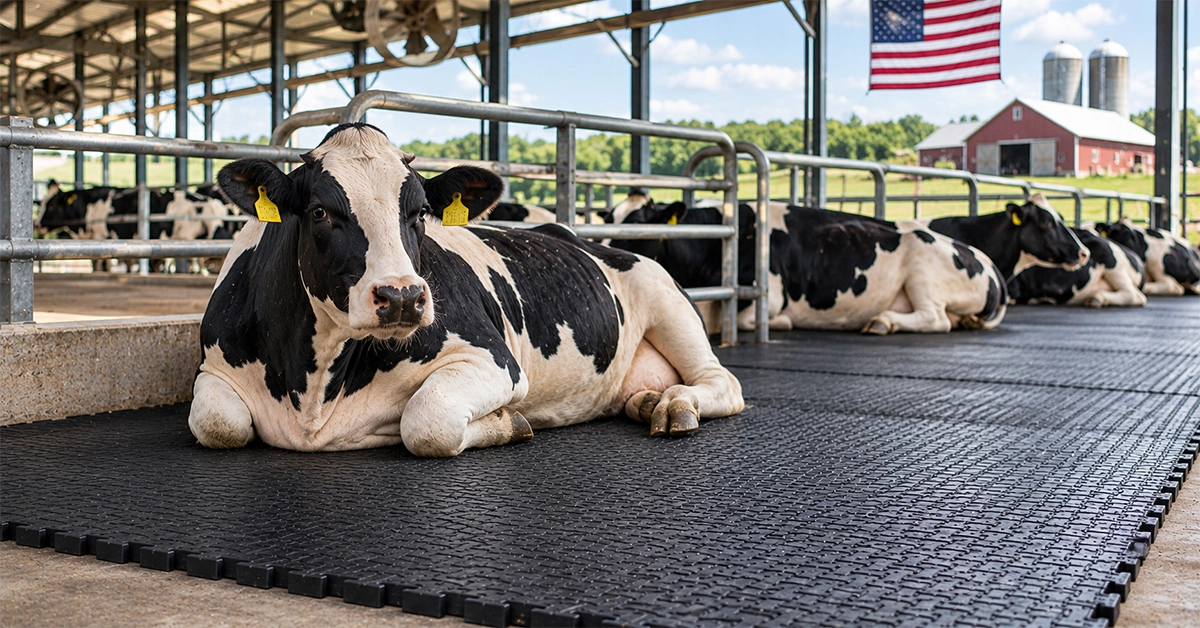
A suitable rubber mat can provide a more resilient surface than bare concrete in selected areas.
Depending on the product design and installation, rubber cow mats may offer:
The actual performance depends on the rubber formulation, thickness, surface design and conditions in which the mat is installed.
Rubber mats should be considered as part of a wider flooring and animal-management system rather than a replacement for appropriate drainage, bedding and hygiene practices.
Resting comfort is an important consideration when planning dairy housing.
Concrete floors can be hard, and suitable resilient flooring may provide a more comfortable surface in designated resting or standing areas.
Dairy farm rubber mats are available in a range of constructions, so buyers should compare product specifications when choosing a solution.
Consider:
The right specification depends on the facility layout and how the flooring will be used.
For further information about rubber flooring in cattle housing, read how rubber flooring can support comfort in dairy cow housing.
Floor traction is another important factor in dairy facilities. Wet or contaminated surfaces can become slippery, so the flooring needs to be suitable for the conditions in which cattle move.
When comparing heavy-duty rubber cow mats, examine the surface texture and the manufacturer's guidance on traction and cleaning.
A patterned surface may help provide grip, but performance can vary with moisture, contamination, wear and installation.
It is also important to ensure that mats remain securely positioned. Loose edges, gaps or uneven sections can create hazards for animals and farm workers.
Dairy flooring must withstand repeated animal movement, equipment use and regular cleaning.
For this reason, buyers should evaluate the material and construction of the mats rather than relying only on product descriptions.
Important considerations include:
A heavy-duty product should be selected according to the actual demands of the facility. The term does not automatically guarantee suitability for every dairy application.
Buyers comparing rubber formulations can also read EPDM vs SBR vs Nitrile Rubber Mats: Which One Is Best? to understand the differences between common rubber materials.
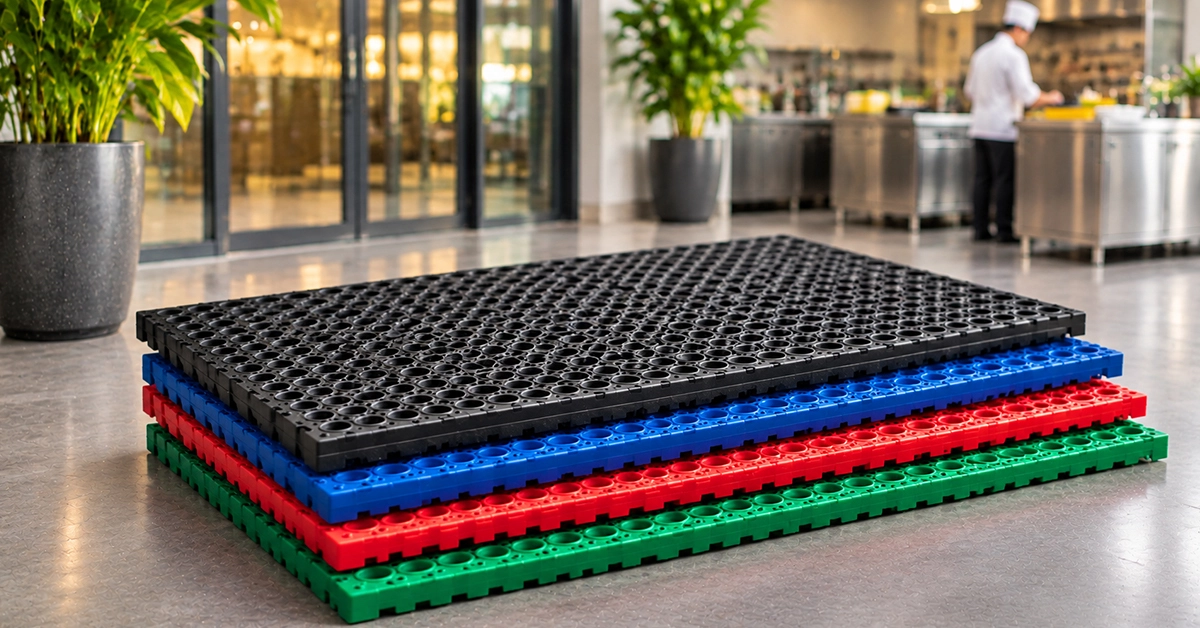
Rubber mats are available in different formats, including individual sheets and interlocking designs.
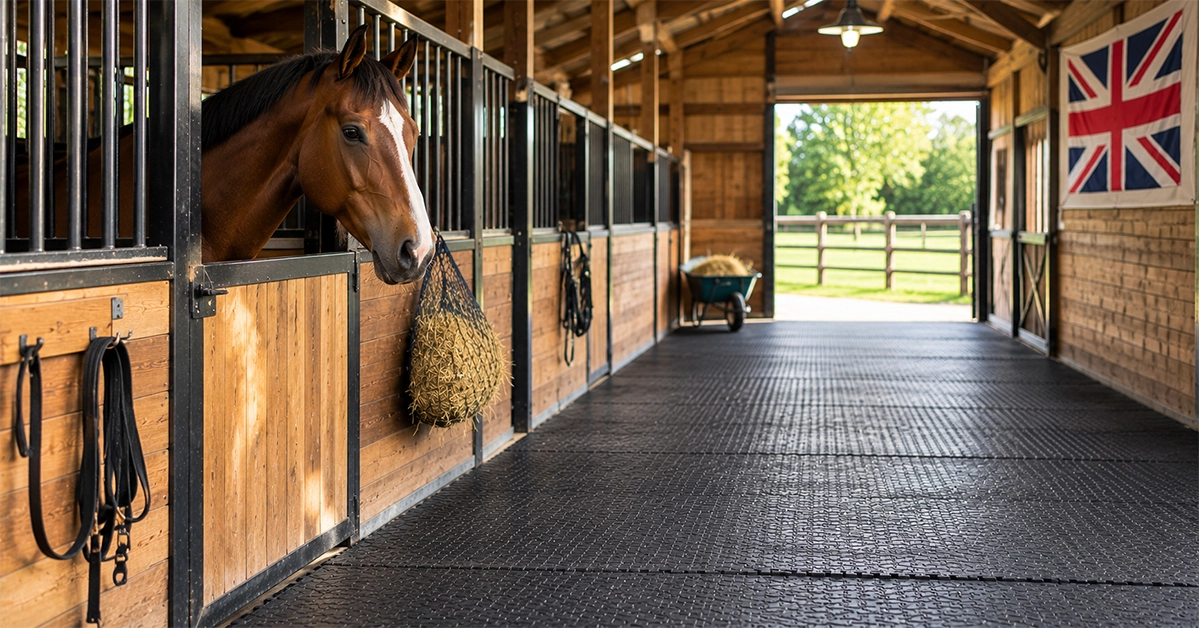
Interlocking stable mats use connecting edges that allow multiple sections to fit together. Although this format is commonly associated with equestrian flooring, similar connecting designs may also be considered for selected livestock applications where the product is specifically designed for that use.
Before choosing an interlocking system, check:
Manufacturer guidance is important, as not all interlocking mats are appropriate for use on dairy farms.
You can explore modular rubber mat systems to understand how connecting flooring designs can accommodate different layouts.
Cleaning requirements should be considered before installing any rubber flooring system.
Dairy facilities need practical arrangements for removing manure, water and other contaminants. A mat's surface design, installation and drainage beneath it can influence maintenance.
When evaluating rubber mats for dairy farms, ask the supplier about:
Rubber mats are not a substitute for regular cleaning. Moisture should not be allowed to accumulate underneath the flooring, and the installation should accommodate the facility's hygiene practices.
For more purchasing considerations, read these tips for choosing the right floor matting.
The correct application depends on the product specifications and the farm's flooring design.
Consider the following areas:
Resilient flooring may be considered in designated cattle resting spaces, alongside suitable bedding and other animal-care arrangements.
Areas where cattle spend time standing may have different cushioning and traction requirements. Select mats designed for the expected use.
Walkways experience regular animal movement and may be exposed to moisture and waste. Surface grip, secure installation and cleaning are important considerations.
These spaces have specific hygiene and operational requirements. Any rubber flooring used here should be suitable for the relevant cleaning procedures and equipment.
The flooring requirements of each area should be assessed separately rather than using the same mat specification throughout the facility.
Buyers in the United States may evaluate domestic suppliers as well as manufacturers and distributors in other markets.
When searching for rubber cow mats in the USA, compare suppliers based on product specifications, availability, shipping arrangements and the support they provide.
Request clear details about material, dimensions, thickness, weight and intended use.
For larger farms and distributors, consider minimum order quantities, bulk pricing and the supplier's ability to fulfil repeat orders.
Rubber mats are heavy and bulky. Before ordering, check packaging, freight costs, delivery timelines and unloading requirements.
Request appropriate product documentation. Make sure the product meets the requirements applicable to the intended facility and market.
A reliable supplier should be able to explain product limitations, installation requirements and maintenance recommendations.
A detailed comparison helps buyers make decisions based on long-term suitability rather than purchase price alone.
Businesses sourcing flooring for multiple agricultural or animal-care applications may also come across related product categories.
Rubber horse mats and rubber stable mats are designed for equestrian environments, where flooring needs may differ from cattle housing.
For example, horse stall flooring should account for the movement and resting requirements of horses. Equine flooring solutions may include mats for stalls, walkways and other stable areas.
Similarly, horse stable mats India and rubber stable mat manufacturer India are search terms relevant to buyers researching the Indian market. Horse stall mats UK is another market-specific term used by buyers exploring equestrian flooring options.
Although these categories may share some material characteristics, products should not be treated as interchangeable. Always check the manufacturer's intended application before purchasing.
Before placing an order, dairy farm operators and distributors should ask suppliers for specific information.
These questions can help buyers compare options and understand whether a particular mat is appropriate for their facility.
When selecting rubber cow mats in the USA, special attention should be paid to animal comfort, traction, durability, cleaning and installation. A suitable rubber flooring product can provide a resilient surface for selected areas on dairy farms, but the product must be matched to the actual requirements of the facility.
Whether sourcing individual mats or planning a larger flooring project, dairy farm operators and distributors should prioritise clear specifications, reliable supply and appropriate product guidance.
Aramats offers rubber matting solutions for commercial and industrial applications. Businesses researching livestock and stable flooring can review the available product range and confirm intended applications, specifications and bulk-order options directly with the team.
Explore the Aramats rubber mat collection and contact the team to discuss your rubber matting requirements and potential bulk-order needs.
Rubber cow mats can be used in selected cattle-housing areas when the product is appropriate for the application and properly installed. Suitability depends on the facility, floor conditions and product specifications.
Consider rubber composition, thickness, density, surface texture, durability, cleaning needs and intended use. Check the manufacturer's specifications before purchasing.
Cleaning requirements differ by product and installation. Follow the manufacturer's recommendations and ensure that drainage and moisture management beneath the mats are addressed.
Not automatically. Horse and cattle flooring can have different requirements. Check whether the product is specifically recommended by its manufacturer for cattle housing.
Compare product specifications, intended applications, bulk pricing, availability, delivery arrangements, documentation and after-sales support. Requesting samples can also help with product evaluation.