
Aramats Team
Written by the Aramats team at Arackathara Group, manufacturers and exporters of rubber matting solutions since 1973.
Written by the Aramats team at Arackathara Group, manufacturers and exporters of rubber matting solutions since 1973.
Choosing suitable flooring is an important part of maintaining a comfortable and practical horse stable. Horses spend a significant amount of time standing and resting in their stalls, so the surface beneath them should support everyday use while remaining manageable to clean and maintain.
For stable owners, equestrian facilities and distributors, Horse Stall Mats UK is an important product category to explore when upgrading existing flooring or planning a new stable.
Rubber mats can provide a resilient surface over a suitable base floor. However, choosing the right product involves more than comparing prices or thicknesses. Material quality, surface texture, dimensions, installation and maintenance all influence how well the flooring performs.
This guide explains what to consider when selecting horse stall mats in the UK.
Stable flooring needs to withstand regular movement, standing, resting and cleaning. A surface that is hard, uneven or difficult to maintain may create challenges for both horses and stable managers.
Suitable Horse Stall Flooring should ideally provide:
Rubber stable mats can help address some of these requirements when the product is suitable for the intended application. You can also explore the Aramats rubber mat range to understand the different types of rubber matting available.
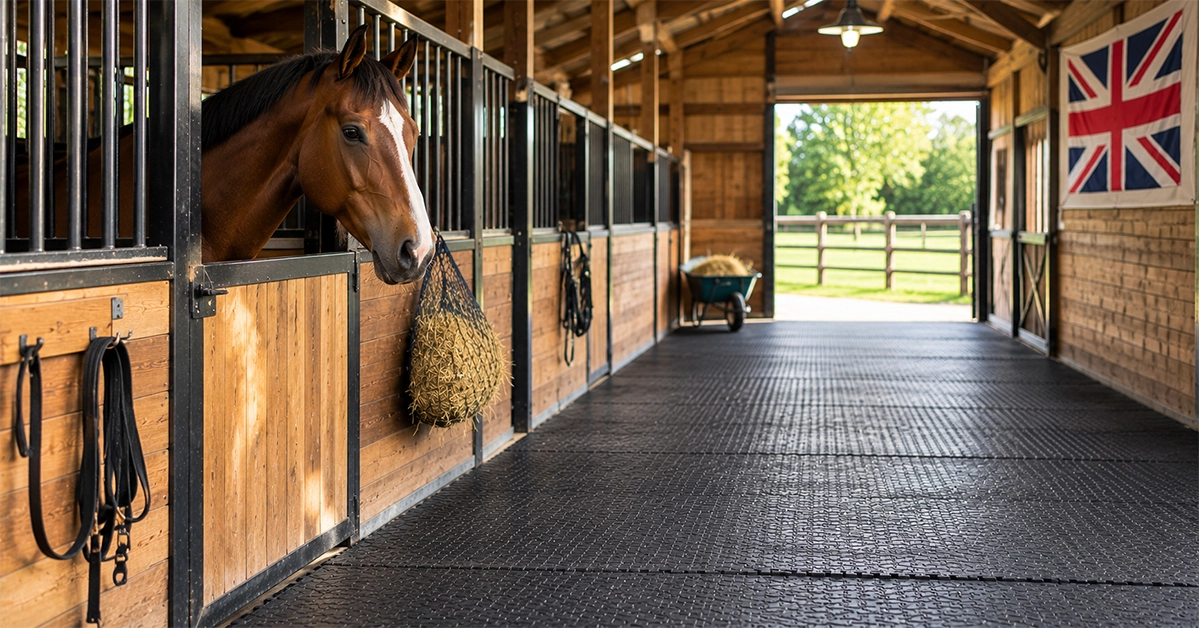
Rubber Horse Mats are flooring products designed for equestrian environments, including horse stalls and stable areas. They are available in different sizes, thicknesses and surface patterns.
Their resilient construction can provide cushioning over concrete or other suitable base flooring. Textured surfaces may also help improve grip, depending on the product design and conditions.
When comparing Rubber Stable Mats, look at the manufacturer's specifications rather than assuming all products provide the same level of cushioning, durability or traction.
Horses spend many hours in their stalls, so the flooring should provide a suitable surface for standing and resting.
Rubber mats can offer a more resilient surface than bare concrete. Their cushioning properties may help improve the comfort of the stable environment.
The level of support depends on factors such as:
The right choice depends on the stable's requirements. A thicker mat is not automatically the best option if its material quality or intended application is unsuitable.
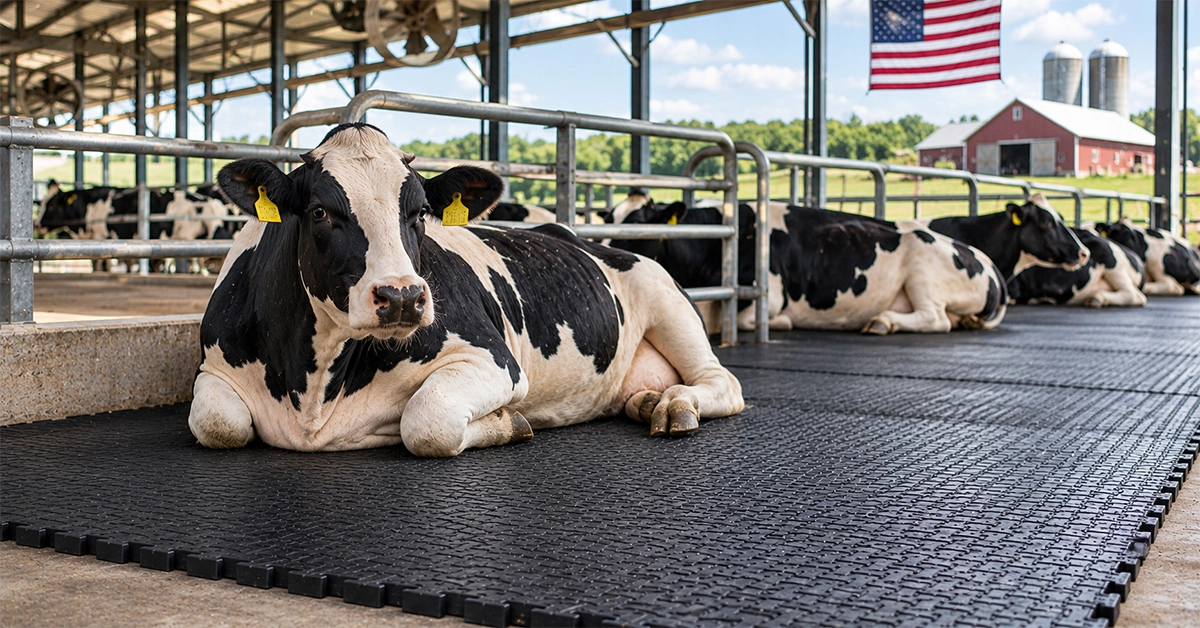
Stable flooring should also be considered alongside appropriate bedding and stable management practices. For additional information, read the Aramats guide on how rubber flooring can support comfort in dairy cow housing. Although this article focuses on cattle housing, horse flooring should always be selected according to equestrian-specific requirements.
Stable floors can become wet during cleaning or through everyday use. A suitable surface texture is therefore an important consideration.
When evaluating Heavy Duty Horse Mats, look at the pattern and finish of the surface. Some designs are intended to provide additional traction, but actual performance can vary depending on moisture, contamination, wear and installation.
Mats should fit securely, too. Loose edges, gaps and uneven sections can create hazards for both horses and the people working in the stable.
For broader stable safety considerations, refer to The British Horse Society's stable safety guidance.
Stable flooring is subjected to repeated use, animal movement and routine maintenance.
Before purchasing, evaluate the product's:
A good supplier will have clear specifications and guidance on the conditions under which the mats are intended to be used.
Rubber composition can influence product characteristics. Buyers can learn more through this guide to EPDM, SBR and nitrile rubber mats.
Durability should be assessed according to the actual needs of the stable, not just general descriptions such as premium or heavy-duty.
Stable layouts can vary, and flooring may need to cover individual stalls or larger areas.
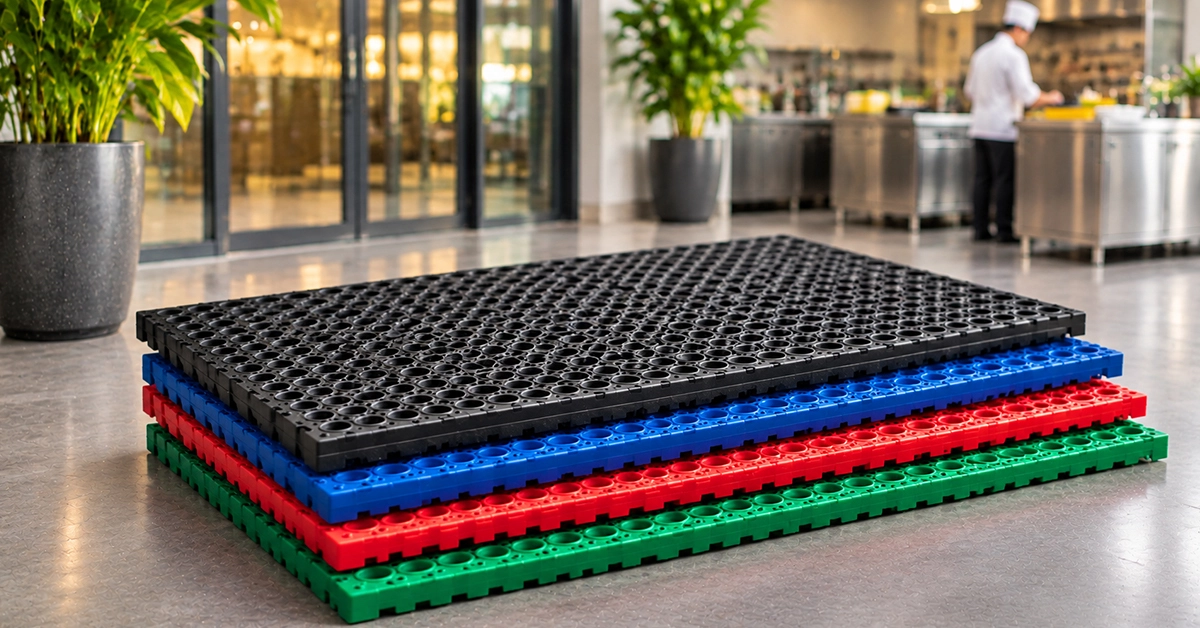
Interlocking Stable Mats have connecting edges that allow separate sections to fit together. Depending on the design, this can help create a more continuous surface across a selected area.
Before choosing an interlocking format, check:
Base preparation is important, too. The finished floor should be free of gaps or raised edges that might interfere with safe movement.
For more information about modular flooring formats, explore modular rubber mat systems.
Good hygiene is essential, and flooring needs to withstand the facility's day-to-day cleaning routine.
Rubber mats can make certain stable surfaces easier to manage, but they do not remove the need for suitable drainage, bedding management and routine cleaning.
When selecting mats, consider:
Following the manufacturer's maintenance instructions can help maintain the condition of the flooring.
Different parts of an equestrian facility can have different flooring requirements.
Horse Stalls
Stalls usually require a comfortable, resilient surface for standing and resting. With a suitable base, the right rubber mats can be installed to complement the stable's bedding and management arrangements.
Stable Walkways
Walkways experience frequent movement from horses and people. Surface grip, secure fitting and resistance to wear are important considerations.
Wash Areas
Wash areas are exposed to water and frequent cleaning. The flooring should be appropriate for moisture exposure and designed to suit the facility's drainage arrangements.
Handling and Exercise Areas
These areas may require different flooring specifications depending on the activities taking place and the level of movement involved.
Selecting suitable Equine Flooring Solutions for each area can help create a more practical and manageable facility.
Rubber flooring is also used in dairy farms and other livestock facilities, but products designed for one animal application should not automatically be used for another.
Rubber Cow Mats are generally considered for cattle housing, where the flooring requirements may differ from those of horse stalls.
Similarly, Dairy Farm Rubber Mats and Rubber Mats for Dairy Farms are selected according to cattle housing conditions, cleaning routines and the intended installation area.
The wider category of Livestock Flooring Mats includes products for different animal facilities. Always confirm the manufacturer's recommended use before choosing a product for a specific environment.
When comparing Horse Stall Mats UK, consider more than the initial purchase price.
Buyers researching international suppliers may also encounter terms such as Horse Stable Mats India, Rubber Stable Mat Manufacturer India and Rubber Cow Mats USA. These are separate market categories, and product availability, shipping arrangements and application requirements should be confirmed directly with each supplier.
Choosing the right horse stall mats in the UK should involve considering comfort, surface grip, durability, cleaning and installation. Practical flooring for an equestrian facility can be achieved with rubber mats, but the product must always be suited to the specific needs of the stable.
Whether you are upgrading individual stalls or planning flooring for a larger facility, compare product specifications carefully and prioritise suitable installation and maintenance.
Aramats offers rubber matting solutions for commercial and industrial applications. If you are exploring stable or livestock flooring, review the Aramats rubber mat range and contact the team to confirm product specifications and suitability for your intended application.
Contact Aramats to discuss your rubber matting requirements and explore suitable solutions for your business.
Rubber horse mats can be suitable for stable flooring if they are designed for equestrian use and installed on a suitable base. Their suitability depends on the product specifications and stable conditions.
The appropriate thickness depends on the construction of the mat, the base flooring and its intended application. Do not choose based on thickness alone; check the manufacturer's specifications.
Interlocking mats can be useful for covering larger or irregularly shaped areas. Their suitability depends on the connection design, installation requirements and stable layout.
Not all cow mats are suitable for horses. Cattle and equestrian flooring can have different requirements, so confirm the intended application with the manufacturer.
Follow the manufacturer's cleaning instructions, remove bedding and waste regularly, and check for moisture underneath the mats. Periodically inspect the floor for loose edges, gaps or signs of wear.