
Aramats Team
Written by the Aramats team at Arackathara Group, manufacturers and exporters of rubber matting solutions since 1973.
Written by the Aramats team at Arackathara Group, manufacturers and exporters of rubber matting solutions since 1973.
The era of treating industrial flooring as a simple, one-time purchase is changing. In 2026, London's industrial and commercial facilities face increasing pressure to manage operational costs, workplace safety and long-term maintenance. Choosing the right flooring is therefore an important part of facility management.
Businesses are moving beyond generic, off-the-shelf products and looking for specialised flooring solutions that can withstand the demands of British workshops, warehouses and distribution centres. Identifying the best industrial rubber mat in London is not simply about finding the lowest price. It involves evaluating material quality, durability, surface design and suitability for the working environment.
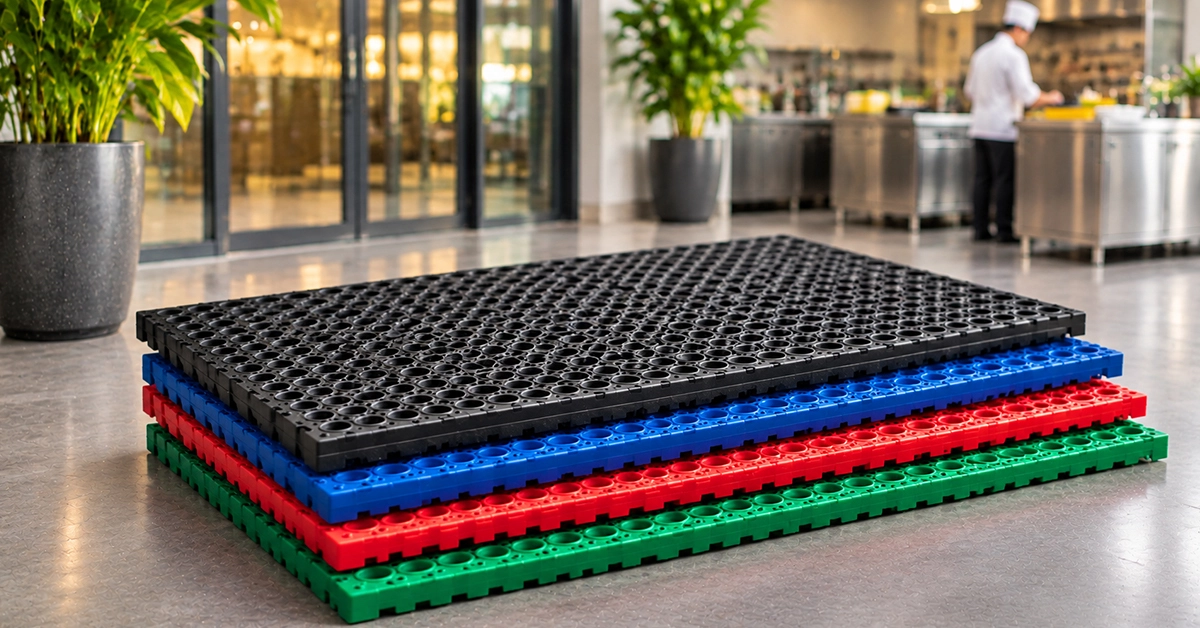
For businesses comparing different flooring options, industrial and commercial rubber mats from Aramats provide a starting point for exploring products designed for demanding workplace applications.
Standard flooring products may not always withstand the repetitive pressure, equipment movement and environmental conditions found in industrial workplaces. Areas exposed to heavy machinery, oil, moisture and continuous foot traffic require flooring selected according to their specific operating conditions.
When procurement teams look for heavy-duty industrial floor mats in London, they should consider more than appearance. Important factors include rubber composition, density, thickness, surface texture and resistance to wear.
Quality industrial rubber mats may help:
The performance of a mat depends on its construction and intended application. Buyers should request technical specifications before choosing products for heavy machinery or high-traffic environments.
Explore why industrial workplaces use rubber mats for more information about their applications.
Global procurement strategies increasingly involve comparing manufacturers across different regions. India has an established rubber manufacturing sector, and international buyers may consider Indian suppliers when evaluating product availability, pricing and bulk-order requirements.
For a UK facility manager, finding the best rubber mats brand in India involves evaluating manufacturing capabilities, material specifications, quality consistency and export support.
Depending on the product range, buyers may compare rubber formulations such as SBR, EPDM and NBR. These materials have different properties and are used in different applications.
For example, NBR rubber is commonly considered where resistance to oils is an important requirement. However, buyers should verify the specific product's chemical compatibility rather than assuming that every rubber mat offers the same resistance.
Read EPDM vs SBR vs Nitrile Rubber Mats: Which One Is Best? to understand the differences between these materials.
Choosing a suitable rubber mat manufacturer in India requires a closer look at manufacturing quality and product documentation.
International buyers should request information about:
Certifications and compliance documents should be checked against the actual product and the intended market. Buyers should not assume that a manufacturer's general quality certification automatically certifies every product.
For businesses evaluating suppliers, Aramats rubber mat manufacturing solutions offer a relevant starting point for exploring rubber matting options.
Slips and falls are important workplace safety concerns, particularly in areas exposed to water, oil, dust and other contaminants.
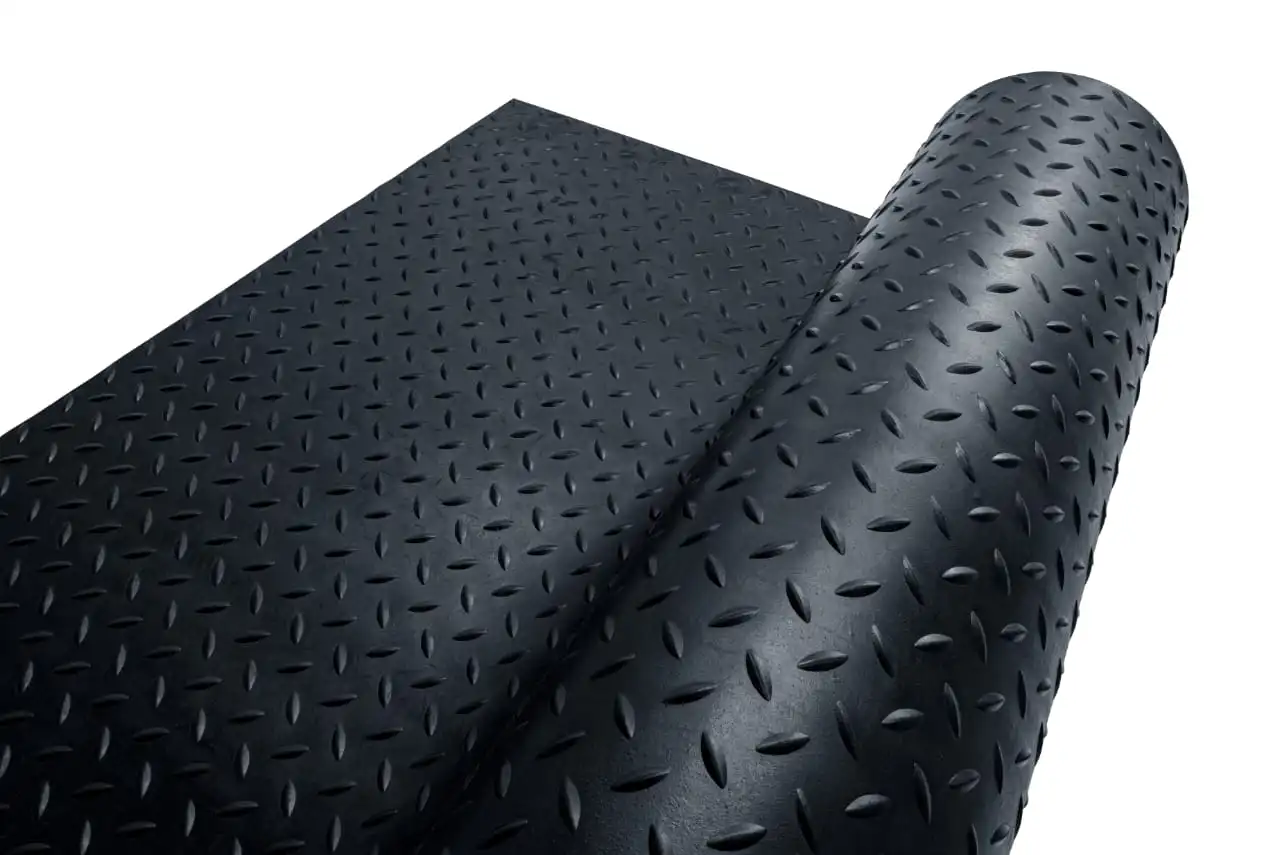
The best rubber floor mats in the UK should be selected according to the conditions in which they will be installed. Surface patterns such as diamond plate, ribbed and other textured designs may be considered where traction is important.
However, a textured surface alone does not guarantee slip resistance. Performance depends on the material, surface contamination, footwear, cleaning practices and installation.
Businesses should also review relevant slip-resistance test results and choose products appropriate for their risk assessment.
For workplace guidance, refer to the UK Health and Safety Executive's guidance on slips and trips.
Industrial safety planning should consider more than large production floors. Entrance areas, corridors, workstations and loading zones can also present flooring challenges.
Using the best rubber floor runners in London can help businesses organise designated walking and working areas. Depending on their design and placement, rubber runners may provide a practical surface for corridors, workstations and selected high-traffic locations.
When choosing rubber runners, consider:
Runners should be positioned securely, with edges managed to avoid creating trip hazards.
Explore the essential guide to rubber floor runners for additional information about their applications.
Sustainability is becoming an important consideration in industrial procurement. Businesses are increasingly evaluating the material composition, product lifespan, manufacturing processes and end-of-life options of the flooring they purchase.
Some rubber mat products may incorporate recycled rubber, depending on the formulation and intended application. However, recycled content does not automatically mean that a product is suitable for every industrial environment.
Before selecting an eco-conscious flooring option, buyers should ask suppliers about:
Read more about the environmental benefits of using recycled rubber floor mats.
Finding the best rubber mat supplier in India involves evaluating the supplier's ability to meet both technical and commercial requirements.
A reliable supplier should be able to explain product specifications, available sizes, material options and intended applications.
Check whether the supplier offers suitable options for industrial floors, commercial spaces, workstations and other required applications.
Compare thickness, density, hardness, dimensions and surface finish. Request supporting product information before making a bulk purchase.
For large orders, ask about minimum order quantities, production capacity, lead times and repeat-order availability.
Ask for relevant test reports, quality documentation and certifications. Verify that the documentation applies to the product being purchased.
For UK buyers sourcing from India, review packaging, shipping arrangements, delivery timelines and any applicable import requirements.
These checks can help procurement teams compare suppliers based on quality, suitability and long-term business requirements rather than price alone.
Some businesses may prefer working with a local UK distributor, while others may consider importing directly from manufacturers.
When evaluating the best rubber mat supplier in the UK, compare product availability, technical support, delivery arrangements and the supplier's understanding of workplace requirements.
A suitable supplier should help buyers identify products based on the intended application rather than recommending the same mat for every environment.
Businesses can also explore heavy-duty industrial floor mats in the UK when comparing flooring options for demanding workplaces.
Selecting the best rubber floor mat in the market requires matching the product to its working environment.
A mat used in an electrical work area may need different specifications from one used in a commercial kitchen or an industrial workstation.
Consider these factors before purchasing:
For additional guidance, read how to choose rubber mats for workplace use.
Aramats offers rubber matting solutions for industrial and commercial applications. Businesses comparing suppliers can explore the available product range and review product information according to their flooring requirements.
Whether you are sourcing industrial flooring for a London workshop, a distribution centre or a commercial facility, it is important to select products based on their specifications and intended use.
Explore the Aramats industrial and commercial rubber mat range to learn more about available flooring options.
Choosing the right industrial rubber flooring in 2026 involves more than comparing prices or selecting a familiar brand. Businesses should evaluate material quality, durability, surface design, workplace conditions and supplier reliability.
For London-based procurement teams, comparing UK distributors with established international manufacturers can help identify suitable products for different applications. Indian manufacturers may offer additional sourcing options, particularly for businesses considering bulk orders and export supply.
Ultimately, the best industrial rubber mat is the one whose verified specifications meet the requirements of the workplace. By working with an informed supplier and reviewing the relevant technical documentation, businesses can make more confident flooring decisions that support workplace safety, operational requirements and long-term value.