Standing for long periods on hard flooring can leave workers with tired, uncomfortable feet and legs. In workplaces where employees spend much of their shift standing at a workstation, the floor beneath them can make a noticeable difference.
This is where anti-fatigue mats for UK workplaces come in. Designed to provide a more resilient surface than hard concrete, metal, or other rigid flooring, anti-fatigue mats can provide cushioning underfoot and may help reduce discomfort associated with prolonged standing. For industrial applications, workplaces can also consider anti-fatigue mats for industrial workstations based on the demands of the working environment.
But do they really reduce worker fatigue?
The short answer is that they can help, but they should not be treated as a complete solution. Workplace design, footwear, opportunities to change position, and the nature of the task also influence how workers experience prolonged standing.
What Are Anti-Fatigue Mats?
Anti-fatigue mats are designed to provide some cushioning and elasticity underfoot for people who spend extended periods standing. Unlike a hard, unyielding floor, a resilient surface can provide a degree of cushioning while a person stands or moves around a workstation.
Anti-fatigue mats used in UK workplaces may be made from different materials such as rubber and other resilient materials. Rubber is a popular choice for its durability and ability to cushion in rugged work environments.
Do Anti-Fatigue Mats Really Reduce Worker Fatigue?
They can help reduce discomfort and foot fatigue associated with prolonged standing, particularly when workers would otherwise spend long periods on hard flooring.
However, a mat is only one part of the workplace setup.
Research and occupational health guidance recognise that prolonged standing itself can contribute to discomfort and fatigue. Factors such as workstation design, footwear and the ability to change position also matter. This means that simply placing a mat underneath a worker does not automatically eliminate fatigue.
A better approach is to look at the entire standing workstation.
Why Is Prolonged Standing Tiring?
Standing may look less physically demanding than active work, but remaining in a fixed standing position for long periods can place continuous demands on the muscles of the legs, back, and other parts of the body.
Workers who stand regularly may experience tired feet, leg discomfort, muscular fatigue and lower-back discomfort.
The issue is particularly relevant in jobs where employees have limited opportunity to sit, walk around or change their working position.
For this reason, workplace ergonomics should consider not only the floor but also the workstation layout and how the job is organised.
Where Can Workplace Anti-Fatigue Mats Be Used?
Workplace anti-fatigue mats can be useful in locations where employees spend extended periods standing in one place.
The typical examples are:
- Production work stations
- Assembly zones
- Packing plants
- POS checkouts
- Help desks
- Seminars
- Production areas
- Inspection points
- Workstations in laboratories
- Commercial and industrial stationary stations
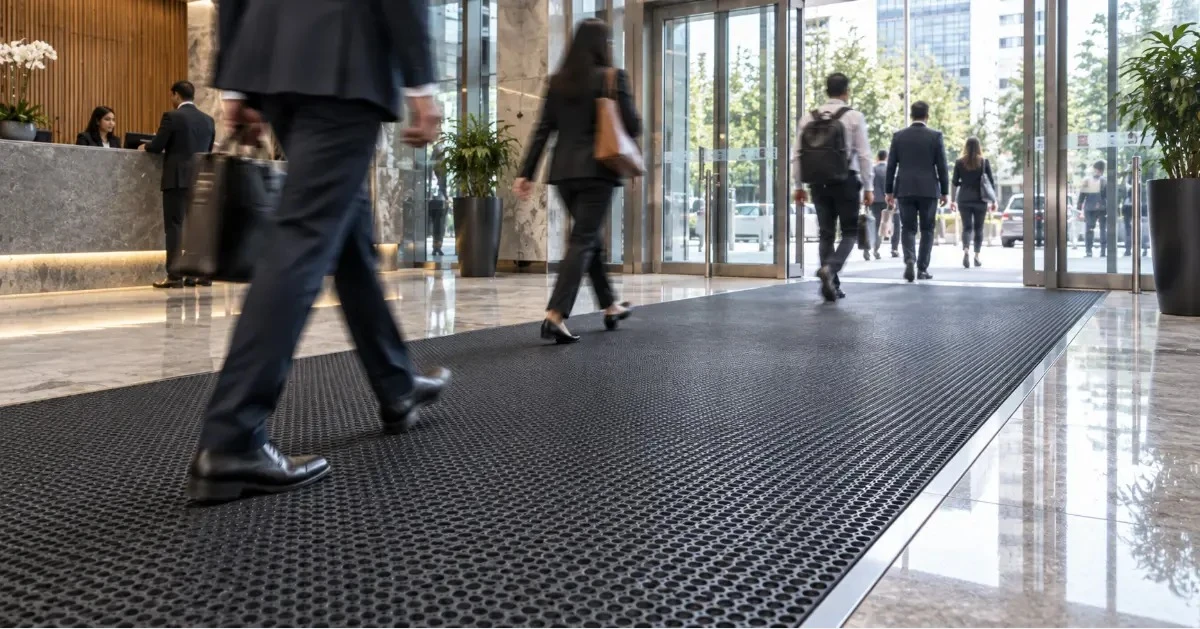
The suitability of a mat depends on the working environment. A mat used at a clean retail counter may have very different requirements from one used around machinery or in a workshop.
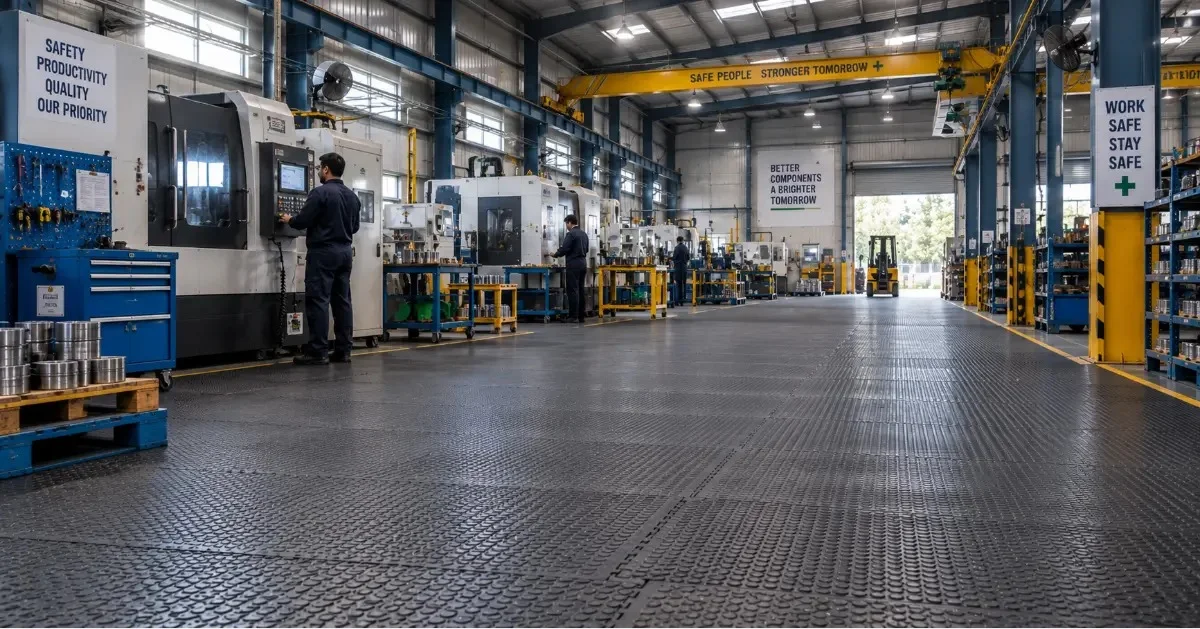
Anti-Fatigue Mats for Industrial Workplaces
In industrial environments, employees may stand for long periods while carrying out repetitive or precision-based tasks.
Industrial anti-fatigue mats for UK workplaces need to balance comfort with practical requirements such as durability, surface grip, cleaning, and resistance to the conditions of the working area.
For example, a production workstation may require cushioning and ergonomic support, while a workshop may also need a surface that can cope with dirt, tools and frequent movement.
The mat should therefore be selected according to the actual application rather than simply choosing the softest option.
Are Anti-Fatigue Rubber Mats Better?
Anti-fatigue rubber mats are widely used because rubber can provide a combination of resilience, durability, and practical workplace performance.
The important point is that an anti-fatigue mat should provide enough elasticity to offer cushioning without being so soft that standing becomes unstable.
Thickness alone does not determine whether a mat will perform well. A mat that is excessively soft or unstable can create its own problems.
Occupational health guidance specifically notes that softer and thicker is not always better when selecting anti-fatigue mats.
For workplaces comparing materials, the differences between rubber mats and PVC mats for industrial use can also be considered alongside the specific working conditions.
What Should You Look for in an Anti-Fatigue Mat?
When choosing ergonomic workplace mats, consider the whole working environment. Guidance on choosing the right floor matting can also help when evaluating factors such as workplace conditions, traffic and intended use.
Cushioning
The mat should provide appropriate resilience underfoot. Too little cushioning may offer limited benefit, while excessive softness can make standing less stable.
Grip
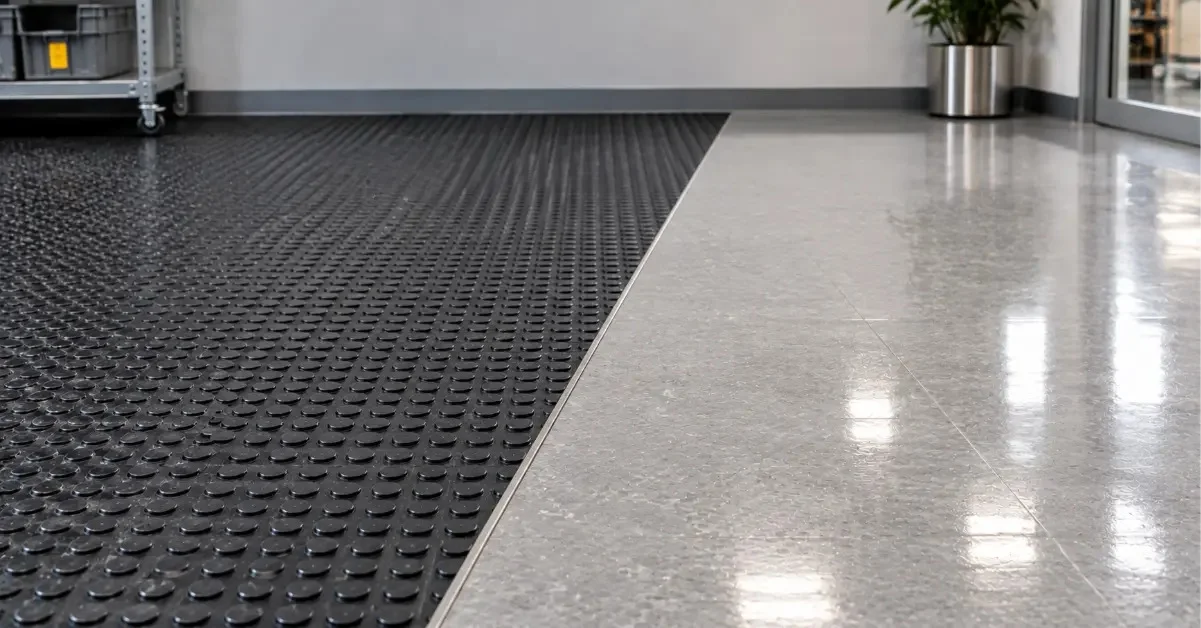
The mat should remain stable during use and should not slide across the floor. Good surface grip is also important in workplaces where employees regularly move around the workstation. Choosing appropriate matting can form part of a wider approach to reducing slips and falls with the right rubber matting.
Edges
Poorly positioned or unsecured mats can become trip hazards. Mats with suitable edges and proper installation can help reduce this risk.
Cleaning
The mat should be compatible with the cleaning requirements of the workplace. This becomes particularly important in environments where dirt, moisture, or workplace contaminants are common.
Durability
A mat used throughout a working shift needs to withstand repeated foot traffic and the conditions of its environment.
Size and Placement
The mat should cover the area where the worker actually stands. It should not create unnecessary gaps, edges, or obstacles around the workstation.
What About Mats for Standing Workers?
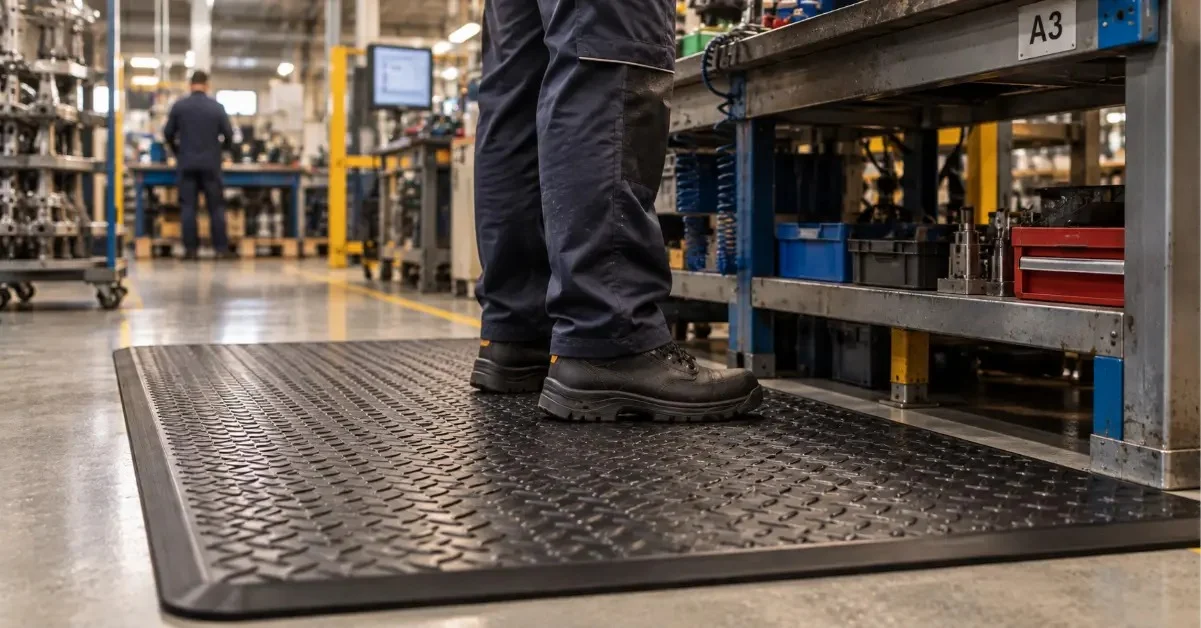
Standing mats for workers are particularly relevant at fixed workstations where employees spend much of their shift on their feet.
A mat can provide a more forgiving surface than bare concrete or other hard flooring. But workers should also have opportunities to shift positions where the task allows it.
A sit-stand stool, suitable footrest, or workstation adjustment may provide additional flexibility.
The goal is not to make workers stand on a mat for longer. It is to create a workstation where workers can vary their position and work comfortably.
Anti-Fatigue Flooring UK: Is a Mat Enough?
Anti-fatigue flooring UK workplaces use should be considered as part of a broader ergonomic approach.
Where possible, workplaces should look at:
- Workstation height and layout
- Opportunities to alternate between sitting and standing
- Suitable footwear
- Footrests or stools where appropriate
- Task variation
- Breaks and changes in working position
- The condition and type of flooring
HSE guidance on workplace design also highlights the importance of considering whether work should be performed sitting or standing and ensuring that workstation dimensions are appropriate for the task and worker.
An anti-fatigue mat can complement these measures, but it does not replace them.
Can Anti-Fatigue Mats Create Safety Problems?
They can if they are poorly selected or installed.
A mat that moves, curls at the edges, or is positioned where people frequently walk across it can create a trip hazard.
This is why stability, edge design, and correct placement matter. Occupational health guidance recommends ensuring mats do not slip or create trip hazards.
For areas where wheeled carts or equipment are used, the mat should also be selected with movement across the surface in mind.
How to Choose Anti-Fatigue Mats for UK Workplaces
Start with the job rather than the product.
Ask:
- How long do employees stand in one position?
- Is the floor concrete, metal, or another hard surface?
- Is the workstation fixed or does the worker move around?
- Is there exposure to water, oil, dirt, or other contaminants?
- Will carts or equipment pass over the mat?
- How often will the area need cleaning?
- Does the worker need to alternate between sitting and standing?
- Is there enough space for the mat to sit securely?
These questions can help identify whether an anti-fatigue mat is appropriate and what type of construction is required.
Choosing Anti-Fatigue Mats from ARAMATS
ARAMATS offers rubber matting solutions for industrial and workplace applications, including anti-fatigue options designed for areas where employees spend extended periods standing.
For UK workplaces, the appropriate product should be selected according to the workstation, working conditions, traffic, and cleaning requirements.
The objective is not simply to add a mat to the floor, but to create a more suitable standing surface that works alongside good workstation design and workplace practices.
Conclusion
Anti-fatigue mats for UK workplaces can be a useful part of a better standing-work environment, particularly where employees spend long periods on hard flooring.
The benefits are not simply about making the floor softer. A suitable mat should provide appropriate cushioning while remaining stable, durable and safe to use.
For the best results, anti-fatigue matting should be combined with sensible workstation design, suitable footwear and opportunities for workers to change position throughout the day.
Improve Comfort at Standing Workstations
ARAMATS provides rubber matting solutions for industrial and workplace environments, including anti-fatigue options for standing workstations.
Explore the ARAMATS rubber matting solutions to find an anti-fatigue mat suited to your workplace conditions.
Frequently Asked Questions
Do anti-fatigue mats really reduce worker fatigue?
They can help to ease foot pain and fatigue that can be associated with standing for long periods, especially on hard flooring. But mats are only part of the ergonomic workplace setup. Work design, footwear and opportunities to change position also matter.
Are anti-fatigue mats suitable for UK workplaces?
Yes. They are useful for use in workplaces where staff are on their feet for long periods of time, provided the mat is appropriate for the environment and is installed in a safe way.
What are the best anti-fatigue mats for standing workers?
There is no single mat that is suitable for every workplace. The choice should consider cushioning, stability, surface grip, durability, cleaning requirements, and the type of work being performed.
Are rubber anti-fatigue mats good for industrial workplaces?
Anti-fatigue rubber mats can be suitable for industrial environments because rubber can combine resilience with durability. The specific mat should still be selected according to the conditions of the workplace.
Are thicker anti-fatigue mats better?
Not necessarily. Excessively soft or thick mats can make standing unstable and may increase trip risks. For a related consideration, see How Thick Should Industrial Rubber Mats Be?.
Can anti-fatigue mats eliminate worker fatigue?
No. They should not be viewed as a complete solution. Prolonged standing, workstation design, footwear, task organisation and opportunities to change position can all affect worker comfort and fatigue.

Written by the ARAMATS team at Arackathara Group, manufacturers and exporters of rubber matting solutions since 1973.